 hendra-wijaya
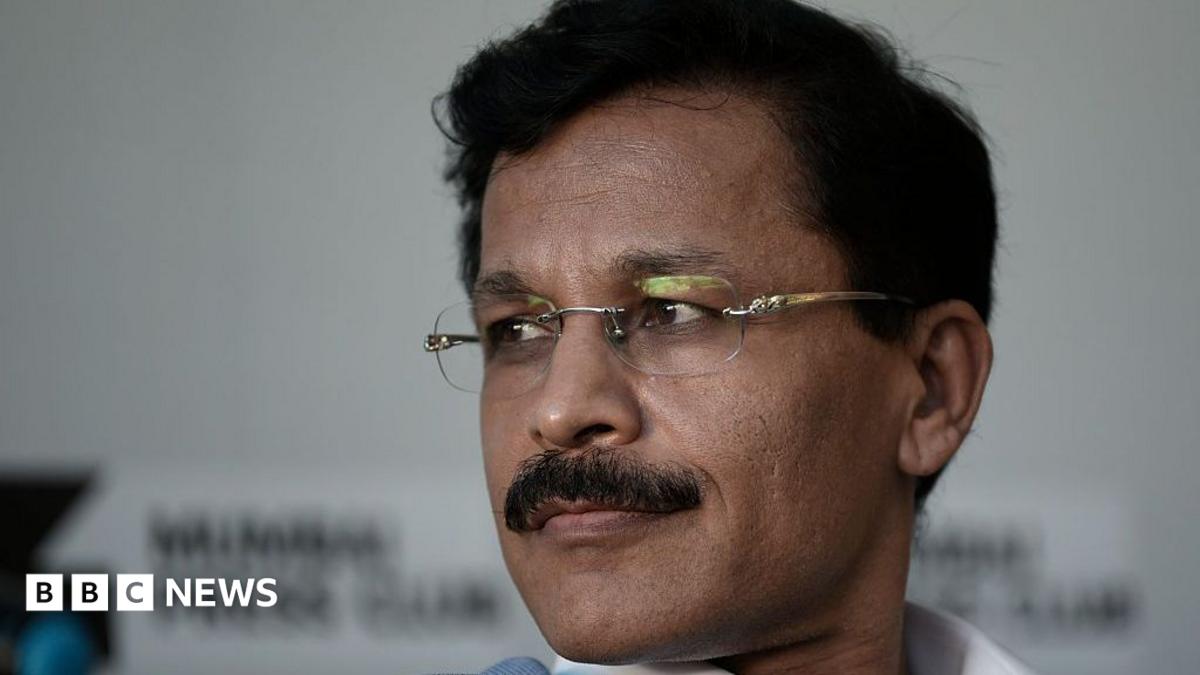
NEW DELHI — Walk into a government office in India and the odds of a quick, courteous encounter are, at best, uncertain. Yet in recent weeks a small cluster of civil servants has found itself being treated as something closer to folk heroes — not for breaking new ground, but for apparently doing their jobs as intended. The clearest example is 51-year-old Tukaram Mundhe, commissioner of Maharashtra's Food and Drug Administration, whose inspection drives have turned him into an unlikely internet celebrity.
Since taking charge in May, Mundhe has led a series of enforcement operations against restaurants and other food businesses. His teams have documented pest infestations, poor hygiene and the sale of expired food. He has also drawn attention to a different kind of gap: the large difference between what hospitals pay for routine medical supplies and what patients are ultimately charged for them. That combination of visible, evidence-led action on everyday irritants has struck a nerve with the public.
Images and video from the inspections have circulated widely on social media, earning Mundhe a following that has little to do with his official title. Hundreds of commenters, the BBC reports, have said they wish officers like him could be dispatched to deal with food-safety problems in their own state. In a country where enforcement is rarely associated with outcomes you can watch on a phone screen, an official who posts receipts — unsealed stock, expired packets, unclean kitchens — offers unusually concrete proof of work done.
Mundhe is not an isolated case. In Gurugram, the district town planner RS Batth, has drawn similar praise for acting against illegal construction and encroachments. His work, like Mundhe's, involves confronting small, often fiercely defended local interests, and it too has generated viral clips and public gratitude.
The question these two cases raise is why. In India, civil servants administer services that people depend on constantly — the issuing of documents, policing, food safety, healthcare. But the same officials are routinely accused of delays, of accepting bribes, and of forcing citizens to run from office to office. That reputation is the backdrop to the reaction these enforcement drives have produced. When an official appears to cut through the red tape, gratitude is not simply for one officer; it is for the possibility that the system can work.
"What should have been normal has become exceptional," says Kamal Kant Jaswal, a retired civil servant, making the point in a single line. He argues that for many citizens, bureaucratic hurdles, repeated visits and indifferent treatment have become so routine that efficient administration now reads as the exception rather than the baseline.
The mundane frustration behind that sentiment is easy to illustrate. Rajesh Singh, 43, who works for a finance company in Delhi, describes long waits to get basic work completed and far longer processes to resolve complaints. In his experience, a task that is supposed to be finished in 24 hours has at times stretched to six months, with no certainty of a positive result even at the end of it.
Mundhe also belongs to a recognisable line of Indian officials who have gained renown for straightforward enforcement. One of the most prominent was TN Seshan, who became a household name as chief election commissioner in the 1990s by fearlessly applying the rules of the poll. Another is Kiran Bedi, the first woman to join the ranks of the Indian Police Service, who was nicknamed "Crane Bedi" in the early 1980s after an illegally parked car belonging to then prime minister Indira Gandhi was towed away. The tow was actually carried out by a sub-inspector reporting to her, but Bedi later said she supported his decision — a story that has only grown in the retelling. She went on to become a decorated police chief and a Ramon Magsaysay Award recipient.
More recent names include Ashok Khemka, who became nationally known after intervening in a controversial land transaction in 2012, and Neeraj Jadaun, a police officer praised for confronting a mob during deadly religious violence in Delhi in 2020. Together, these cases have made the figure of the honest, no-nonsense bureaucrat both familiar and rare.
Jaswal offers an important corrective to the celebrity treatment. Thousands of officials in India, he points out, do their jobs every day without attracting attention at all, partly because their work involves little direct contact with citizens or is simply less visible. A sanitation supervisor, a revenue clerk handling records, a public health inspector without a smartphone-friendly narrative — none of them trends. Their absence from public view is not evidence of absence of work, though it means the burden of a broken system is often placed on citizens rather than on the officials who staff it.
Heroism can also invite its own backlash. Officers praised for enforcing rules are sometimes criticised for applying them rigidly, without weighing ground realities. Mundhe has faced pushback from sections of India's food and hospitality industry, who have accused him of selective or unlawful action; he has rejected those allegations, saying his inspections are evidence-driven and that licences are suspended only in serious cases. Batth has faced similar flak over his action against illegal encroachments, with critics claiming his enforcement is selective and falls hardest on vulnerable people. In several widely shared videos, he has said his actions follow town-planning rules strictly.
Jaswal explains why such actions can be lawful and harsh at the same time. A street vendor's stall may count as an unauthorised structure in the eyes of the law, yet it may be a family's only source of income. In a country where millions migrate to cities looking for work, an unsanctioned living space may be the only housing a family can find. The tension between the letter of the law and the economics of survival, he says, goes a long way toward explaining why the same enforcement can be read as both legitimate and cruel.
Bureaucrats, meanwhile, face pressures of their own, and writers such as Pushpa Sundar, who briefly served as a civil servant, have drawn attention to the conditions under which officials are expected to perform. The result is a recurring pattern: ordinary competence becomes news, and the reason is a measure not of the officer but of the expectations a citizen has been taught to hold.
For that reason, the public enthusiasm these officials inspire may be the clearest commentary on Indian governance. It says less about any single commissioner or town planner than about a system in which the normal experience of dealing with the state is delay and obstruction, and where the visible exception is welcomed as a personality. Whether the admiration remains episodic, or becomes a standard officials are judged to meet, will depend on whether the underlying system changes — or whether the next viral clip simply features a different officer doing the same job.








Comments (0)