

Kenya Quarantines Ten Contacts as First Ebola Case Exposes Screening Gaps
Kenyan health authorities have placed ten people under quarantine after they came into contact with the country's first confirmed Ebola patient, a man who died in a Nairobi hospita
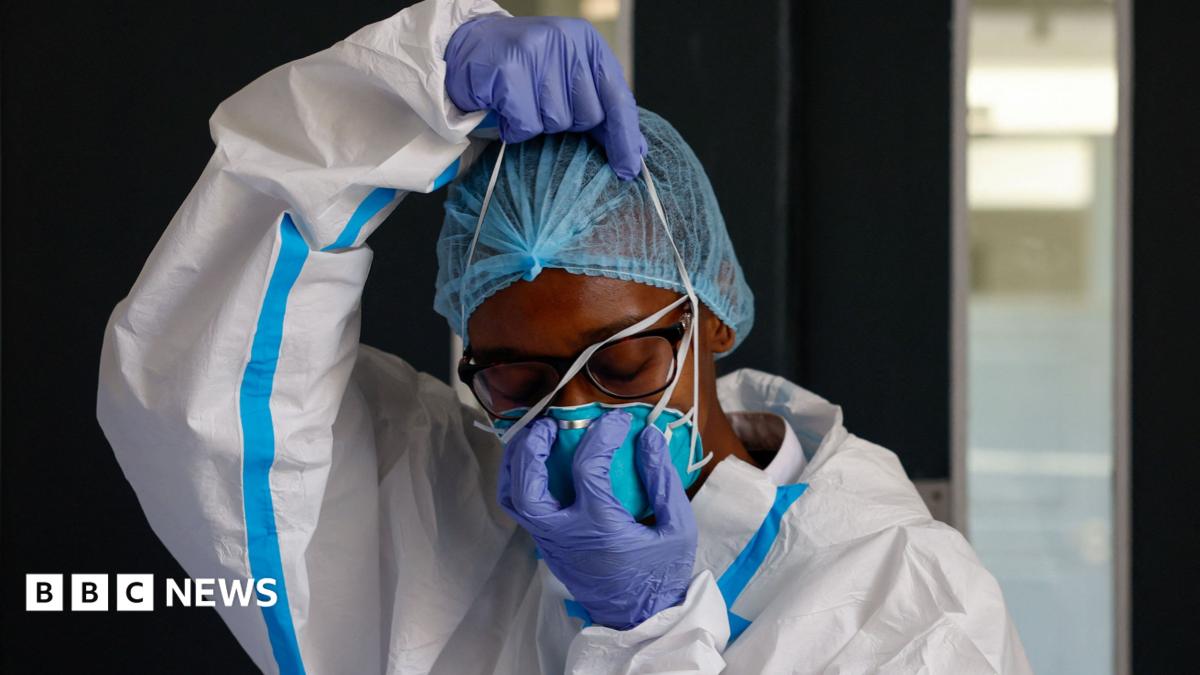
Kenyan health authorities have placed ten people under quarantine after they came into contact with the country's first confirmed Ebola patient, a man who died in a Nairobi hospital on Monday after travelling from the Democratic Republic of Congo. Officials say they are also attempting to trace a further 57 people who may have crossed paths with the victim, as questions mount over how an infectious patient was able to move through multiple countries and cities without being detected.
The case marks the first time Ebola has been recorded in Kenya, and it has triggered widespread concern about the effectiveness of screening measures at airports and land border crossings across East Africa. The patient, who had reportedly been unwell for roughly a month, travelled a circuitous route from eastern DR Congo to the Kenyan capital, passing through several towns and at least two international frontiers before his condition was finally identified.
Jean Kaseya, the head of the Africa Centres for Disease Control and Prevention, told the BBC that the patient's journey should have raised alarms long before he reached Nairobi. According to Kaseya, the man left Buta, a city in northern DR Congo, and drove to Kisangani. From there he boarded a flight to Beni, then continued by road into Uganda, before taking another flight to Kenya. Kaseya questioned why the symptoms the patient was displaying at various points were not picked up by health or border personnel, describing the sequence of undetected movements as a serious cause for concern.
The Ebola virus is transmitted through direct contact with the bodily fluids of an infected person, including blood, vomit and other secretions. The outbreak currently affecting DR Congo, which was declared in May, is caused by the Bundibugyo species of the virus. This strain is relatively rare compared with other forms of Ebola, and there are no approved vaccines or treatments specifically for it, although clinical trials are in progress. More than 4,000 people have died in DR Congo this year alone, making it the second deadliest Ebola outbreak on record.
Kaseya confirmed that the Africa CDC is investigating the Kenyan case in coordination with Congolese authorities, and that a team from the organisation was scheduled to meet Kenyan health officials. He stressed that a regional approach is now more critical than ever, warning that while Kenya was well prepared to receive and isolate the patient, other countries in the region may lack the same capacity. He also noted that rapid testing is not yet available at border points, and that temperature checks alone can fail to identify infected travellers.
Kenyan health ministry official Patrick Amoth suggested the patient may have passed through screening because medications he was taking had suppressed or masked his symptoms. After landing at Nairobi's main airport, the man was taken by a relative to a hospital in the city, where he later died. He was buried on Tuesday in accordance with health and safety protocols designed to prevent further transmission.
Authorities have urged the public not to panic, with the health ministry insisting that surveillance at airports and border crossings has been strengthened. President William Ruto said surveillance and rapid response teams are deployed on the ground, building on systems the country put in place after the DR Congo outbreak was declared in May. His spokesman added that Kenya has the capacity to detect, isolate and manage suspected cases, and that more than 650,000 travellers have already been screened, with 267 samples tested so far.
Despite those assurances, Dr Dennis Miskellah, a representative of Kenya's main doctors' union, said the emergence of the case came as no surprise to him or many of his colleagues. He told the BBC that he had personally observed lapses at multiple border points, including crossings shared with Uganda and Tanzania, as well as at Kenya's principal airport. Miskellah pointed to the central puzzle facing health officials: how a person could be ill for nearly a month in DR Congo, travel through several countries and arrive at Kenya's main gateway without being stopped.
In response to the case, facilities at four major hospitals have been designated for the management of Ebola patients, including the Nairobi Hospital where the first victim died. The ten contacts currently in quarantine are being held at an isolation facility where they are under constant observation, while contact tracers work to locate the remaining 57 individuals linked to the patient.
The case has also revived attention on a controversial proposal from June, when the United States planned to establish an Ebola treatment facility at a military base in the central Kenyan town of Nanyuki. The plan sparked public anger over the potential risks of cross-border infection and was halted by the courts. On Wednesday, Health Minister Aden Duale told a local television station that, depending on the outcome of the legal case, the government was considering converting the facility into the region's first dedicated infectious disease hospital.
Beyond Kenya's borders, the wider region has been closely monitoring the situation. Uganda, which the Kenyan patient transited through for less than 24 hours, emphasised on Tuesday that it remains free of Ebola and is maintaining strong surveillance measures. Uganda's health ministry said screening teams had recorded that the traveller had a normal temperature at the time of his departure, and the World Health Organization declared the country free of the disease in August following two earlier deaths linked to the outbreak.
Kaseya said the Africa CDC is working with countries across the region to reinforce response mechanisms, but he cautioned that not every nation is as prepared as Kenya. With no quick testing available at many border posts and symptoms sometimes masked by medication, the incident has underscored how quickly an outbreak can cross frontiers in a region where movement between countries is frequent and often difficult to monitor.
What's Your Reaction?
 Like
0
 Dislike
0
 Love
0
 Funny
0
 Wow
0
 Sad
0
 Angry
0

Reporter Senior. Meliput dinamika politik nasional, kebijakan publik, dan isu parlemen selama 8 tahun. Alumni FISIP UI.






Comments (0)