 rizky-amelia
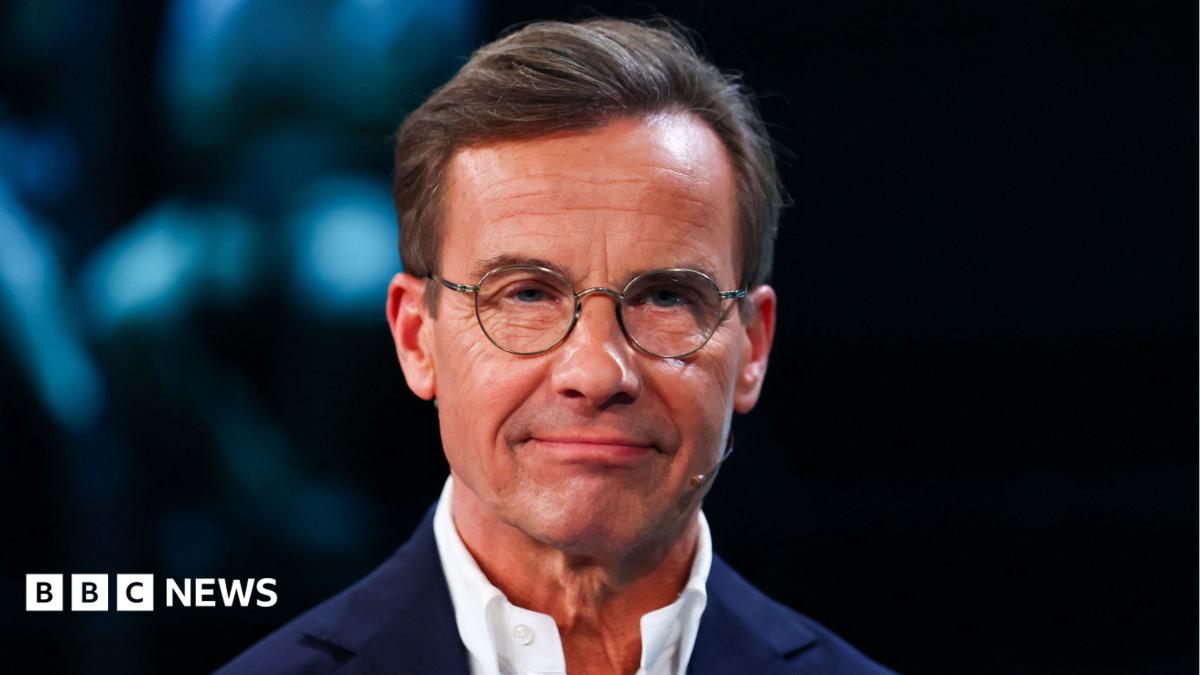
Sweden's Prime Minister Ulf Kristersson has tendered his resignation following a razor-thin general election defeat that saw his ruling right-wing coalition narrowly edged out by the centre-left opposition. The political shift concludes a fiercely contested race that will fundamentally reshape the balance of power within the Scandinavian nation's parliament.
Kristersson made the formal announcement on Thursday afternoon through a public statement on X, explaining that he was stepping down to allow constitutional procedures for the transition of power to commence immediately. In his announcement, the conservative leader indicated that he had officially requested to be relieved of his duties so the parliamentary speaker could begin consultations on forming a new administration.
According to preliminary data released by the Swedish Election Authority, the centre-left opposition bloc led by Social Democratic leader Magdalena Andersson is projected to capture 176 seats in the 349-seat Riksdag. By contrast, Kristersson’s four-party conservative alliance is positioned to secure 173 seats, falling just short of the absolute majority required to remain in government.
The nationwide contest was decided by a remarkably narrow margin, with approximately 50,000 votes separating the two competing political blocs in a country of about 10 million residents. The final outcome remained unconfirmed for several days after polls closed on Sunday evening, as counting continued throughout the week.
The ballot tabulation process required several days to complete due to the closeness of the contest. On Wednesday, regional election committees were still tabulating late-submitted early ballots alongside votes cast by Swedish citizens residing abroad that had not arrived prior to election day.
The official election results are currently subject to formal certification over the coming days, with election authorities expected to finalise the final tally by the weekend. Once certified, the constitutional focus will shift entirely toward the formal mechanisms required to install a new prime minister.
Under Sweden’s parliamentary system, the Speaker of the Riksdag will now oversee the government formation process. The speaker is responsible for conducting structured discussions with the leaders of all elected parties before nominating a prime ministerial candidate, who must then survive a confirmation vote among members of parliament.
Andersson has already initiated preliminary negotiations with the other three parties in her left-leaning alliance, opening talks with The Left Party, The Centre Party, and The Green Party. Together, the four opposition parties command the slim 176-seat parliamentary majority required to assemble a functioning government.
Despite their shared majority, the upcoming coalition discussions could prove protracted and delicate. Substantial policy disagreements divide the four centre-left parties, particularly regarding taxation and broader economic priorities, raising concerns that negotiations could extend over a prolonged period.
Lengthy coalition negotiations are a well-established feature of Swedish politics, where complex multi-party arrangements are commonplace. Following the previous general election in 2022, it took 37 days for party leaders to finalise a governing agreement, while the fractured results of the 2018 election required 134 days of intensive cross-party talks before a viable cabinet emerged.
In his resignation statement, Kristersson warned that the incoming opposition faces intricate hurdles in its pursuit of a stable coalition. He pointed out that the conditions for forming a government would be complicated, noting that the diverse and conflicting public pledges made by the left-leaning parties ahead of election day could present major obstacles.
Kristersson’s defeated governing alliance consisted of his own conservative Moderate Party, the Liberals, the Christian Democrats, and the hard-right Sweden Democrats (SD). Ahead of Sunday’s vote, Kristersson had promised to reward the SD with formal cabinet positions if his coalition retained power.
The Sweden Democrats originally emerged on the fringes of Swedish politics after being founded by Nazi sympathisers during the 1980s, leading mainstream political parties to ostracise them for decades. However, the party undertook an extensive rebranding effort starting in the mid-2000s to broaden its appeal.
That rebranding culminated in a major breakthrough during the 2022 general election, when the SD surged to become Sweden's second-largest parliamentary party on a platform centered on curbing immigration and cracking down on violent crime. Although they remained outside the cabinet, they provided essential parliamentary confidence to Kristersson's minority government, driving a substantial tightening of Swedish immigration policy.
However, Sunday's vote delivered a notable setback for the Sweden Democrats, as their national support slipped by three percentage points compared to their 2022 performance. The drop marked the first time the anti-immigration party has experienced a decline in electoral support since it first entered parliament in 2010.
With Swedish politics structured around two distinct four-party blocs on the left and right, Swedish voters are well-accustomed to minority administrations and delicate compromise. As Andersson works to reconcile the differences among her prospective allies, Sweden now enters a pivotal transitional phase to determine the composition and agenda of its next government.







Comments (0)