 rizky-amelia
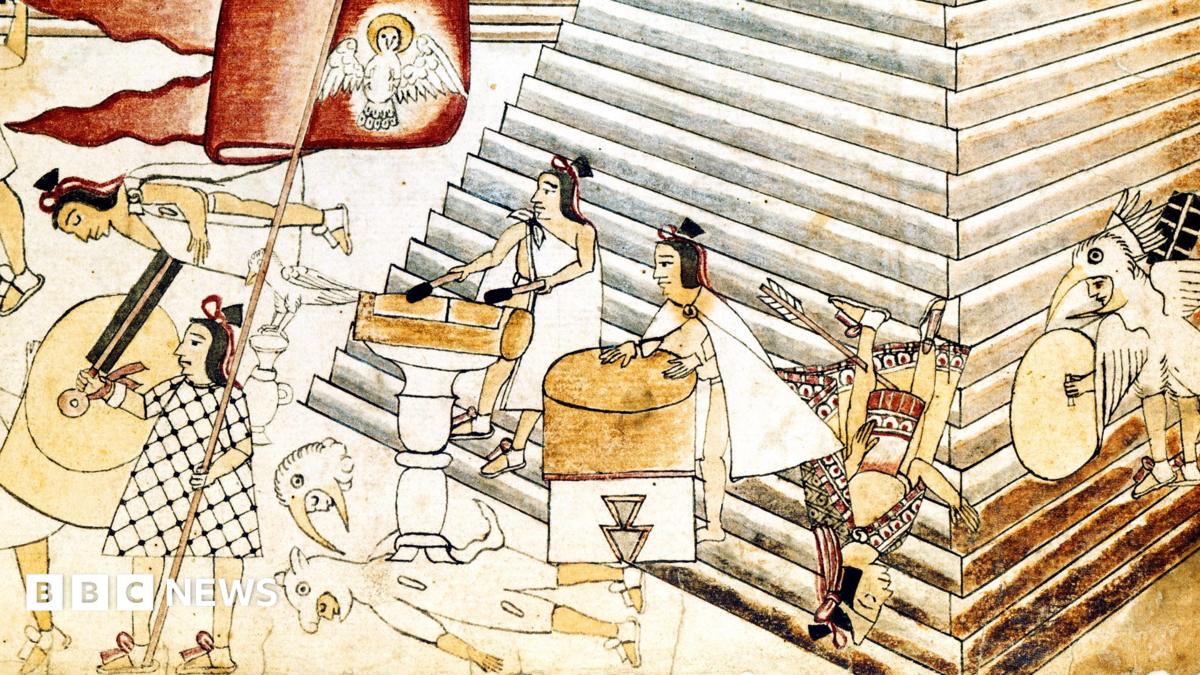
A landmark cultural event is unfolding in Mexico as a rare and precious manuscript depicting the history and eventual downfall of the Aztec civilisation goes on public exhibition in its native land for the first time in nearly two centuries. Known as the Codex Azcatitlán, the centuries-old pictographic document has been outside the country for 186 years, making its return a historic moment for the nation's cultural heritage.
The manuscript has arrived on a high-profile loan from France and will be presented to the public at the renowned National Museum of Anthropology in Mexico City, opening on Thursday. The temporary exhibition provides citizens and international visitors an unprecedented opportunity to view one of the most comprehensive pictorial records of indigenous Mexican history in existence.
Scholars and historians widely regard the Codex Azcatitlán as one of the most insightful and valuable surviving testimonies of the Mexica, or Aztec, people. Created in the sixteenth century, merely years following the arrival of the Spanish conquistadors, the manuscript bridges the pre-Hispanic tradition of pictorial record-keeping with the profound transformations brought about by European colonisation.
Through intricate and vivid pictograms, the codex illustrates the narrative of the Aztec people across key chapters of their existence. It includes depictions of the crucial moments surrounding the conquest, documenting the arrival of Spanish forces led by Hernán Cortés alongside the intense armed struggle that led to the collapse of the imperial capital of Tenochtitlán.
Among the striking scenes preserved across its folios are depictions of Spanish conquistadors marching in full armor with shields, weapons, and banners bearing religious iconography such as angels, accompanied by indigenous porters carrying logistical supplies. Other folios capture the fierce defense of Tenochtitlán, showing Aztec warriors—including combatants in bird disguises and ceremonial attire—guarding the steps of the great pyramid while confronting the foreign invaders amidst arrow strikes and drum music.
Before arriving back in Mexico for this exhibition, the Codex Azcatitlán had been housed across the Atlantic. It has been maintained within the collections of France's national library, the Bibliothèque Nationale, since 1898. Decades before entering the French national institution, the manuscript had already spent substantial time abroad, effectively distancing it from the land where it was originally illustrated.
The return of the manuscript to Mexican soil was arranged as a major cultural initiative to commemorate 200 years of formal bilateral relations between France and Mexico. The loan reflects a collaborative diplomatic effort between both governments to celebrate their shared history and foster institutional cooperation between their premier cultural bodies.
The agreement for the loan was formally established following direct diplomatic engagements between the leaders of both republics. Mexican President Claudia Sheinbaum and French President Emmanuel Macron reached a consensus on the exchange during President Macron's official visit to Mexico last year, underscoring the political importance assigned to cultural heritage exchanges.
As part of this reciprocal arrangement, Mexico agreed to send another irreplaceable national treasure across the Atlantic for exhibition in France. The reciprocal piece chosen for this transatlantic exchange is the revered Codex Boturini, another masterwork of indigenous pictorial literature.
The Codex Boturini is famed for documenting the ancestral journey of the Mexica people prior to the rise of their empire. Rendered in traditional pictograms, it chronicles their epic migration from their legendary homeland to the shores of Lake Texcoco, where they eventually established the sprawling island city of Tenochtitlán that would become the heart of Aztec power.
This high-profile exchange arrives amidst a broader, sustained campaign by the Mexican government to retrieve and celebrate cultural artifacts that were taken from the nation during previous centuries. Mexican authorities have consistently intensified diplomatic and legal efforts to recover historical treasures held in foreign private collections and overseas institutions.
According to official figures provided by Mexico's Ministry of Foreign Relations, these ongoing repatriation initiatives have yielded notable results in recent years. In the past year alone, the ministry successfully facilitated the repatriation of more than 2,000 historical and archaeological objects, reintegrating them into the country's national collection.
While the current exchange of the Codex Azcatitlán and the Codex Boturini is structured as a temporary bilateral loan rather than a permanent return, it serves as an important milestone in modern museum cooperation and international diplomacy. It demonstrates how diplomatic partnerships can facilitate public access to historically divided collections without administrative impasse.
For the public and cultural researchers in Mexico, the exhibition at the National Museum of Anthropology represents a rare reunion with a primary source that documents the defining transition from indigenous sovereignty to Spanish rule. The arrival of the Codex Azcatitlán after 186 years abroad stands as a significant moment in the ongoing appreciation of Mexico's pre-Columbian and early colonial narrative.








Comments (0)