

Canada Halts Expansion of Assisted Dying to People with Mental Illness, Citing Lack of Medical Consensus
Canada has announced it will indefinitely suspend plans to extend its medically assisted dying programme to individuals whose only underlying condition is a mental illness. The dec
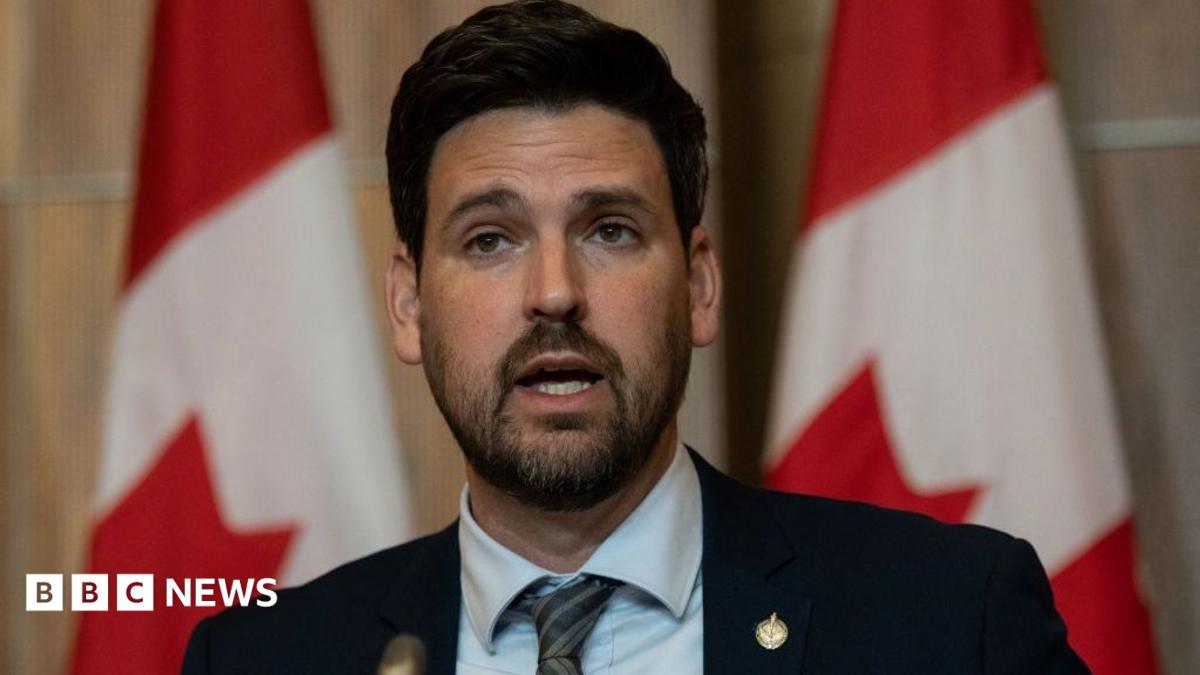
Canada has announced it will indefinitely suspend plans to extend its medically assisted dying programme to individuals whose only underlying condition is a mental illness. The decision, confirmed by Justice Minister Sean Fraser on Wednesday, marks a significant shift in one of the world's most permissive assisted dying regimes and follows months of intense debate among medical professionals, parliamentarians, and advocacy groups.
The expansion had been scheduled to take effect by March 2027, but will now be shelved under new legislation the government says it will introduce in the coming weeks. Fraser described the decision as difficult but necessary, telling reporters that while there is no perfect consensus on the matter, the government believes it has arrived at the correct approach. He pointed specifically to lingering uncertainty within the medical community about whether certain mental illnesses can be reliably classified as irremediable, a core legal threshold for eligibility.
The issue has divided Canadians and their representatives for years. A parliamentary committee examined the question earlier this year and ultimately recommended that people whose sole medical condition is a mental illness be indefinitely excluded from the programme. In its report, the committee acknowledged competing viewpoints but concluded there was a pressing need for broader and more equitable access to adequate mental health services before any expansion could be responsibly considered.
The committee's findings were informed by testimony from physicians, advocates, and experts from countries that already permit assisted dying on mental health grounds alone, including the Netherlands and Belgium. However, the recommendation was not unanimous. Some committee members issued a dissenting report, arguing that the review process had been fundamentally flawed and biased against expansion.
Supporters of extending the law argue that excluding people with mental illness alone amounts to discrimination and violates their constitutional rights to equal treatment and healthcare access. Among those challenging the current framework is Claire Brosseau, a Toronto woman living with treatment-resistant bipolar 1 disorder. She has said that euthanasia would offer her what she calls a safe death. Her case is part of a federal legal challenge contesting the government's earlier decisions to delay access for people with mental illness. Fraser acknowledged that the Supreme Court could eventually weigh in on the matter.
Medically assisted dying, commonly known in Canada as Maid, has been legal since 2016, when it applied only to people with terminal illnesses. Those patients still represent the overwhelming majority of cases. The programme was broadened in 2021, following a court ruling in Quebec, to cover individuals with incurable conditions whose deaths were not imminent. That second pathway is known in Canada as track two Maid. Lawmakers had originally intended to extend eligibility to people whose sole condition is mental illness in 2023, but delayed the change twice to allow further study of how it would be delivered in practice.
Concerns about the programme extend beyond the mental illness question. Some experts have warned more broadly that assisted dying has increasingly become a means of alleviating suffering for people who would be better served by improved access to affordable housing and healthcare, rather than functioning strictly as an option of last resort. Those criticisms have fuelled ongoing scrutiny of how the law operates in practice.
Public opinion appears nuanced. Polling suggests that a majority of Canadians support access to medically assisted death in general, but that support declines sharply when the question turns to patients whose only condition is mental illness. That divide has been reflected in the political and legal battles surrounding the file.
Alongside the suspension, the government's proposed legislation will include a separate measure allowing patients with a progressing incurable illness to give advance consent to assisted dying before their health deteriorates to the point where they can no longer do so. Such advanced requests are not currently legal in Canada. Fraser said the combined changes represent not easy decisions, but ones the government believes are correct.
The announcement leaves several questions unresolved. The federal court case challenging the delays continues, and the Supreme Court may yet be asked to rule on whether excluding mental illness as a sole criterion infringes constitutional rights. For now, however, Canadians whose only medical condition is a mental illness will not be able to seek assisted dying under the country's law, and the government has signalled it does not intend to revisit the question on any fixed timeline.
The development places Canada at odds with a small number of jurisdictions that permit assisted dying for psychiatric suffering alone, and it intensifies an international debate over how societies should balance compassion, autonomy, and the limits of medical certainty. For advocates on both sides, the pause is unlikely to end the argument; it simply moves the fight to a new stage.
If you or someone you know has been affected by the issues raised in this story, support is available through the BBC's Action Line. In Canada, the Suicide Crisis Helpline can be reached by dialling 988.
What's Your Reaction?
 Like
0
 Dislike
0
 Love
0
 Funny
0
 Wow
0
 Sad
0
 Angry
0

Reporter Senior. Meliput dinamika politik nasional, kebijakan publik, dan isu parlemen selama 8 tahun. Alumni FISIP UI.






Comments (0)