 rizky-amelia
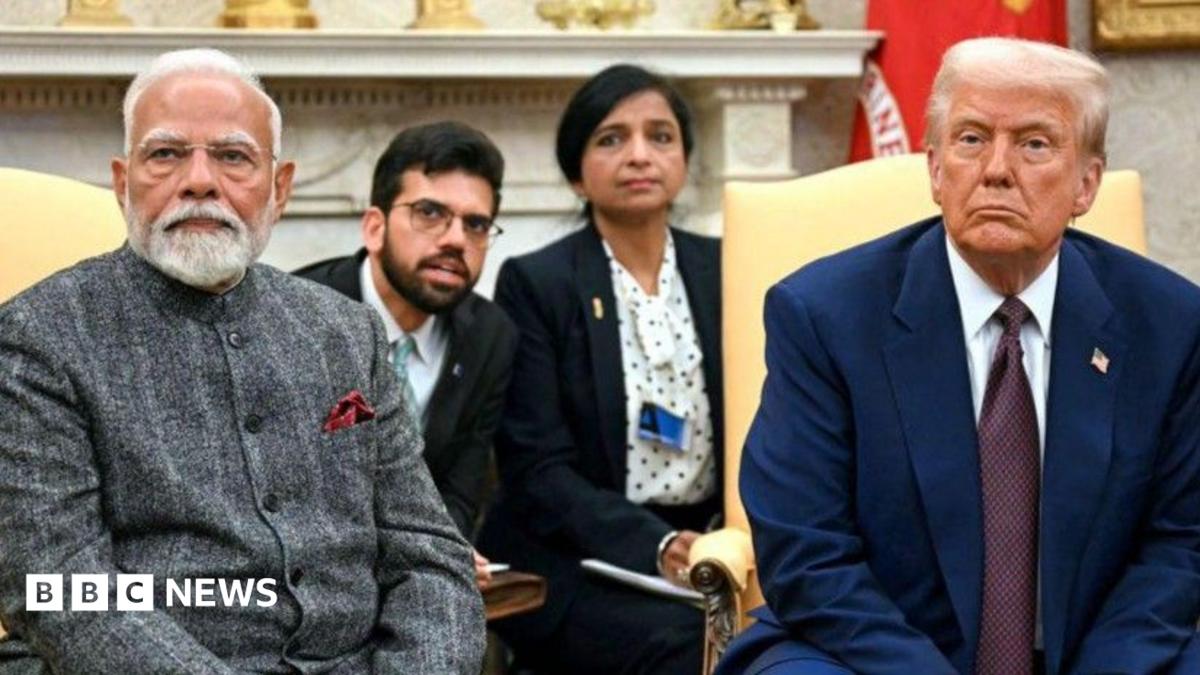
The United States House of Representatives has passed a sweeping legislative measure that grants President Donald Trump broad authority to enforce punitive tariffs of up to 100% on nations purchasing crude oil and natural gas from Russia. The bill, which now moves to the president’s desk to be signed into law, threatens to upend international energy trade and places significant geopolitical pressure on major buyers of Russian hydrocarbons.
India stands directly in the crosshairs of the new legislation alongside China. Both nations have emerged as the primary destinations for Russian fossil fuels following the realignment of global energy markets after the invasion of Ukraine. According to data compiled by the Centre for Research on Energy and Clean Air, China received 50% of Russia’s crude exports between December 2022 and August 2026, while India secured 37%. Other buyers trailed far behind, with Turkey and the European Union each accounting for 5% during the same timeframe.
For roughly four years, Indian refineries have capitalized on the redirection of Russian crude, which was largely abandoned by Western buyers due to sanctions. By purchasing these barrels at attractive discounts, India managed to significantly lower the financial burden of one of its largest imports. The trade provided domestic refiners with an abundant, consistent supply of feedstock, helping to manage national fuel costs.
However, the passage of the US sanctions bill transforms this cost-saving strategy into a profound geopolitical vulnerability. The legislation seeks to penalize foreign trading partners that continue to patronize Russian energy producers, with Washington lawmakers demanding an immediate pivot away from Moscow’s supplies.
Recent trade data underscores the scale of India’s dependence on Russian oil. According to the Delhi-based think tank Global Trade Research Initiative, Russia accounted for 30.3% of India's total crude oil imports during fiscal year 2026. This amounted to a staggering $40.8 billion out of the country’s overall $134.7 billion crude import expenditure.
The dominance of Russian barrels became even more pronounced in specific months. In July, Russian crude constituted more than half of all oil imported into India. That volume eclipsed the combined imports from India's next six largest suppliers during that month: the United Arab Emirates at 10.8%, Saudi Arabia at 9.6%, Venezuela at 6.3%, Brazil at 5.5%, Oman at 5.3%, and the United States at just 2.9%.
This deepening trade relationship persists even as the underlying economics of Russian crude have changed. The steep discounts that initially incentivized Indian purchases during the early stages of the Ukraine conflict have substantially narrowed. Simultaneously, intensified global competition for Russian barrels, paired with mounting shipping, insurance, and regulatory sanctions risks, has added friction to the procurement process.
American lawmakers have adopted a hardline stance following the bill’s passage. Democratic Senator Richard Blumenthal issued a direct warning to New Delhi and Beijing, declaring that both countries should look elsewhere for their oil and gas needs. Under the legislative framework, purchasing nations would typically be granted a 180-day window to wind down their Russian energy imports or negotiate terms with Washington, though the US president maintains the statutory power to shorten this compliance grace period.
In response to the vote, the Indian government issued an official statement indicating that it is closely monitoring developments and reiterated its unwavering commitment to safeguarding domestic energy security for its population. Indian officials emphasized that the matter had already been raised during high-level diplomatic discussions with US counterparts in recent months, where New Delhi clearly articulated the negative repercussions such measures could have on both bilateral ties and broader global energy markets.
Ajay Srivastava, a former Indian trade official who heads the Global Trade Research Initiative, criticized the US measure as an aggressive tactic designed to force India into an unfavorable bilateral trade agreement. He noted that India’s energy purchases are aimed entirely at securing affordable power and fuel for its 1.4 billion people rather than financing conflict, emphasizing that maintaining these flows has played an important role in stabilizing worldwide oil prices and global supply chains.
Transitioning away from Russian supplies would present severe logistical and financial hurdles for India. Analysis from S&P Global indicates that sourcing alternative crude would entail higher procurement, freight, and insurance costs, while extended maritime shipping routes would compound the economic strain on Indian refiners.
The availability of replacement volumes on the open market remains a critical concern for market analysts. Sumit Ritolia, an analyst at maritime intelligence firm Kpler, observed that the fundamental challenge is not merely whether Russian crude can be rerouted to different buyers, but whether sufficient alternative supplies exist to meet demand without triggering severe supply shortages and upward price shocks across the international energy complex.
Furthermore, the structure of the proposed US tariffs means the economic fallout would extend well beyond energy procurement. The penalty would be applied as a tax on Indian goods entering the United States rather than a levy on oil imports entering India. Such a move would deal a direct blow to Indian export industries, place downward pressure on the rupee, squeeze refinery margins, and worsen the national trade balance.
Michael Kugelman, a senior fellow at the Atlantic Council, warned that the legislation arrives at a precarious juncture for diplomatic and economic relations between Washington and New Delhi. He pointed out that the threat comes during sensitive, final-stage trade negotiations and amid broader bilateral uncertainties.
Kugelman added that while India has attempted to build economic resilience through new trade agreements with the European Union and other partners, as well as by reinforcing its existing trade ties with China, facing tariffs of up to 100% in a vital export market like the United States represents a severe commercial headwind that hedging strategies cannot easily mitigate.









Comments (0)