 rizky-amelia
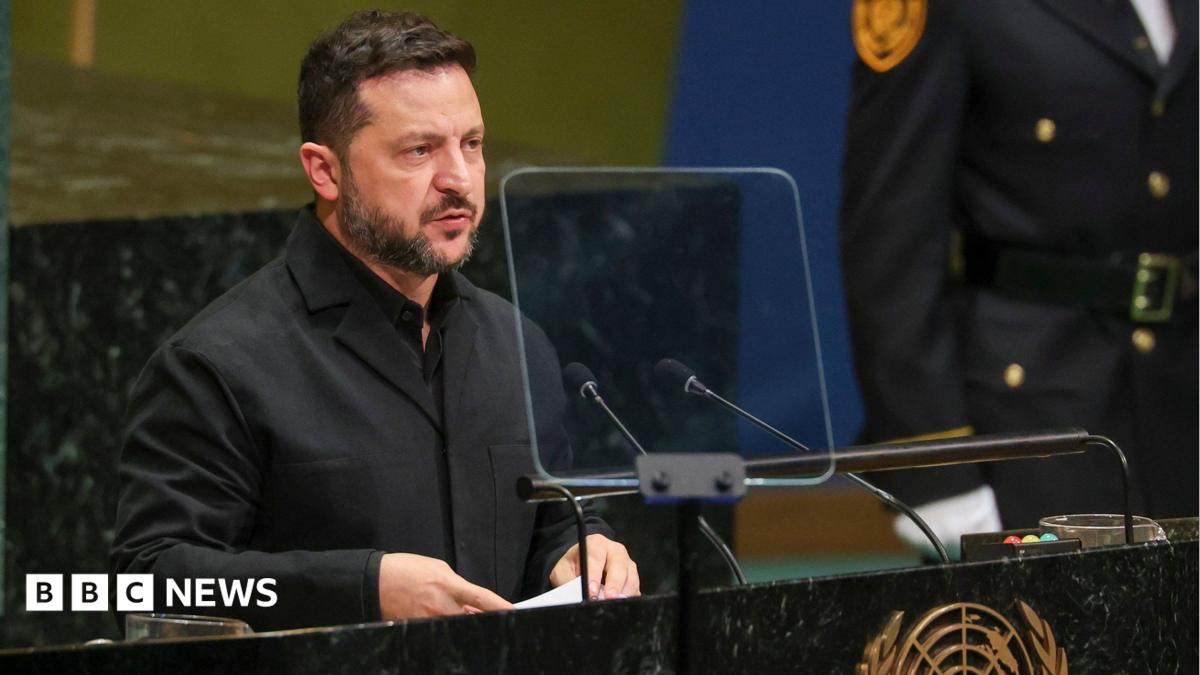
South Korea escalated a diplomatic dispute with Ukraine this week by summoning Kyiv's acting ambassador to protest President Volodymyr Zelensky's public disclosure that two captured North Korean soldiers had been quietly moved to Seoul. Vice Foreign Minister Park Yoon-joo delivered a formal complaint to Andrii Vieshkin, expressing what the ministry described as "strong regret" that Zelensky revealed the transfer, which South Korean officials insist was meant to remain confidential.
The two North Korean prisoners, captured while fighting alongside Russian forces in Ukraine, had previously told local media they wished to be resettled in South Korea. Their case has become an unexpected flashpoint in relations between Seoul and Kyiv, two governments that have broadly aligned against Russia's invasion but now find themselves at odds over how the handover was handled.
According to South Korean officials, the transfer was the product of more than a year of delicate negotiations between Seoul and Kyiv. The arrangement was kept under wraps for two main reasons, President Lee Jae Myung's office said in a statement. First, secrecy was intended to shield the prisoners' relatives still living in North Korea from possible reprisals. Second, Kyiv itself had an interest in avoiding publicity, since disclosure could invite criticism that it had forfeited a valuable bargaining chip—two North Korean soldiers who might have been exchanged for Ukrainian prisoners of war held by Russia.
The dispute erupted after Zelensky used his address to the United Nations General Assembly last Wednesday to announce that the two North Koreans had been transferred to South Korea. In his remarks, he noted that the soldiers had not been "easy to capture alive." Seoul confirmed the news shortly afterward but sharply criticised the Ukrainian president for what it called a breach of an agreed silence.
Lee's office acknowledged that Ukraine had signalled in advance that the soldiers would feature in Zelensky's speech, but said the understanding was that he would not reveal the fact of their transfer to South Korea. The president's office described the disclosure as "greatly disappointing" and characterised the prisoner issue as a "highly sensitive matter" with direct implications for South Korea's national security.
The spat deepened when Zelensky's office pushed back, asserting that the two countries had never signed a non-disclosure agreement covering the transfer. Seoul responded by demanding that Ukraine apologise for what it called "announcing a falsehood," warning that the episode had seriously damaged trust between the two governments. Ukraine's foreign ministry declined to comment when approached by the BBC.
The political fallout has been felt keenly inside South Korea. Opposition lawmakers accused Lee of concealing the transfer in order to avoid provoking Pyongyang, part of a broader criticism that his administration is too eager to placate the North. Lee, whose party favours a conciliatory approach toward North Korea, has been trying to restart peace talks with Pyongyang, so far without success.
The two soldiers were captured in early 2025, when Ukraine said its forces took them prisoner during fighting in Russia's Kursk Oblast. They were among thousands of North Korean troops that Pyongyang dispatched to support Moscow's war effort, a deployment that began in 2024 and marked a significant deepening of military cooperation between Russia and North Korea.
Seoul has broadly supported Ukraine since Russia's full-scale invasion, but it has refused to abandon its longstanding policy of not supplying lethal weapons to any country engaged in an active war. South Korea has instead provided non-lethal assistance. This July, Seoul announced a $100 million aid package for Ukraine, which Lee's office described as an expansion of earlier support that included helmets, personal armour and medical equipment.
Kyiv has been pressing Seoul to go further. After North Korean troops were deployed to fight for Russia, Ukrainian officials intensified calls for South Korea to supply advanced anti-air missiles to help defend Ukraine's energy infrastructure against Russian drone and missile strikes. Mykhailo Podolyak, a senior adviser to Zelensky, argued that the North's direct participation in a European war means South Korea can no longer stand apart. He framed the potential transfer of defence technologies and capabilities as a matter of Seoul protecting its own long-term security by helping contain what he called an aggressive totalitarian axis.
Moscow has warned that it would have "no choice but to retaliate" if South Korea provides weapons to Ukraine, without specifying what measures it might take. The threat adds another layer of risk for Seoul, which has long sought cordial ties with countries opposed to the United States. Since the collapse of the Soviet Union, South Korea has worked to deepen trade and diplomatic relations with Russia, which shares a border with North Korea, and it regards both Moscow and Beijing as key partners in efforts to influence Pyongyang.
For now, the prisoner row has injected fresh tension into a relationship that both sides had reason to keep stable. Seoul's decision to summon Ukraine's acting ambassador signals that the Lee government views the disclosure as more than a procedural misstep. The episode has also handed domestic critics a new line of attack against the president's North Korea policy, while raising questions in Kyiv about whether the public revelation has complicated future cooperation with a partner whose non-lethal assistance and diplomatic support remain valuable.
The two North Korean soldiers, whose whereabouts and legal status have not been detailed publicly, remain at the centre of a diplomatic incident that touches on prisoner exchanges, family safety, alliance management and the widening reach of the Russia-North Korea military partnership. How Seoul and Kyiv repair the breach—and whether Ukraine's appeals for defensive weapons gain any traction in the aftermath—will shape a relationship both governments have treated as strategically important.








Comments (0)