 rizky-amelia
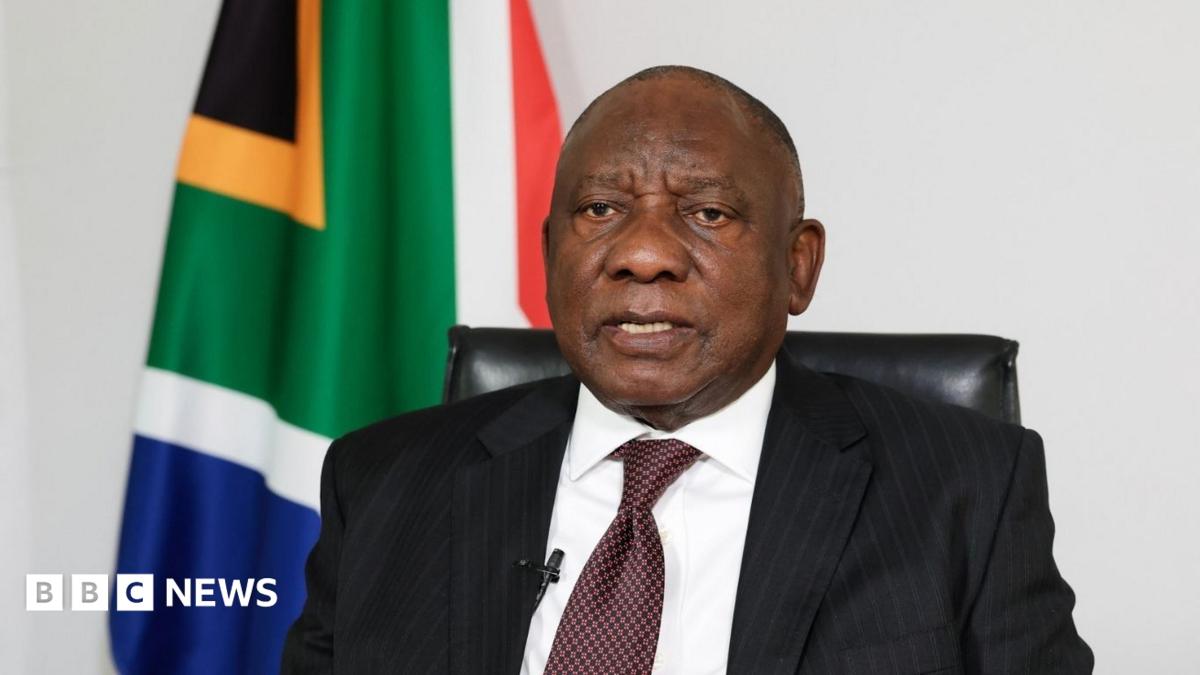
JOHANNESBURG — South African President Cyril Ramaphosa used an address to the nation on Tuesday to announce a sweeping response to the discovery of the bodies of 12 women east of Johannesburg, instructing local authorities to begin identifying and fixing the environmental conditions he says have left women exposed to danger.
The bodies were recovered from a single area over a two-month period, a discovery that has sent shockwaves through a country already struggling with what the World Health Organization and domestic campaigners describe as one of the world's most severe gender-based violence crises. The killings have prompted demonstrations, urgent missing-person appeals from families, and intense public debate about why women in South Africa continue to die in such numbers.
Ramaphosa said he was declaring what he termed a multidisciplinary, national-level emergency response to the murders. Four arrests have been made in connection with the case, according to the president's remarks, though police have cautioned the public against drawing premature conclusions. Many residents have feared that the proximity of the bodies might point to a single, serial offender, a theory that has circulated widely on social media and in comments from political leaders.
In his address, Ramaphosa directly addressed that anxiety. He said it was understandable that people were afraid the discovery of the women close together could indicate the work of one perpetrator, but stressed that "at present, the police have not found evidence establishing that these killings were committed by a single perpetrator." That distinction matters both for the integrity of the investigation and for the wider public debate: the president appeared to be warning against the idea that the country can simply lock up one man and declare the crisis over.
The president did not stop at reassurance. He acknowledged a failure of government, conceding that the state has "not done enough" to protect women and girls and that violence against women "cannot be accepted as a normal part of life in South Africa." That admission carries weight from a leader who has held office since 2018 and who has previously faced criticism that promises on gender-based violence have not been followed by measurable reductions in killings.
The most concrete element of Tuesday's announcement was a directive that every municipality in the country must carry out a women's safety audit without delay. Under the plan, authorities will be required to map "high-risk areas" and then act on them. Ramaphosa spelled out the kinds of hazards auditors should be looking for: broken streetlights, overgrown public spaces, abandoned buildings, unsafe transport routes and facilities, and poorly secured parks. Each of these, he suggested, represents a condition that places women at risk, whether by removing natural surveillance, isolating commuters on poorly lit routes, or giving offenders cover.
The strategy reflects a growing view among researchers and policing officials that femicide in South Africa cannot be tackled through arrests alone. Studies have repeatedly linked GBV to the built environment, to alcohol availability, to poverty and to social inequality, and have urged authorities to treat public space as a site of prevention rather than simply a backdrop to crime. Critics of similar audits elsewhere have warned, however, that without funding, deadlines and published findings, they risk becoming paperwork exercises. Ramaphosa's announcement as reported did not attach timelines or budgets to the audits, and campaigners are likely to press for both.
A second pillar of the package is an "enforcement package" aimed at reducing alcohol-related violence. Ramaphosa was careful to frame the measure, saying alcohol does not cause gender-based violence and can never excuse it, because "responsibility always lies with the perpetrator." At the same time, he argued that harmful alcohol use is a significant aggravating factor in interpersonal violence and must be tackled as part of a broader prevention effort. That dual framing reflects the tension in official policy: South African law has progressively tightened restrictions on the sale and distribution of alcohol, yet enforcement remains inconsistent and debate about whether regulation or education is more effective continues.
Beyond policing and legislation, Ramaphosa argued that the change required is cultural. Violence, he said, "does not begin when a fist is raised," or when a woman is raped or murdered. It begins, he explained, in attitudes that treat women as inferior, in the assumption that a man has a right to control a woman, in jealousy mistaken for love, control mistaken for protection, and coercion mistaken for affection. It begins, he concluded, "when a man refuses to accept the word no."
He then turned directly to men and boys, urging them to take the lead in ending gender-based violence. "We have placed the burden of male violence on women," Ramaphosa said, adding: "That must change." He insisted that the answer to violence against women "cannot be to make women less free" — a pointed reference to the argument, advanced by some politicians and commentators, that women should be advised to avoid certain places, hours or clothing rather than confront the men who pose the danger.
The scale of the underlying problem is illustrated by official figures. South Africa has one of the highest homicide rates in the world, with 5,427 people murdered between April and June alone. Police statistics do not break victims down by gender, a gap that activists have long criticised, but the South African Human Rights Commission reported recently that 569 women were killed and 1,052 others survived attempted murder over the same three-month period. Taken together, those numbers suggest that for every woman who dies, roughly two more are targeted but survive.
For women's rights organisations, the announcement is likely to be welcomed as a recognition of the crisis, while also being treated as a test. Previous national declarations have been followed by implementation gaps, and campaigners say they will judge the response on results: how many audits are completed, how many streetlights are repaired, how many transit routes are made safe, and how many of the accused are convicted. The four arrests announced so far are unlikely to ease the wider anxiety, particularly among women who live in or travel through the areas identified as high-risk.
What Tuesday's address did deliver was an unusually direct acknowledgment from the presidency that the burden of violence has been placed on women, and that reversing that is a task for men. Whether the safety audits and alcohol enforcement measures translate into safer streets in the months ahead will determine whether the response is remembered as a turning point or as another set of promises.






Comments (0)