 hendra-wijaya
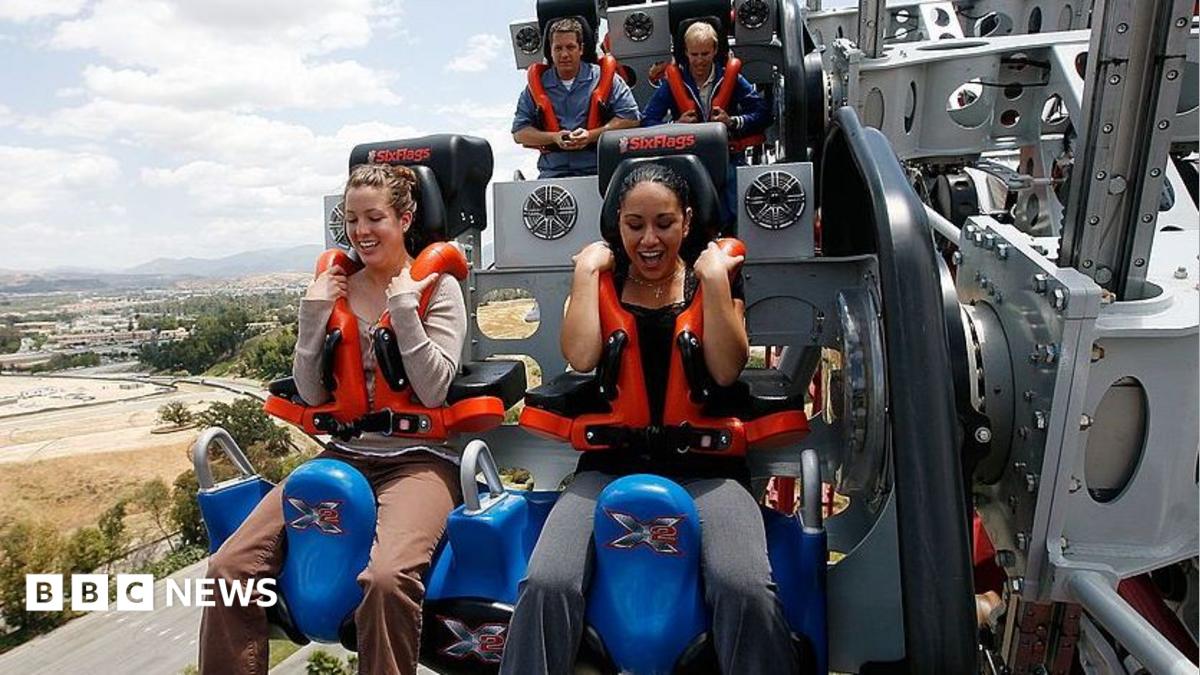
Six Flags Magic Mountain, an amusement park in Valencia, California, has announced that it will permanently retire the X2 rollercoaster, one of the park's best-known attractions, following a wave of lawsuits and news reports in which hundreds of former riders say they suffered brain injuries after riding it. The decision, announced on Tuesday, closes a long-running legal and reputational dispute over the fate of a ride that has drawn unusually large crowds since it reopened under its new name in 2008.
The X2 was a fixture of the park's lineup, and much of its appeal rested on its extreme design: riders sit in seats that spin a full 360 degrees, a feature that has become synonymous with the attraction. The ride consistently generated long queues, and Six Flags has said more than 16 million people have ridden it since it was reintroduced. Its popularity made it a significant source of revenue and a signature draw for a park catering to thrill-seekers in the Los Angeles area.
The coaster has already been off the operating schedule since July. That initial shutdown was not presented as a permanent decision; it has now been followed by an announcement that the vehicle will not return. In a statement published on the company's blog, Six Flags Magic Mountain Park President Brian Oerding said the ride had passed a range of safety tests, but that the company had concluded retiring it was "the right thing to do."
Oerding framed the decision in terms of public trust as much as engineering. "Ride safety is a cornerstone of our business, and when we see guest confidence affected, we take it seriously," he said, signalling that the park's calculation was driven as much by the reputational damage surrounding the injury claims as by any single mechanical finding.
On the other side of the dispute, the law firm Dordick Law Corporation, which has filed civil lawsuits against the park, said it had been contacted by hundreds of people who alleged they sustained injuries they believe were caused by the ride. In a statement, the firm described the consequences in stark terms: "They got on X2 expecting a thrill. Instead, they left with catastrophic brain injuries." Some of those claimants, according to the firm, required emergency brain surgery, and others are still attempting to recover from the effects of their injuries.
Dordick said the closure decision had arrived "too late" for many of its clients, while acknowledging that taking the ride out of service protects visitors who have not yet ridden it. The firm's position was that the closure "does nothing for the people who have already been hurt," pointing to what it sees as the unresolved question of compensation for those claimants still pursuing cases.
The ride's history helps explain why the allegations have proved so contentious. It was originally built under the name X and opened in 2002, but was shut down only months later to correct what the Los Angeles Times reported were design flaws. It stayed closed again in 2007, this time while its trains were replaced with lighter versions. When it returned the following year, it was rebranded as X2 — and it was that configuration that generated the current wave of injury claims, with millions of subsequent passengers exposed to it.
The most serious individual case has been that of 22-year-old Christopher Hawley, who died after riding the X2 in 2022. The family representing him settled a wrongful death lawsuit with the theme park in August, but continued to press for wider change. Brent Wisner, an attorney at Wisner Baum LLP who acted for the Hawley family, said the closure brought a measure of relief without delivering justice.
While the family is "relieved to hear that Six Flags is finally closing the X2," Wisner said, that reaction "does not change the fact that Christopher Hawley was killed by a dangerous roller coaster that was allowed to operate for nearly two decades." He added: "That tragedy cannot be undone."
Wisner used the announcement as a springboard for a broader argument about accountability beyond this single attraction. He called for legal reform, proactive regulation and proper governmental oversight of extreme rides, warning against a system in which safety depends on the goodwill of the industry. "We cannot rely on profit-centered corporations to do the right thing only after enough people have been hurt," he said, while adding that he and his clients "hope that whatever replaces the X2 is safe."
The episode raises wider questions about how rides of this type are supervised in the United States, where theme park safety largely rests on manufacturer standards, internal inspections and voluntary self-reporting. Six Flags has maintained that the X2 passed a range of safety tests, and the numerous allegations of injury remain claims to be weighed in court rather than established findings. The park's willingness to retire a popular, revenue-generating attraction is notable precisely because it sits outside what is required.
For visitors, the immediate effect is that one of Magic Mountain's headline experiences is gone for good, with the park yet to detail what may occupy the site. The first riders are part of that history: Jacque Marquez and Sarah Martinez were among the first people to ride the X2 on 22 May 2008, the day the reimagined coaster opened to the public. Nearly two decades and more than 16 million riders later, what began as a technological showcase has ended in permanent closure and renewed calls for stronger oversight.









Comments (0)