 rizky-amelia
Republic of Ireland players will wear black armbands when they face Israel in the Nations League in Debrecen on Sunday, having voted by a "significant majority" to go ahead with a fixture that had appeared on the verge of being abandoned over the war in Gaza. The gesture, said Football Association of Ireland chief executive David Courell, will be made "in recognition of all lives lost" in the conflict.
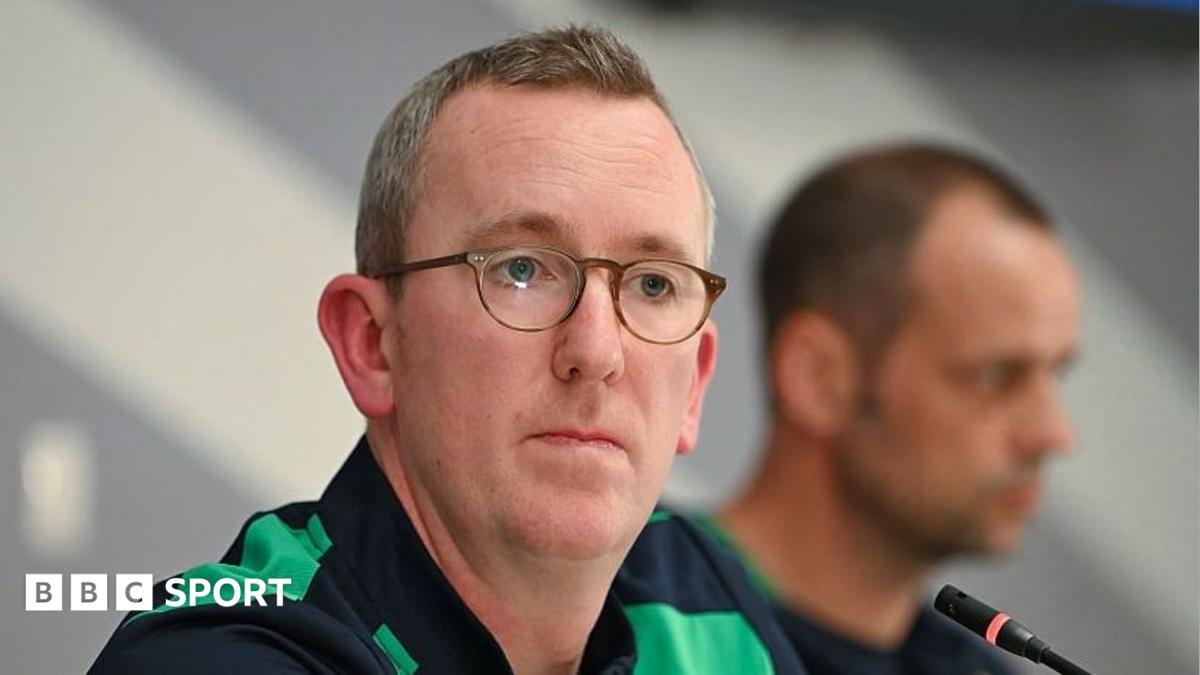
The plan was confirmed at a lengthy and delayed news conference at the Nagyerdei Stadion in Debrecen, Hungary, on Saturday afternoon — more than five hours after the media gathering had originally been due to take place. Courell was flanked by manager Heimir Hallgrimsson and the FAI's director of football, John Martin.
The controversy stretches back to the draw that placed the two countries together in Group B3 of the Nations League. Because of the security situation and sustained political pressure, the fixtures were arranged at neutral venues with no travelling away support, an arrangement that drew heavy criticism from campaigners and has done little to defuse tensions among supporters.
Players had faced calls to withdraw from both games, a move pushed by the "Stop The Game" campaign organised by the pressure group Irish Sport for Palestine, which argues that international fixtures should not be played while the Israel-Gaza war continues. One of the campaign's principal demands, according to Courell, is that the squad step back from its remaining media obligations for the current international window.
Doubt over whether Sunday's match would even go ahead was evident throughout Saturday morning. A pre-match press conference featuring Hallgrimsson and a player, scheduled for 09:15 BST, was called off roughly 15 minutes before it was due to begin. Reporters were told it would instead take place after training — a session that was also pushed back — and the players were holed up in a meeting at their hotel.
That meeting followed the news that goalkeeper Gavin Bazunu had withdrawn from the squad in protest, with several team-mates said to have voiced concerns about being asked to take the field. Players began filtering out of the room at around 13:00, and a new 14:30 press conference slot was confirmed, with training to follow.
Courell said the withdrawal had forced an extra four hours of discussion, "predominantly among the players, but also at times with coaching staff and the FAI executive". He stressed that a wide range of views was aired and that the association respected everyone's right to hold a different opinion — a formulation that suggests the outcome of the internal vote was far from unanimous.
Bazunu, who had previously played for the Republic, published his reasoning on social media later that evening, insisting the decision was not one he had "taken lightly". Writing that he is "a man of strong faith" who tries to be "a person of character and principle", he said it would be wrong for him to take part in the fixtures.
Crucially, the 33-year-old goalkeeper framed his stance as a position on conduct rather than on nationality or faith, saying it was "not in opposition of the Israeli people or the Jewish community but against the atrocities in the region", and rested on his "personal belief that the killing of innocent people is wrong". He added that there are "few times when you get a chance in life to stand up for something bigger" and believed this was one of them.
Beyond the armbands, Courell said some elements of the pre-match ceremony will be declined by the Republic of Ireland team. The players have also indicated an intention to direct the Israel match fees, alongside receipts from Thursday's Nations League fixture against Austria at the Aviva Stadium in Dublin, into charitable donations.
The second meeting with Israel — nominally the Republic's "home" leg, but scheduled for next Sunday in Serbia — is also expected to be accompanied by gestures, meaning the squad's plan extends across the whole window rather than being confined to a single afternoon in Hungary.
Practically, the armband initiative raises questions the squad will need to resolve in the coming hours, including whether substitutes, coaches and backroom staff will join the gesture and whether it will be repeated in Serbia. Historically, mourning bands are worn on the arm of players who start a match, and any refusal by an individual team-mate to participate would again put the collective decision under pressure.
What makes this episode notable is the mechanics of the decision itself. Dressing-room votes on whether to play politically sensitive fixtures are rare, and Courell's confirmation that a single player's withdrawal reshaped the agenda for four hours underlines how fluid the situation was. It also illustrates the difficulty the governing body faces in a fixture that is simultaneously treated as a competitive obligation and a stage for protest.
Hallgrimsson, who has been in the middle of the controversy throughout, has been among the most candid voices, describing the situation as one you simply cannot win — whichever course of action is taken, the team is judged.
For supporters of the "Stop The Game" campaign, a game that goes ahead with black armbands will be viewed as a partial, symbolic protest rather than a concession. For critics, the decision splits the difference between refusing to play and ignoring the issue entirely. The donation pledge and the skipped ceremony are likely to be read by both camps as insufficient, or as a reasonable middle ground, depending on perspective.
How the squad's gesture is received in Debrecen, where Israel will play before a home crowd, is another open question. The absence of Irish travelling support may reduce the risk of a confrontation, though neutral venues have not prevented flare-ups at other European grounds.
Whatever happens on Sunday, the episode leaves the Republic of Ireland with two significant fixtures still to play inside a single international window, a senior international goalkeeper who has made a public stand and is unlikely to be quietly dropped, and a federation attempting to balance the competing claims of players, players' representatives, campaigners and the demands of competition.









Comments (0)