 rizky-amelia
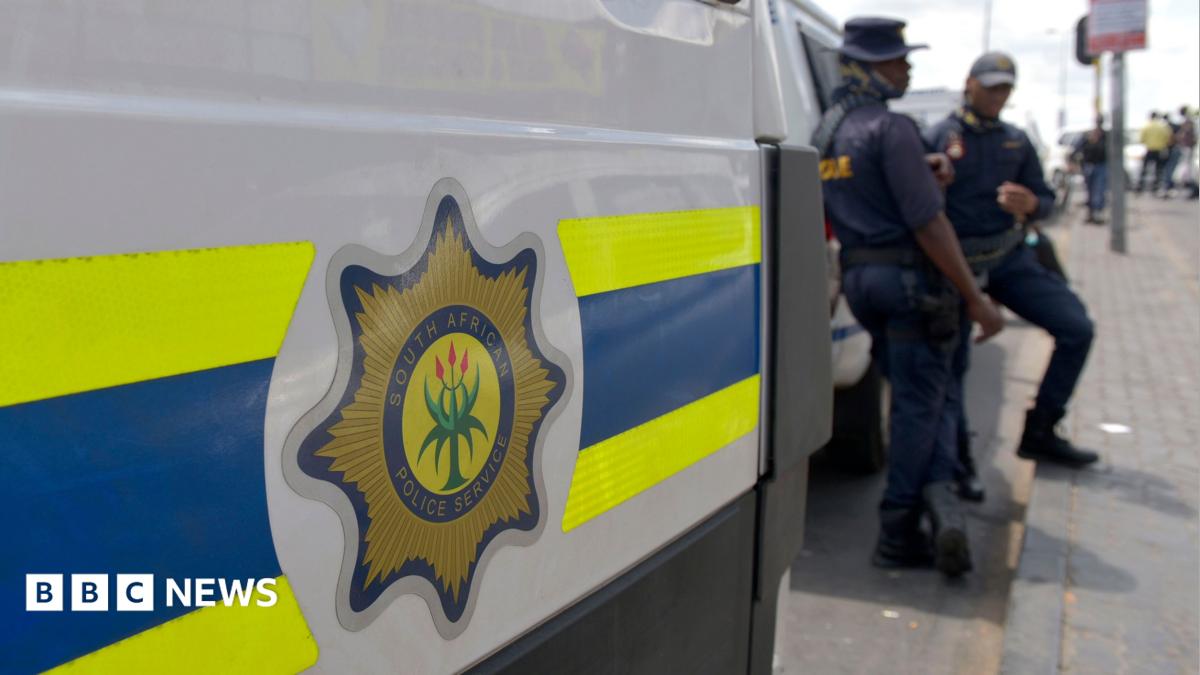
South African police have recovered the body of a woman in a Johannesburg suburb, the tenth victim discovered in the area in recent months, police said. The body was found on Saturday morning at a cemetery in Tembisa, a neighbourhood lying to the north-east of central Johannesburg, according to a statement issued by the local force.
The woman was identified on the basis of clothing she had been wearing the previous evening. A friend who had been with her at a bar recognised her friend's clothes after being shown a photograph of the body, and subsequently approached national broadcaster SABC to describe the moment she was told the news.
Speaking to the broadcaster, the friend was visibly distraught as she reflected on the news she had to deliver to the dead woman's family. She said she had no idea what she would say to her friend's children, and described the loss as profoundly painful. Her account has added a human dimension to a case that has dominated South African newsrooms and prompted an outpouring of grief from residents.
Police said shortly afterwards that crime scene investigators had attended the location and were gathering evidence. Officials had not publicly identified the victim by the time of the BBC's report, and no details of her age or circumstances leading to the cemetery were released.
Gauteng Police Commissioner Tommy Mthombeni said it was too early to determine whether the death was connected to the other killings under investigation. He explained that investigators work by comparing the characteristics of victims and the manner in which they died, describing the other bodies as sharing a similar "victimology" and a common "modus operandi" — the term police use for a recurring method of operation.
Those similarities, he said, are what allow detectives to establish whether the latest death belongs to the same series. Asked directly whether the country was dealing with a serial killer, Lt Gen Mthombeni said the evidence did not yet support a definitive conclusion. He said officials could not positively identify a serial killer at this stage, but equally could not rule one out, and stressed that the investigation was at an early stage.
The cluster of deaths has prompted a national outcry over the scale of violence against women in South Africa, a country that the report notes has among the highest rates of gender-based violence in the world. The response in Johannesburg has been one of particular fear, as residents grapple with a growing death toll in their own neighbourhoods.
Geographically, the killings are concentrated in the Ekurhuleni area, where most of the bodies have been found in Kempton Park, which neighbours Tembisa. Police have also been examining a further killing in Soweto, taking the total under scrutiny to more than the ten recent discoveries referenced in the Johannesburg cases.
Investigators say the pattern is disturbing. Many of the women killed were young, and almost all are believed to have suffered extreme violence before death. The bodies have largely come to light since July, and their discovery in similar circumstances has left women across the city and beyond living in fear, many questioning what is happening in communities that should be among the safest places in the country.
The killings have placed considerable pressure on the national government, arriving less than a year after ministers declared gender-based violence a national disaster — a designation intended to galvanise a national response but one now facing intense scrutiny over results.
Official figures underline the scale of the problem. South Africa has one of the highest homicide rates in the world, with 5,427 people murdered between April and June alone this year, according to figures cited in the report. National police statistics, however, do not separate victims by gender, a gap that has complicated efforts to measure the true extent of violence against women.
That picture was supplemented last week by the South African Human Rights Commission, which reported that 569 women were killed and a further 1,052 survived attempted murder between April and June this year. Campaigners and campaign organisations have repeatedly argued that the absence of gender-disaggregated crime data makes it harder for the state to target prevention and enforcement.
The criminal justice process has begun to move. Three men appeared in court earlier this week accused of being involved in one of the nine murders that preceded the latest discovery. Police said they were continuing to trace additional suspects who may have been involved.
What happens next depends on what forensic examination of the Tembisa scene reveals. If investigators conclude the death shares the same characteristics as the others, the case will likely be added to the series being reviewed, and the question of a linked serial investigation will become harder to avoid. If it does not, attention will turn to the failures that allowed so many women to go missing or be killed in the first place.
For now, the burden falls on a community already reeling. Each new discovery in Tembisa and Kempton Park has deepened a sense of insecurity, and residents are waiting both for answers from police and for the identification of a woman whose family is yet to be told where she has been found.









Comments (0)