 hendra-wijaya
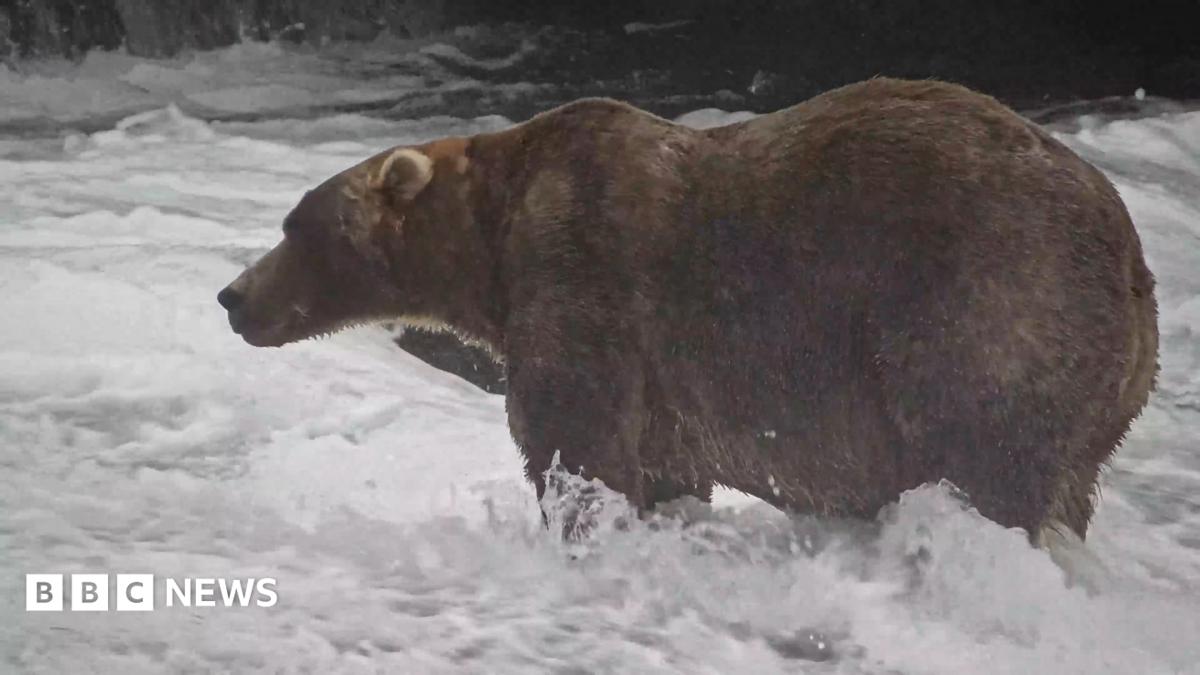
A hefty brown bear officially known as 89 Backpack has claimed the crown in this year's Fat Bear Week, the popular annual competition hosted by Katmai National Park in Alaska. The contest, now in its thirteenth edition, invites the public to vote on which of the park's bears has packed on the most impressive bulk ahead of winter hibernation. Backpack emerged victorious after a closely fought final round, according to the US National Parks Service, which framed the contest as a "battle of size, skill, snack acquisition, and strategic loafing."
In the decisive matchup, Backpack edged out a rival identified simply as 910, a female bear who drew a devoted following of her own. The final tally stood at 103,344 votes for Backpack against 98,253 for 910, a margin narrow enough to suggest that the outcome was far from assured until the last ballots were counted. The parks service extended its thanks to the sixteen bears that, in its words, "involuntarily participated" in the competition, a wry acknowledgment that the animals had no say in their newfound celebrity.
Backpack's victory carries a strong sense of family legacy. His mother, a bear named Holly, took the Fat Bear Week title back in 2019, making Backpack the second member of his immediate lineage to earn the honor. His unusual name does not, as some might assume, refer to any hump or bulge on his frame. Instead, it traces back to his cubhood, when he developed a habit of clambering onto Holly's back as she waded through the salmon-rich waters of the Brooks River. The behavior stuck, and so did the nickname.
Fans of the champion were quick to celebrate his physical proportions with affectionate humor. One supporter praised him for possessing both the "chonk and the badonk," while another simply called him a "big fuzzy boy." A third admirer described his silhouette as resembling a light bulb, though the comparison was offered as a compliment rather than a criticism. Such colorful commentary has become a hallmark of the competition, which blends wildlife biology with internet culture and draws a global audience each autumn.
Not everyone was convinced that Backpack deserved the title, however. Supporters of the runner-up, Bear 910, argued that she was the more deserving candidate on both merit and mass. One detractor insisted that 910 was a "larger bear all around," adding that Backpack merely "has a bigger booty." Another fan wrote on the park's Facebook page that 910 had truly "put in the work this year." A third voter summed up the sentiment with the declaration, "She round, she thick my girl 910 got my vote."
Beyond the playful rivalry lies a serious biological purpose. Fat Bear Week is designed to spotlight the extraordinary feats of weight gain that brown bears accomplish each year in preparation for hibernation. From June through mid-October, the animals gorge themselves on abundant food, most notably salmon that they snatch from the water using either their jaws or their paws. The resulting transformation is dramatic and essential to their survival through the harsh Alaskan winter.
The parks service has not yet released the final weights of this year's contestants, leaving the precise figures behind the matchup a matter of speculation. Nonetheless, general patterns offer a useful guide. Adult male brown bears typically reach an average of up to 408 kilograms by mid-summer, and many add the equivalent of roughly a quarter of their body weight by the time autumn arrives. The very largest males can tip the scales at more than 540 kilograms. Females are generally smaller but can still exceed 300 kilograms, while newborn cubs enter the world at a mere half a kilogram or so.
The stakes of this annual feeding frenzy could hardly be higher. As organizers explain, bears neither eat nor drink during hibernation, a period that can stretch for up to six months, and they lose approximately one-third of their body weight while denned. Winter survival therefore hinges on how much fat a bear can bank before retreating underground. For the animals of Katmai, a successful summer of fishing is quite literally a matter of life and death.
Backpack's official biography credits him with a "quiet toughness" that has allowed him to carve out a place alongside the largest bears at Brooks River. That understated description contrasts with the exuberant language of his fans, but it captures something important about the competition: the bears are judged not only on raw size but also on resilience, skill, and the ability to compete for the best fishing spots against formidable opponents. Backpack's rise from a cub riding on his mother's back to a champion in his own right fits that narrative neatly.
The scale of public engagement with Fat Bear Week continues to grow. Last year, more than 1.7 million votes were cast from over 100 countries, underscoring the contest's transformation from a local park initiative into a global online phenomenon. The event has become a fixture of early autumn for nature enthusiasts, school groups, and casual observers alike, many of whom follow the bears' daily lives through livestreamed cameras positioned along the river.
That popularity is not without complications. The parks service's gentle joke about bears participating involuntarily serves as a reminder that the contest is ultimately a human construction imposed on wild animals going about the business of survival. The bears are not performing for an audience; they are responding to biological imperatives refined over millennia. Their apparent indifference to the spotlight is, in fact, part of the appeal, offering a rare window into a natural process that unfolds largely beyond human observation.
Conservationists note that events like Fat Bear Week can serve as an accessible entry point into broader discussions about wildlife management, habitat protection, and the health of salmon runs that sustain Katmai's bear population. The Brooks River ecosystem depends on the annual return of sockeye salmon, a resource that is sensitive to climate shifts, fishing pressures, and changes in ocean conditions. The bears' ability to grow so large each year is itself an indicator of ecosystem health.
Backpack now faces a quieter phase of his year. He will soon enter hibernation, withdrawing from the river and the cameras that have followed his summer exertions. For the next several months, he will neither eat nor drink, living off the reserves he accumulated during his winning campaign. When he emerges in spring, he will be significantly lighter, and the cycle of feasting and fasting will begin anew, with next year's contest already a distant prospect.
For now, though, the title belongs to Backpack. His victory adds a new chapter to a family story that already includes his mother's 2019 win, and it cements his status as one of the most recognizable bears at Brooks River. Whether his reign lasts a single year or sparks a longer dynasty, his triumph serves as a reminder of the remarkable adaptations that allow brown bears to thrive in one of the most demanding environments on Earth.







Comments (0)