 rizky-amelia
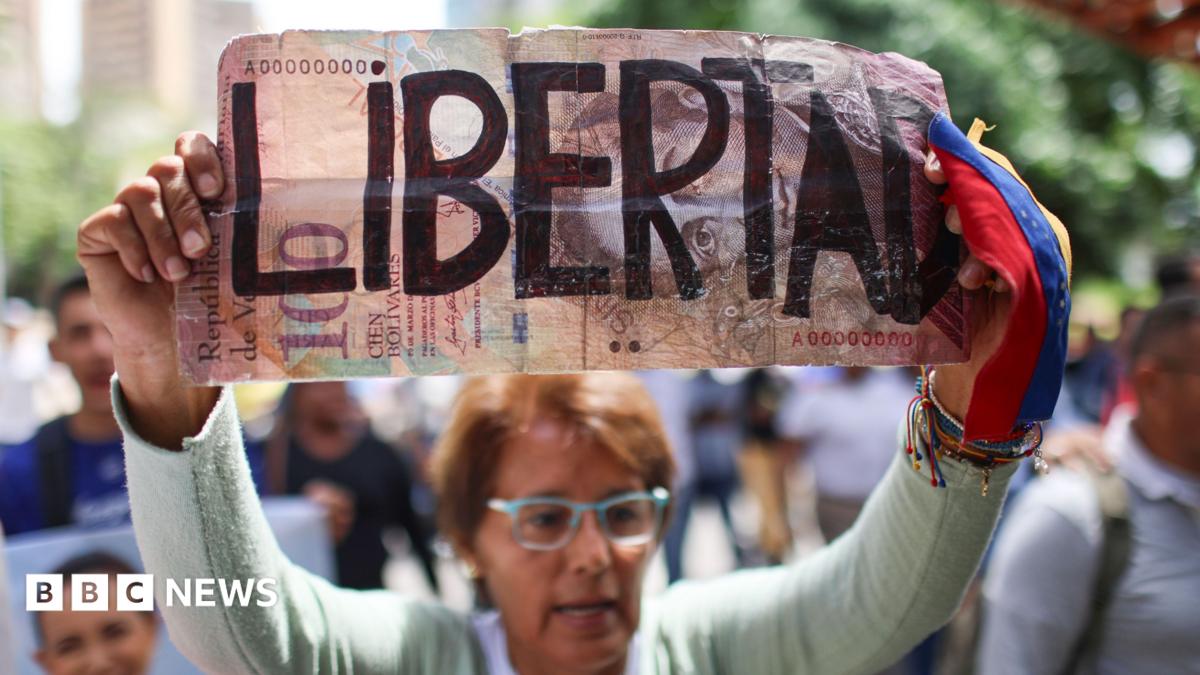
Venezuelan authorities have freed dozens of political prisoners in a move confirmed by human rights organizations, coming just days after the country's interim leader held face-to-face talks with US President Donald Trump in New York. The releases, which unfolded in the early hours of Saturday morning, have reignited demands from opposition figures and rights advocates for the country to hold free and fair elections.
Among those walked free was Wilder Vasquez, who had been serving a five-year sentence handed down in 2018 over allegations that he was involved in a plot to assassinate former President Nicolás Maduro. His release marks one of the more prominent cases in a wave of prisoner departures that rights monitors say spanned multiple detention facilities across the country.
Gonzalo Himiob, vice-president of the human rights group Foro Penal, said a "significant number" of political prisoners had been released from several of Venezuela's detention centres on Saturday morning. The organization has been tracking politically motivated detentions in the country for years and has repeatedly accused the government of using imprisonment as a tool to suppress dissent.
Foro Penal confirmed the release of Miguel Castillo Cedeño, who the group said had been arbitrarily detained since June 2019. Also freed was Frank Cabañas, who rights groups say had spent nine years behind bars after being linked to the death of a police officer. According to Foro Penal, Cabañas was the only suspect who remained detained in that case, despite family members having reported that he was suffering from health problems last year.
The timing of the releases is significant. They came only days after interim President Delcy Rodriguez met with Trump at the United Nations General Assembly on Tuesday for talks that have reshaped the diplomatic landscape between Washington and Caracas. Opposition voices have seized on that meeting to renew their push for elections, arguing that the Venezuelan people have waited long enough for a chance to choose their own government.
Rodriguez's administration had previously released hundreds of prisoners as part of what it described as a reconciliation effort following Maduro's seizure earlier this year. However, the pace of those releases slowed dramatically in April, after Rodriguez publicly stated that the scheme was "coming to an end." Rights organizations criticized that decision at the time, with Foro Penal noting that the program was halted before even half of the nation's political prisoners had been freed.
Venezuela's government has not issued any statement regarding the latest releases, nor has it indicated whether they were a direct consequence of Rodriguez's conversation with the US president. The silence from official channels has left observers to speculate about the motivations behind the timing, though many see a clear link to the diplomatic engagement in New York.
Rodriguez has sought to present her interim government as more tolerant of political dissent while simultaneously courting favour with Washington. The prisoner release scheme represented a key concession her administration made to the United States, and its partial resumption appears designed to signal continued goodwill toward the Trump White House without fully committing to the program's original scope.
Yet the government continues to deny that dissidents are jailed at all. Officials have consistently characterized the release of prisoners as a gesture of goodwill and national reconciliation rather than an acknowledgment of political persecution. This framing has been rejected by opposition leaders and human rights groups, who argue that the detentions were always politically motivated.
Interior Minister Diosdado Cabello, a figure closely associated with Maduro's authoritarian rule, described the interim president's meeting with Trump as "a great triumph of the diplomacy of peace." His comments underscore the delicate balancing act Rodriguez is performing, seeking to maintain domestic support among the ruling party's base while improving relations with a US administration that has made no secret of its desire for stability in Venezuela.
Opposition voices, however, expressed disapproval over the meeting, viewing it as a snub of their calls for swift elections—calls that the US had previously endorsed. The perception that Washington is prioritizing short-term stability over democratic transition has frustrated many who hoped Maduro's removal would quickly pave the way for a new vote.
Pedro Mario Burelli, a former executive at Venezuela's state oil company and a prominent opposition commentator, offered a sharply critical assessment of the two leaders, calling them "the shameless puppet and her unscrupulous and undignified puppet-master." He added that "little has changed in Venezuela under Washington's clumsy and selective oversight," capturing a sentiment shared by many who feel the international community has failed to deliver on promises of democratic reform.
The backdrop to these developments is Venezuela's last election in 2024, in which Maduro was declared the winner. Those results were widely disputed as rigged, with opposition tallies suggesting their candidate—who ran after opposition leader María Corina Machado was barred from the ballot—had won by roughly seventy percent of the vote. The legitimacy of that contest remains a central grievance for the opposition.
Despite the disputed election, the Trump administration backed Rodriguez, Maduro's former vice-president, as his successor rather than throwing its weight behind Machado, after Maduro was seized and put on trial on drug charges in January. Analysts at the time interpreted the decision as the US choosing short-term stability in Venezuela until elections could eventually be held.
Rodriguez used her UN General Assembly speech on Thursday to reiterate that there "will be elections in Venezuela," though she stopped short of specifying when they would take place. That ambiguity has done little to satisfy opposition demands for a concrete timeline, and the latest prisoner releases—while welcomed—are unlikely to quell the growing pressure for a definitive path to the ballot box.








Comments (0)