 rizky-amelia
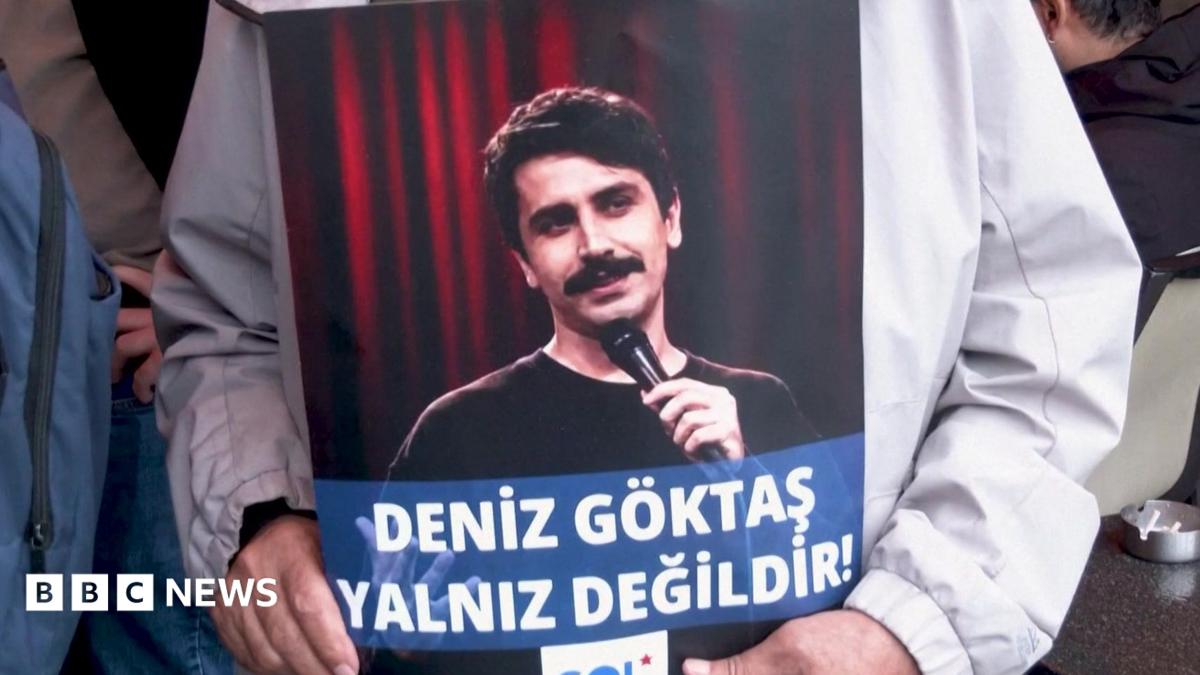
An Istanbul court on Monday convicted prominent stand-up comedian Deniz Göktaş of insulting President Recep Tayyip Erdoğan, sentencing him to nearly 19 months in prison but ordering his immediate release because of the time he has already spent behind bars. The court also imposed a travel ban on Göktaş, barring him from leaving Turkey while the case continues through the appeals process.
The ruling, delivered after a closely watched trial, does not represent the final word in the matter. A court of appeals must still issue a definitive decision, leaving the comedian's legal future uncertain even as he walks free. The conviction itself stands as a significant development in a case that has drawn international attention to the state of free expression in Turkey.
Göktaş, who has consistently denied the charges against him, has already spent nearly 90 days in custody. Prosecutors had sought a far more severe punishment, asking the court to impose a sentence of up to 12 years. Instead, the panel handed down a term of less than two years—a length that, combined with his pre-trial detention, permitted his release under Turkish law.
The case stems from a stand-up routine that became a viral sensation on YouTube, amassing more than 15 million views. Prosecutors focused on a specific line in the performance in which Göktaş described the Turkish leader as "a shy dictator." The comedian has argued that his words carried no criminal intent, framing them instead as legitimate political commentary.
"Dictator is not an insult," he told the court. "It is a political characterisation."
That defence failed to persuade the judges, who found him guilty of insulting the head of state—a charge that carries substantial legal weight in Turkey and has been used repeatedly against journalists, activists, and ordinary citizens in recent years.
Arrested and handcuffed at Istanbul airport in July as he returned from a holiday, Göktaş spent 88 days in solitary confinement before Monday's hearing, according to the account provided in court. Despite the hardship, the comedian demonstrated that his wit remained intact. "Three months have been taken away from my life," he told the courtroom. "But I quit smoking, so I'll add another three months to my life."
The remark triggered laughter and loud applause among those present, a rare moment of levity in a proceeding that has come to symbolise broader concerns about the erosion of civil liberties in Turkey.
Outside the courthouse, supporters gathered with signs reading "Deniz Göktaş is not alone," expressing solidarity with the comedian and relief at the news of his impending release. Among them was Firat Aksal, a fellow comedian, who described the verdict as a welcome surprise. "We hardly know what to do with our happiness," he said. "We are thrilled. To be honest, we weren't hopeful of getting a fair trial."
Aksal said Göktaş planned to rest for a few days and spend time with his family before returning to the stage—a prospect that supporters view as both a personal victory and a small reprieve for Turkey's embattled comedy and arts community.
Yet the celebration outside the courthouse stood in stark contrast to the broader climate of repression that human rights organisations say has intensified across Turkey. The comedian's case is not an isolated incident but part of what critics describe as a sustained campaign to silence dissent through the courts. Arrests have swept up journalists, human rights campaigners, student protesters, and LGBTQ activists, while prisons across the country report overcrowding.
Perhaps most notably, Ekrem Imamoglu—the elected Mayor of Istanbul and a leading opposition figure—remains behind bars, a development that has alarmed Turkey's international allies and raised questions about the fairness of the country's judicial system. The contrast between Göktaş's release and Imamoglu's continued detention underscores the selective nature of the legal process, according to rights advocates.
Göktaş's routine, which circulated widely online before his arrest, touched on themes that authorities have increasingly treated as off-limits. His description of Erdoğan as "a shy dictator" became the central piece of evidence in the prosecution's case, even as the comedian insisted that political criticism, however sharp, does not constitute a criminal act.
The verdict—conviction without immediate imprisonment—reflects a pattern seen in other politically sensitive cases in Turkey, where courts sometimes stop short of lengthy incarceration while still delivering a guilty finding that carries lasting legal and social consequences. The travel ban ensures that Göktaş remains tethered to Turkey's judicial system, unable to leave the country while appeals proceed.
For Turkey's stand-up comedy scene, which has flourished in recent years despite growing restrictions, the case has served as a cautionary tale. Performers who once tested the boundaries of satire have increasingly found themselves navigating a legal landscape where a single joke can lead to arrest, prosecution, and months in detention.
International observers, including press freedom organisations, have cited Göktaş's case as evidence that Turkey's insult laws—particularly those protecting the president—remain a potent tool for suppressing criticism. The laws have been condemned by the European Court of Human Rights and repeatedly flagged in annual reports on global free expression.
The comedian's expected release in the coming hours marks a temporary conclusion to a legal ordeal that has lasted months and captured attention far beyond Turkey's borders. But with the conviction on his record and an appeal still pending, Göktaş's future—and the broader question of whether Turkey's courts can deliver impartial justice in politically charged cases—remains unresolved.
For now, supporters who gathered outside the courthouse will celebrate a rare outcome: a comedian who told a joke about power, faced the prospect of more than a decade behind bars, and walked out of court with his freedom, if not yet his full vindication.







Comments (0)