 hendra-wijaya
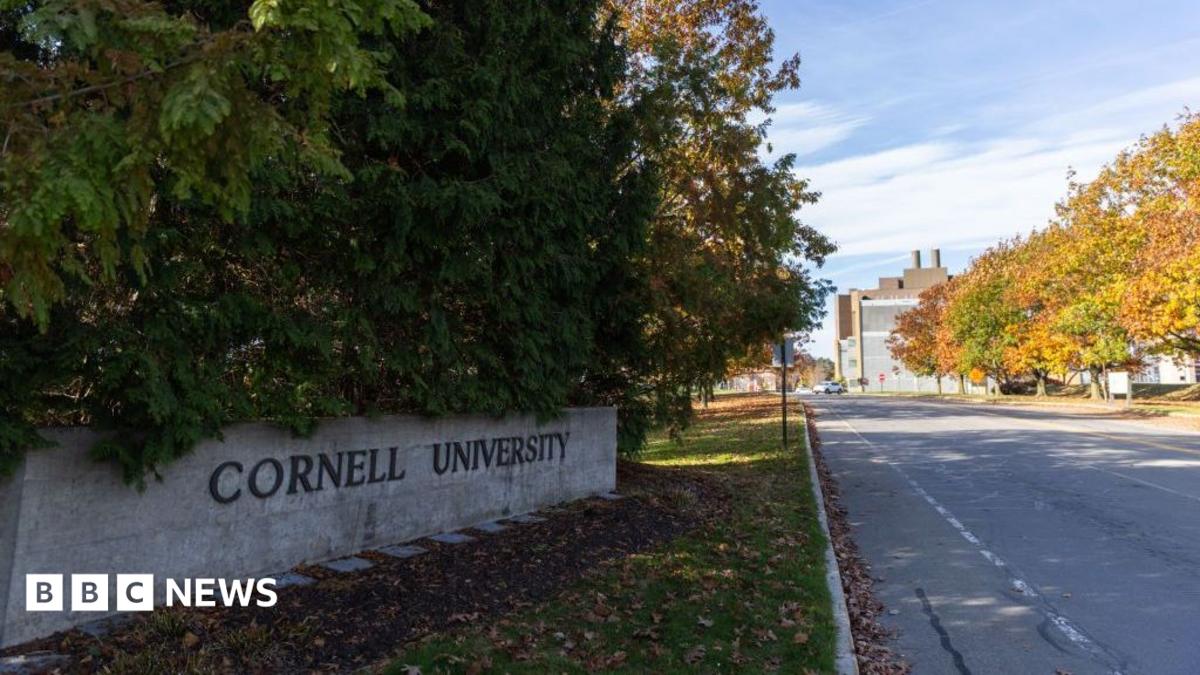
New York state prosecutors have confirmed they will revive a criminal investigation into allegations that a female student was drugged and sexually assaulted by multiple men at a Cornell University fraternity house in October 2024. The decision, announced Monday by Tompkins County District Attorney Matthew Van Houten, marks a significant escalation in a case that has already drawn national attention and prompted a civil lawsuit against the Ivy League institution.
The accuser, identified in court filings as Jane Doe, filed a civil complaint on 16 September alleging that seven men affiliated with Cornell's Chi Phi fraternity chapter assaulted her during an incident involving alcohol and the drug ketamine. According to the lawsuit, the alleged attack occurred on the night of 19 October 2024, when Doe claims she was intoxicated and therefore incapable of giving consent.
Van Houten stated that his office would present the matter to a grand jury, a body of citizens that weighs evidence and testimony to determine whether criminal charges are warranted. He said the case would be prosecuted "in the most objective and impartial means possible" once appropriate charges are identified. The move signals that prosecutors are now treating the allegations with renewed seriousness after initially declining to pursue charges.
The district attorney explained that at the time of the alleged assault, his office concluded that evidence from Doe's initial statement to authorities did not meet the legal threshold required to bring charges. However, he said he reached out to Doe and her legal team for additional information as he prepared to convene the grand jury, suggesting that new material or a reevaluation of existing evidence prompted the review.
In his public statement, Van Houten included a summary of what Doe told Cornell University Police in November 2024, shortly after the alleged incident. He noted that her sworn statement at that time did not claim she had been drugged against her will or gang raped. Instead, he said, the statement described her participation in drug use and sexual conduct as "voluntary, conscious, and consensual." That characterization stands in stark contrast to the allegations laid out in her civil lawsuit, a discrepancy that Van Houten highlighted.
The district attorney also pointed out that Doe's lawyers had never contacted him to assert that her original statement was inaccurate or to request that he reconsider his earlier decision not to press charges. Nevertheless, he acknowledged "the reality that it can take years of therapy and healing for victims of sexual assaults to fully process and understand what happened to them," a comment that appeared to leave room for the possibility that Doe's understanding of the events had evolved over time.
Thomas Giuffra, an attorney for Doe, pushed back against the district attorney's framing. In a statement obtained by CBS, the BBC's US partner, Giuffra said that in the days following the assault, his client "was traumatised, numb and unable to function or accept the horror of what had happened. She was in self-preservation mode." He added that Doe never spoke to anyone other than the officer who took her initial complaint, arguing that a thorough investigation would have involved multiple interviews and evidence collection.
Giuffra criticised what he described as a "defensive posture" in the district attorney's statements, saying it suggested that prosecutors recognised failures in their initial handling of the case and were attempting to excuse them. His remarks underscore a growing tension between the accuser's legal team and law enforcement over how the investigation was conducted in its early stages.
The civil lawsuit also takes aim at Cornell University's response to the allegations. Doe claims the university failed to protect her and did not adequately punish the men involved, alleging they were "afforded the opportunity to mitigate their conduct by submitting essays." The suit contends that Doe suffered "severe emotional and psychological distress and personal physical injury" as a result of both the incident and the university's handling of it, and that news of the alleged assault quickly spread across campus.
Cornell has firmly disputed the suggestion that it failed to act. In a statement Monday, the university said it supported the case being brought before a grand jury but insisted that "any suggestion that the university did not impose consequential punishments for those involved is false." Cornell said the matter had been referred to a panel of trained faculty and staff, which issued a range of sanctions including expulsions and suspensions from the university.
The university also directly rejected Doe's claim about essays, stating that "none of the individuals charged were offered the opportunity to write essays as a sole consequence of their involvement." In November 2024, Cornell had issued a public statement describing "serious and deeply disturbing allegations of drug abuse and sexual violence at the Chi Phi fraternity house," confirming that campus police were investigating and that the local fraternity chapter and a number of students had been suspended. The university also opened an internal investigation and a Title IX civil rights inquiry, as the federal law bars sex discrimination at institutions receiving federal funding.
Attorneys for the men named in the lawsuit have denied the allegations. Jeremy Saland, representing one of the accused, acknowledged that his client "responded to and made an immature comment on Snapchat" but said he "did nothing else." Saland denied that his client was involved in any sexual activity, touched the plaintiff in any way, or ingested ketamine. The lawsuit includes an image purported to be from a Snapchat fraternity group chat in which a participant alerted other members, in vulgar terms, to the potential for a sexual encounter with Doe.
The case has attracted widespread national attention following the filing of the civil lawsuit and the announcement that prosecutors would reopen the criminal inquiry. Several celebrities, including actress Florence Pugh, have spoken out about the allegations, amplifying public pressure on both the university and the district attorney's office. The involvement of high-profile figures reflects broader societal scrutiny of how elite institutions and law enforcement handle sexual assault allegations, particularly when fraternities and drugs are involved.
Grand juries in the US legal system operate behind closed doors, hearing evidence presented by prosecutors without defence attorneys present. If the grand jury votes to indict, criminal charges would follow, potentially leading to a trial. The reopening of the case therefore represents a critical juncture, as prosecutors weigh whether the evidence now available meets the standard for criminal proceedings. The outcome could have profound implications not only for the individuals accused but also for Cornell's handling of sexual misconduct cases.
For now, the case remains under active investigation, with both the criminal inquiry and the civil lawsuit proceeding on parallel tracks. The district attorney's willingness to revisit the matter suggests that additional evidence or testimony may have emerged since 2024. As the grand jury process unfolds, the accuser's legal team and the university are likely to continue clashing over the adequacy of the original investigation, while the accused men maintain their innocence. The national spotlight on the case shows no signs of dimming.









Comments (0)