 rizky-amelia
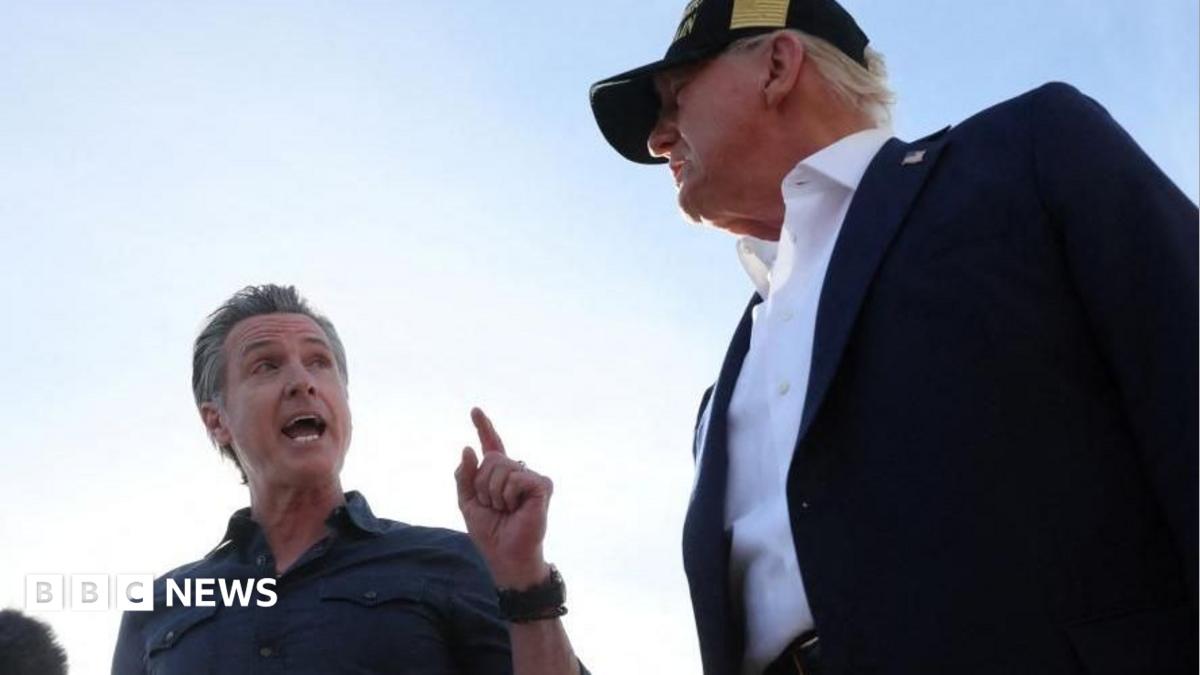
A campaign rally remark by President Donald Trump suggesting Iran could "take out" Los Angeles and San Diego has triggered a sharp political confrontation with California's Democratic leadership, prompting the White House to insist that the president's words were being distorted beyond recognition.
Speaking at an election campaign event in Nebraska, Trump discussed the military conflict with Iran that he initiated earlier this year and framed the human and strategic costs of the war as a necessary trade-off for global and national security. In the course of those remarks, he named two of America's largest cities as potential targets, a statement that drew cheers from portions of the audience in attendance.
The president's phrasing quickly became the flashpoint of a transcontinental political dispute. California Governor Gavin Newsom responded through his official social media account, sharing coverage of the remarks and labeling them "disgusting and disqualifying." He did not stop there, issuing a separate statement that characterized the comment as "deranged and dangerous" — language that underscored how deeply the remark cut in a state that houses some of the nation's most critical military infrastructure.
Los Angeles Mayor Karen Bass framed the president's words in even starker terms, describing them as threats and an attempt to "encourage attacks on American lives." Her counterpart in San Diego, Mayor Todd Gloria, weighed in on X by rejecting any notion that his city could be treated as acceptable collateral damage and demanding that Trump exclude San Diego from what he called "reckless war talk."
The two cities at the center of the controversy are far from symbolic targets. San Diego, situated just seventeen miles from the Mexican border, ranks as the eighth-largest city in the United States and serves as one of the most concentrated military hubs on the West Coast. It hosts Naval Base San Diego, the home port for the US Navy's Pacific Fleet, as well as Naval Amphibious Base Coronado, the principal training facility for Navy SEALs on the western seaboard. Marine Corps Base Camp Pendleton, which employs roughly 70,000 service members and civilians, is also located in the area.
Los Angeles, positioned about 120 miles to the north of San Diego, is the second most populous city in the country. It is home to the headquarters of the US Space Force's space systems command and to Los Angeles Air Force Base. The concentration of defense installations in Southern California means that any rhetorical reference to the region's vulnerability carries immediate strategic resonance, a factor that likely amplified the intensity of the political response.
The White House moved quickly to reframe the president's meaning. Communications Director Stephen Cheung dismissed what he termed a "media freakout" as "not rooted in reality," arguing that Trump had been making a straightforward national security case. According to Cheung, the president was asserting that American cities would have faced the threat of a nuclear-armed Iran had he not ordered military action. He wrote that the United States is safer as a result of the president's decisions, claiming that Iran now possesses no nuclear capability, no navy, no air force, and no financial resources.
The official White House rapid response account on X went further, using combative language to attack journalists at the Los Angeles Times who reported on the comments, calling them "buffoons." The account reiterated the administration's position that Trump was describing the purpose of the military campaign — preventing Iran from acquiring the means to strike American cities with a nuclear weapon — rather than inviting an attack.
That defense rests on a broader argument that Trump and senior administration officials have advanced repeatedly: that degrading Iran's nuclear program was indispensable to US national security, and that any fallout from the conflict was a price worth paying. The president himself framed the war in those terms at the Nebraska rally, describing the costs as "a small price to pay for keeping the world safe, keeping our country safe."
The episode also lands against a backdrop of sustained friction between Trump and Newsom, a rivalry with obvious national political dimensions. The two have clashed repeatedly over the past year. Trump previously called Newsom incompetent, blaming him for what he described as an inadequate response when anti-immigration enforcement protests in Los Angeles turned violent. Newsom, in turn, accused the president of a "brazen abuse of power" after military personnel were deployed to protect federal buildings during those demonstrations.
More recently, Trump drew criticism from dyslexia advocacy organizations after mocking Newsom's learning disability and asserting that presidents should not have learning disabilities. Newsom is widely viewed as a potential contender for the presidency in 2028, giving each exchange between the two men an added layer of electoral significance.
As of the reporting of the original article, Trump had not personally responded to the statements issued by California's governor and mayors. The silence left the White House's communications apparatus to carry the administration's rebuttal, with officials insisting that the interpretation being circulated by critics and some media outlets misrepresented both the president's intent and the strategic logic behind the Iran campaign.
The controversy illustrates a recurring dynamic of the current political era: a presidential remark delivered to a friendly rally audience, amplified instantly through social media and cable coverage, and met with condemnations from opposition leaders that are themselves calibrated for a national audience. In this instance, the geographic specificity of the president's words — naming two major American cities — transformed what might have remained an abstract foreign policy argument into a localized political fight with implications for residents, service members, and defense installations across Southern California.








Comments (0)