 rizky-amelia
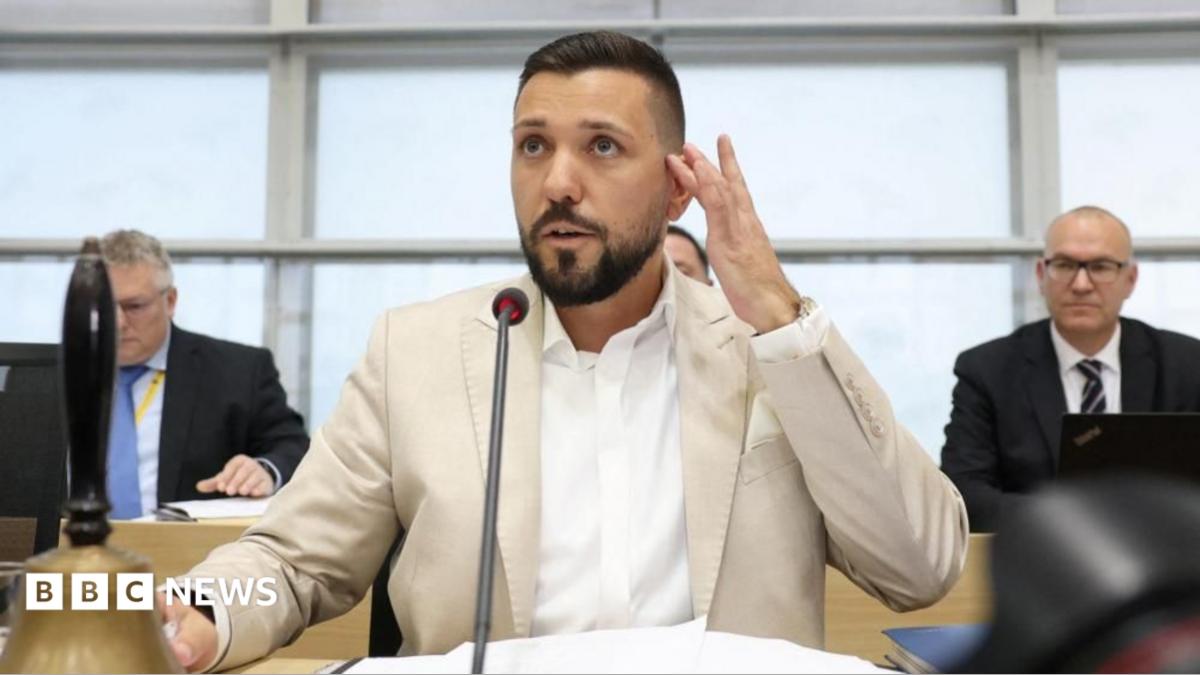
For the first time since the end of World War Two, a far-right party has captured the speaker's chair in a German state parliament. Tobias Rausch, a 35-year-old member of the Alternative for Germany (AfD), was elected Tuesday to lead the legislature in the eastern state of Saxony-Anhalt, marking a symbolic but significant milestone for a party that has steadily expanded its influence in German politics.
Rausch's election came roughly a month after the AfD scored a decisive victory in Saxony-Anhalt's state election, a result that stunned establishment parties and reshaped the political landscape in the region. Although the party fell three seats short of an outright majority in that vote, Rausch comfortably secured the speaker's post with backing from nine lawmakers beyond his own caucus, according to the BBC.
The vote took place as Saxony-Anhalt's newly elected representatives gathered for their first constitutional session in Magdeburg. Outside the parliament building, more than 300 demonstrators voiced their opposition, holding banners with the message "Never again is now" — a pointed reference to the Holocaust and the post-war pledge that far-right extremism would never again hold institutional power in Germany.
The election of a far-right speaker represents a rupture with a decades-old convention in German politics. Since the founding of the Federal Republic, mainstream parties have maintained a so-called "firewall" against cooperation with the far right at both the federal and state levels. Rausch explicitly rejected that consensus in remarks after the vote, declaring that "the days of political firewalls should be a thing of the past."
Regional Greens leader Susan Sziborra-Seidlitz described the outcome as a watershed. She said a line had been crossed with the election of a far-right speaker and vowed that her party would not be intimidated, nor would it stand by if rights were curtailed either inside the parliament or for people across the state.
The AfD is classified by domestic intelligence in Saxony-Anhalt as a "right-wing extremist" organization, a designation party leaders firmly reject. The party's platform is pro-Russian and anti-immigrant, and it has proposed segregating child refugees in schools. It has also drawn criticism for its intolerance toward the LGBT community.
Symbolically, the speaker's role is largely ceremonial, but it carries meaningful institutional power. Rausch will now chair parliamentary debates, control access to the parliament building and represent the legislature at official events — levers that could shape the tone and conduct of state politics in the months ahead.
Rausch, a trained estate agent who has served in the parliament for a decade, is regarded as a close confidant of Ulrich Siegmund, the charismatic local AfD leader now seeking to become state premier in December. Siegmund's ambitions, however, remain far from assured: like Rausch, he would need the support of 42 lawmakers in the 83-seat legislature to take the top executive post.
Before Tuesday's session, the AfD successfully argued that its members should be seated in the political centre of the chamber rather than on the right fringe where they had previously sat — a symbolic repositioning that reflects the party's growing self-confidence in the region.
The vote's arithmetic has prompted intense speculation about where Rausch's cross-party support came from. Five of the nine additional votes are believed to have come from the hard-left BSW, but the identity of the other four lawmakers remains unclear. Commentators immediately raised the question of whether members of the conservative CDU of Chancellor Friedrich Merz — who has publicly ruled out working with the AfD — may have backed Rausch.
Fourteen CDU state lawmakers participated in the ballot, but only five abstained as the party had planned, according to the BBC. One unconfirmed report suggested that four of them may have voted for the AfD candidate, despite all 15 having ruled out doing so ahead of the vote. The discrepancy has fueled debate over whether the firewall against the far right is holding at the ground level.
The BSW, for its part, has refused to enter a coalition with the AfD. Instead, the party has said it would support a non-partisan candidate for state premier and abstain in December's vote — a stance that complicates Siegmund's path to power while leaving the AfD's institutional gains intact.
The scenes in Magdeburg underscored the charged atmosphere surrounding the AfD's rise. As Siegmund spoke to German media outside the chamber, protesters crowded around him and held up a sign reading "2026. Never again is now." Reuters photographs captured Rausch seated in the speaker's chair and demonstrators pressing in around the AfD leader.
The election carries implications beyond Saxony-Anhalt. It signals that the AfD, long treated as a pariah by mainstream parties, is finding ways to translate electoral strength into institutional authority — even without a governing majority. Whether that trend continues in December's premier vote, and whether the CDU's declared refusal to cooperate with the far right withstands pressure, will be watched closely across Germany and beyond.







Comments (0)