 rizky-amelia
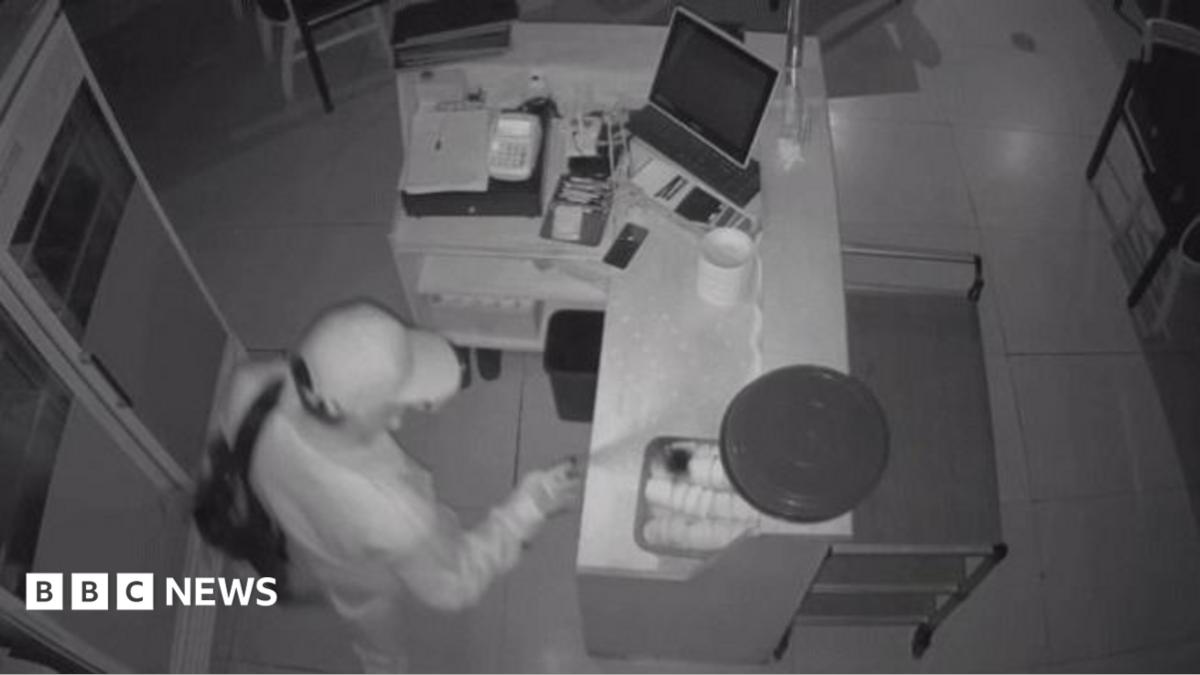
A Chinese restaurant in South Korea that operates under the name of Chinese President Xi Jinping has been vandalised in an overnight attack that police attribute to a group of Chinese nationals who are believed to have left the country immediately afterwards.
The establishment, located in Seongnam, a satellite city just south of the capital Seoul, was targeted in the early hours of 24 September, according to surveillance footage reviewed by investigators. The recording shows four masked individuals forcing their way into the premises before damaging furniture and spraying lacquer across the interior.
The owner of the restaurant has said he chose the name "Xi Jinping" purely as a branding decision, explaining to local media that he "wanted it to be the best Chinese restaurant" in South Korea. He has insisted that the name carried "no political intent" and was never meant as a comment on Chinese politics or the country's leadership.
According to police statements released on Tuesday, the four suspects are Chinese men whose ages range from their twenties to their forties. Investigators believe that after carrying out the attack, the group fled to Shanghai and to Yantai, a port city in China's eastern Shandong province.
Authorities in South Korea say they intend to seek red notices from Interpol for the four men. Such notices are not equivalent to international arrest warrants; rather, they function as formal requests asking police forces around the world to locate and temporarily detain a suspect while extradition proceedings are prepared.
The incident follows more than a year of mounting pressure on the restaurant over its name. The eatery has been in operation for eight years, but according to reporting by The Chosun Daily, it only began receiving demands for a name change within the past year. The owner said the calls intensified in August of last year, when news emerged that Xi would be travelling to South Korea to attend the Asia Pacific Economic Co-operation Summit. During that period, he said, he received dozens of phone calls from people urging him to rebrand.
Some of those who contacted him went further than simply asking, the owner told The Chosun Daily. "People claiming to run businesses in China proposed large sums if we changed the name," he was quoted as saying. "They were persistent." The offers of money suggest that at least some of those pressing for the change were prepared to pay for it rather than rely on persuasion alone.
The dispute also extended into formal complaints. In April this year, an individual filed a case with South Korea's Ministry of Intellectual Property concerning an item on the restaurant's menu called "Xi Jinping Special Rice." The ministry ultimately closed the case after determining that there was no issue requiring action, allowing the dish to remain on offer.
The owner has described last week's break-in as the most serious incident he has faced during the year-long campaign against the restaurant's name. He told local media that the damage to the property was valued at approximately 15 million won, a figure equivalent to about $11,100, or £8,400. That figure covers smashed furniture and the cost of cleaning and repairs after lacquer was sprayed through the premises.
As a result of the vandalism, the restaurant was forced to close for five days. It reopened on Tuesday, and the owner has said his team is now considering adopting a new name for the business, a decision that would bring an end to a branding choice that has generated both attention and, increasingly, conflict.
The restaurant, which serves a broad selection of Chinese dishes, also offers some South Korean menu items, according to screenshots of its offerings shared online. Despite the unusual circumstances surrounding its name, it has maintained a generally favourable reputation among diners, holding an average rating of four out of five stars on Google reviews.
The case raises unusual questions about the intersection of commerce, national identity and political sensitivity. The restaurant sits in South Korea, where roughly one million Chinese nationals live and work, and where Chinese cuisine is widely popular. The use of a foreign leader's name as a commercial brand is legally permissible in South Korea, but it can become a flashpoint when political tensions rise.
The timing of the pressure on the restaurant is notable. It began intensifying around the period when Xi's attendance at the APEC summit in South Korea was announced, an event that focused regional attention on Beijing's relationship with Seoul. While there is no suggestion that Chinese state authorities were involved in either the demands for a name change or the vandalism, the fact that the suspects are Chinese nationals and fled to China complicates any potential prosecution.
Legal cooperation between South Korea and China in criminal matters can be slow and politically sensitive, even when the alleged offence is an ordinary property crime. If the four suspects remain in China, it is far from certain that they would ever face trial in South Korea, despite the Interpol notices that police plan to request.
For the owner, the practical consequences are immediate. He has lost revenue during five days of closure, faces repair bills running into thousands of pounds, and is now weighing whether to abandon the name that has defined his restaurant for nearly a decade. His remarks suggest a reluctant recognition that the cost of keeping the name may now outweigh whatever marketing benefit it once provided.
The attack also comes amid broader scrutiny of how political symbols travel across borders. A restaurant name that one proprietor regarded as a playful bid for attention has, over time, been reinterpreted by others as a statement requiring a response. The result has been a dispute that moved from phone calls and complaints to physical destruction, leaving police in two countries to untangle what happens next.








Comments (0)