 rizky-amelia
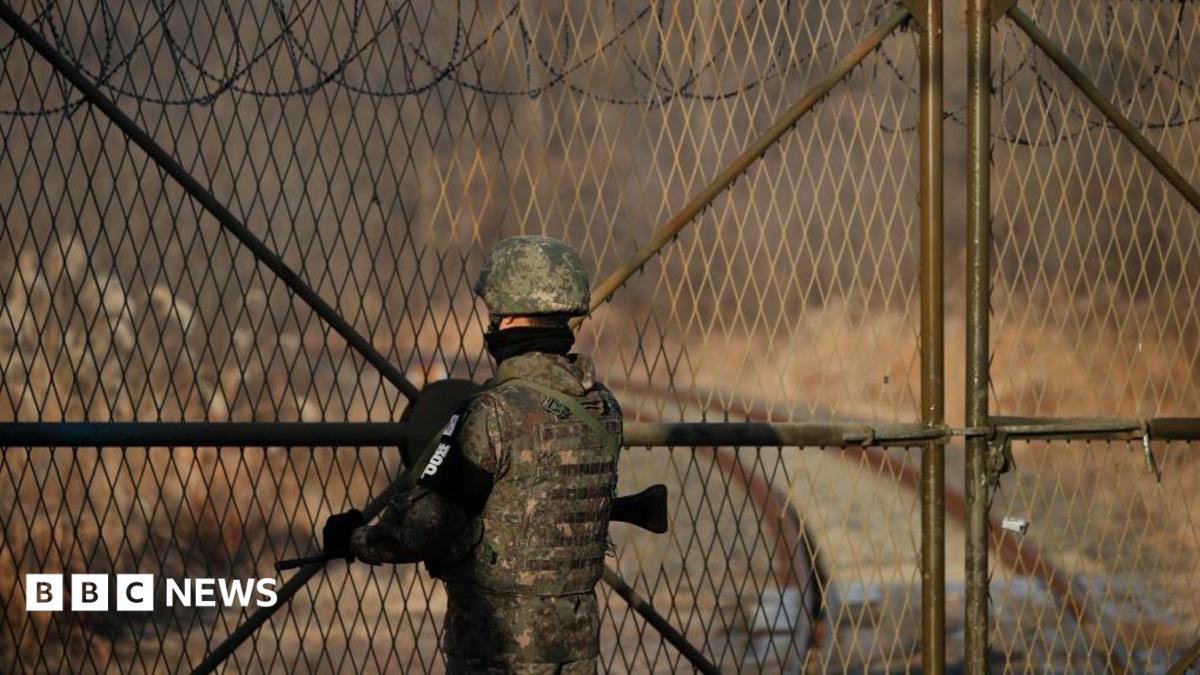
South Korea's military has formally called on North Korea to issue an apology for landmine explosions along the heavily fortified border between the two countries, which left three South Korean personnel wounded earlier this month. The demand, issued on Wednesday, marks the latest escalation in a rapidly intensifying war of words between Seoul and Pyongyang over responsibility for the blasts.
The explosions occurred on 21 September inside the Demilitarised Zone (DMZ), the buffer strip that has separated the two Koreas since the end of active fighting in the Korean War. According to South Korea's military, the devices detonated on the southern side of the zone, and investigators concluded it was "highly likely" that the mines had been planted by North Korean forces.
Three South Korean personnel sustained injuries in the incident, though the source material did not specify the severity of their wounds. The blasts have nonetheless triggered a sharp diplomatic confrontation, with Seoul vowing to take "corresponding measures" against what it describes as a violation of the decades-old armistice that halted the Korean War in 1953.
South Korea's Defence Minister, Kang Shin-chul, said on Tuesday that the explosions represented a "clear" breach of the 1953 agreement. In its statement the following day, Seoul's military went further, demanding that Pyongyang apologise for the blasts and immediately halt any fortification work along the border. South Korean officials believe the mines were laid by the North as part of an effort to reinforce its side of the frontier.
North Korea has flatly rejected the accusations. Pyongyang described Seoul's claims as "groundless" and dismissed the entire episode as a "farce" designed to inflame tensions on the Korean peninsula. The North's denial was delivered in forceful language, setting the stage for a prolonged exchange between the two rivals.
Kim Yo Jong, the influential sister of North Korean leader Kim Jong Un, issued a statement carried by state media on Wednesday accusing South Korea of fabricating the allegations. She said Seoul was "cooking up" the claims to serve what she characterised as political and military provocation. Kim also rejected any suggestion that North Korean personnel had crossed the border to plant the devices, calling the accusation a deliberate and pre-planned assertion aimed at shifting blame for rising tensions onto Pyongyang.
Her statement included a stark warning, telling the South to be "prepared for paying price for the farce of their own making." The language echoed the increasingly confrontational tone that has come to define inter-Korean rhetoric in recent months.
The 1953 armistice ended active combat in the Korean War but never produced a formal peace treaty, leaving the two Koreas technically still at war. The agreement established the DMZ, a buffer zone roughly 4km (2.5 miles) wide that straddles the Military Demarcation Line, the de facto land border between North and South. Because the zone is jointly overseen rather than permanently occupied by either side, incidents within it are treated as particularly sensitive matters.
This is not the first time landmines have sparked a serious confrontation in the DMZ. In 2015, two South Korean soldiers were maimed by explosions while on patrol in the area. At the time, Seoul said the mines had been secretly planted by North Korean soldiers near a South Korean guard post, a claim Pyongyang denied. Kim Yo Jong referenced that episode directly in her Wednesday statement, arguing that South Korea had used the 2015 incident as a "pretext" to escalate tensions and was now repeating the same playbook.
The recurrence of a nearly identical dispute a decade later underscores how little the underlying dynamic has changed. Each incident in the DMZ risks spiralling into a broader military confrontation, and each side's account of events is filtered through deep mutual distrust.
The United Nations Command, which operates alongside South Korean forces and conducted an on-site investigation into the September blasts, has signalled that it intends to address the matter through formal channels. The command said it would handle the alleged armistice violation "through established Armistice mechanisms," without detailing what specific steps that would involve.
In its statement, the UNC reaffirmed its commitment to upholding and enforcing the Armistice Agreement. It said it remained dedicated to fulfilling its responsibilities to preserve stability and prevent escalation on the Korean Peninsula, language that highlights the delicate role the multinational command plays in managing incidents that could otherwise spiral out of control.
The timing of the dispute adds to its significance. Any clash along the DMZ carries the risk of unintended escalation, particularly given the absence of routine communication channels between the two militaries. With North Korea having rejected the accusations outright and South Korea demanding accountability, the immediate prospects for de-escalation appear limited.
For now, the two sides remain locked in a familiar pattern: Seoul pressing for an apology and a halt to border fortification, and Pyongyang rejecting the claims as a manufactured provocation. The wounded soldiers, the on-site investigation by the UN Command, and the 1953 armistice all sit at the centre of a dispute that shows few signs of cooling. How the UN Command proceeds through established armistice mechanisms may determine whether the incident remains a war of words or escalates into something more dangerous along one of the world's most heavily militarised borders.









Comments (0)