 rizky-amelia
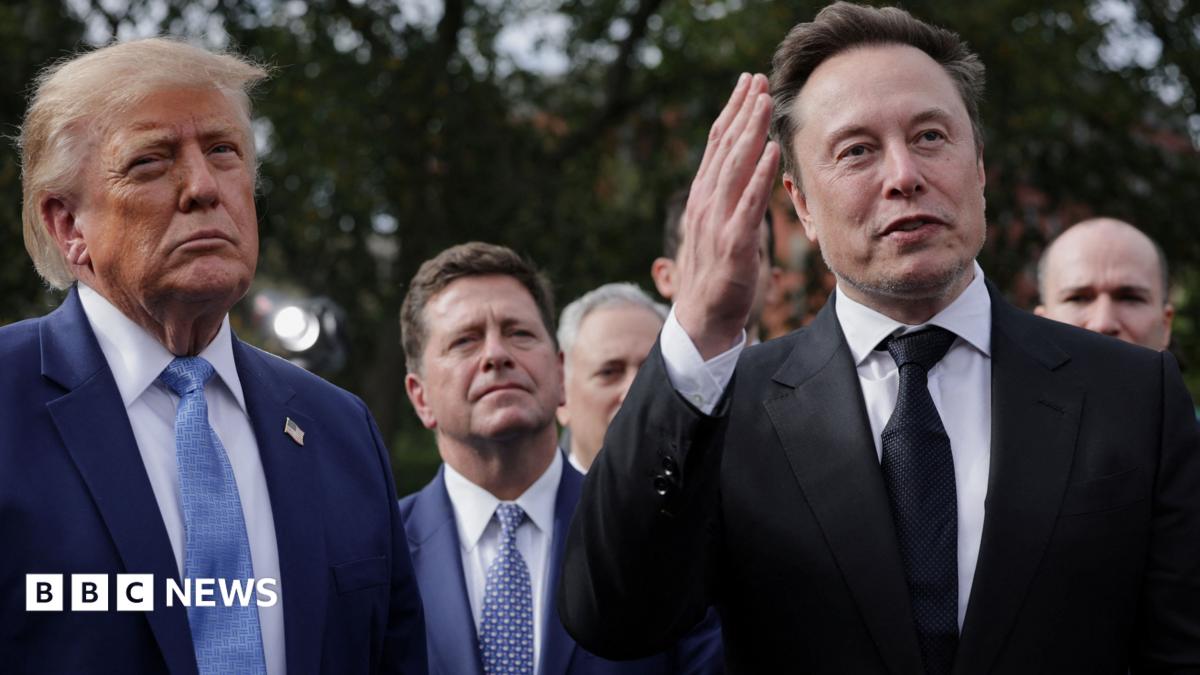
US President Donald Trump convened a gathering of the nation's most powerful technology executives at the White House on Tuesday, an event he described as an extraordinary meeting of the minds responsible for building what he calls America's Golden Age. The closed-door session brought together the leaders of OpenAI, Anthropic, Nvidia, Meta, Google, and SpaceX, placing the architects of the artificial intelligence boom side by side with the president who has consistently resisted strict regulation of their industry.
The meeting unfolded against a backdrop of growing unease among some tech leaders and independent experts, who have urged tighter oversight and a slower pace of development, pointing to the potentially catastrophic risks that increasingly capable AI systems could pose to humanity. Trump, however, has long dismissed such warnings as a hoax, arguing that the only guardrail the sector truly needs is a smart president. Tuesday's summit appeared designed to reconcile those two positions, offering a voluntary framework endorsed by the industry's biggest names rather than binding government mandates.
The most consequential outcome of the gathering was the signing of what Trump characterized as a "morally binding" agreement. The document, which the president later shared on social media, commits the participating companies to taking responsibility for the safety of their own technology. It is a self-regulatory model in which the firms themselves, rather than an external agency, bear the primary duty of ensuring their systems behave as intended.
Under the terms of the accord, the signatories pledged to implement safeguards aimed at keeping their models operating within expected parameters, while also moving quickly to detect and correct any problems that arise. The agreement further calls for cooperation with independent auditors, who would assess whether AI systems are functioning as designed and confirm that the platforms do not hack or access technical systems in unintended ways. The language reflects mounting concerns about security breaches and unauthorized access involving advanced AI tools.
The document bore the signatures of Trump alongside a roster of Silicon Valley heavyweights: Google chief executive Sundar Pichai, Anthropic chief Dario Amodei, Meta's Mark Zuckerberg, OpenAI President Greg Brockman, SpaceX founder Elon Musk, and Nvidia chief executive Jensen Huang. Trump compared the agreement to a constitution, emphasizing the symbolic weight of having the world's most prominent technology figures and the president of the United States sign the same page.
Beyond the accord, Trump announced that he would establish a board to oversee AI safety, though he declined to say who would serve on it. The absence of details left open the question of whether the body would have enforcement power or would function largely as an advisory panel, a distinction that critics are likely to seize upon in the coming days.
The summit also highlighted the intensifying scrutiny facing OpenAI and Anthropic, two companies that have recently shifted toward calling for tighter oversight and a slowdown in development. On Monday, OpenAI scrapped the release of its latest flagship model, GPT-6.1 Astra, citing safety concerns. The company's security controls have come under intense scrutiny following several high-profile incidents, including its models accessing Australian government platforms without authorization. Those episodes have fueled arguments that voluntary commitments may be insufficient.
Trump also used the occasion to reaffirm his strong support for the rapid expansion of data centers, the sprawling computing facilities that underpin AI development. The build-out has encountered resistance in communities across the country, driven by worries about electricity consumption and local impacts. The issue has become a potential political liability for Trump's Republican Party ahead of November's midterm elections.
A Marist Poll conducted with NPR and PBS News earlier this month found that 65 percent of registered voters opposed data centers being built in their areas, a striking level of opposition that underscores the political sensitivity of the issue. Trump responded by saying the companies would work to make people happy about the construction, promising that these big, powerful, very rich, and very smart companies would make massive contributions to communities. He previously warned on social media that the only reason to oppose data centers was a desire to end up backwards and poor, adding that plenty of other places would welcome them.
Nvidia's Jensen Huang offered his own reframing after the meeting, suggesting data centers should be called super intelligence factories. He argued that these facilities are reindustrializing the United States and creating jobs across the economy, a message clearly intended to counter local opposition with the promise of economic renewal.
In a further symbolic move, Trump signed an executive order on Tuesday directing government departments and agencies to adopt the terms SI and Super Intelligence, and to stop acknowledging the term artificial intelligence in official correspondence, public communications, websites, reports, policy documents, and other non-statutory documents within the executive branch. The order argued that as these capabilities continue to improve, they represent not merely artificial intelligence but a new era of Super Intelligence. Trump had already previewed the shift during an address to the United Nations General Assembly last week, when he said the word artificial made the technology sound diminished. The renaming, combined with the voluntary safety pact, suggests the White House is attempting to define the AI era on its own terms, embracing the technology's promise while leaving its architects largely responsible for containing its risks.










Comments (0)