 rizky-amelia
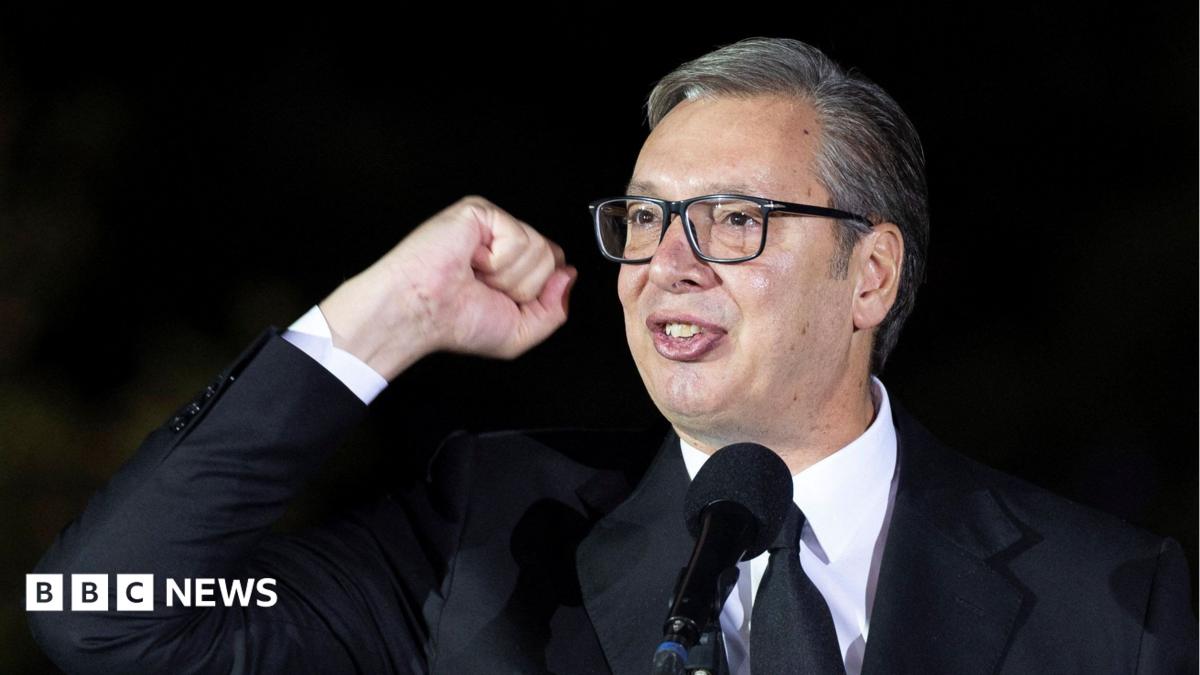
Serbia's President Aleksandar Vučić has resigned, bringing an end to a presidency that spanned nearly a decade and giving in to mounting pressure from more than a year of student-led demonstrations and widespread public anger over corruption allegations. The announcement, made in an address to supporters gathered outside the presidential building in Belgrade, marks one of the most significant political shifts in the Balkan nation in recent memory.
During his remarks, Vučić insisted that his administration had safeguarded peace and stability throughout his nine years in office. Yet his departure follows sustained unrest that has shaken the country's political establishment and drawn hundreds of thousands of citizens into the streets.
The president had already signalled in June that he intended to step down, and he is now campaigning as his party's candidate for prime minister in an upcoming parliamentary vote. Because Serbia's constitution bars him from seeking a third presidential term, the move effectively clears the way for him to attempt to remain at the centre of national politics through a different office.
The roots of the crisis stretch back to November 2024, when a canopy at the railway station in Novi Sad gave way, killing 16 people. The tragedy became a catalyst for public outrage, as many citizens came to view the disaster as evidence of deeper failures within the government. Vučić had closely tied himself to the station's renovation, which had been promoted as a showcase of Serbia's modernisation and progress.
What began as grief quickly turned into a broad-based protest movement. Students were soon joined by teachers, factory workers and farmers, forming a coalition of demonstrators that cut across class and regional lines. Their demands went beyond accountability for the station collapse, expanding into a wider indictment of the ruling Progressive Party's long hold on power.
A wave of resignations by officials failed to calm the situation. Protests continued through the summer, later escalating into episodes of unrest after allegations emerged of police brutality against demonstrators. The government's attempts at damage control proved insufficient to restore public confidence.
Vučić's presidency had been scheduled to run until next year. Under the country's constitution, a presidential election must be held within three months of a resignation, meaning Serbian voters will head to the polls twice before the end of the year. Vučić indicated that the presidential contest would take place just over a month after snap parliamentary elections set for late October. Those early elections were themselves called in response to the protests, which had added a demand for a fresh vote to their list of grievances.
Parliamentary speaker Ana Brnabić, who also belongs to the Progressive Party, will serve as interim president until a successor is chosen. Her appointment ensures continuity within the ruling party during the transition period, though it is unlikely to satisfy opposition groups who have long accused the government of entrenching its power.
In one of his final acts before leaving office, Vučić used his constitutional authority to pardon 49 people. According to the Serbian public broadcaster RTS, those pardoned included 23 students along with party loyalists who had been suspected of offences tied to what he described as the "terrible events we have gone through over the past year and a half." The decision is likely to prove contentious, with critics expected to question whether the pardons were intended to shield allies or to ease tensions ahead of the elections.
The coming parliamentary contest will set Vučić's Progressive Party against two distinct challengers. One is a student-led, anti-corruption movement operating under the name Students Win, which emerged directly from the protest wave. The other is a coalition of pro-Western opposition parties known as European Serbia, which draws on more traditional political structures.
Vučić has been a dominant figure in Serbian politics for more than a decade. He became prime minister in 2014 and won his first presidential term in 2017. Throughout his time in power, he has pursued a balancing act on the international stage, publicly stating his desire for Serbia to join the European Union while simultaneously cultivating close ties with Russia and welcoming Chinese investment.
That ambiguous foreign policy stance has drawn scrutiny both at home and abroad, particularly as Western capitals have sought to keep Serbia aligned with European institutions. His resignation opens a period of uncertainty over the country's geopolitical direction, with the opposition generally more firmly oriented toward Brussels.
For now, the immediate focus turns to the logistics of holding two national elections in rapid succession. The parliamentary vote in late October will determine the composition of the next government, while the presidential election will decide who occupies the highest office. The sequencing reflects the unusual circumstances created by Vučić's mid-term departure.
Analysts will be watching closely to see whether the protest movement can translate its street presence into electoral success. Movements born from demonstrations often struggle to build the durable organisational structures needed to contest elections effectively, while established parties benefit from existing networks and name recognition. The Students Win campaign in particular will face the challenge of converting broad discontent into concrete votes.
Whoever prevails will inherit a country still roiled by the aftermath of the Novi Sad disaster and divided over the legacy of Vučić's rule. The next government will need to address public demands for accountability and reform while managing relations with the European Union, Russia and China. The scale of the protests suggests those demands will not fade quickly, regardless of the election outcome.
The resignation represents a rare instance in the region of a long-serving leader yielding to sustained popular pressure. Whether it leads to a genuine political reset or a reshuffling that preserves the existing power structure will depend largely on voters when they cast their ballots in the months ahead.









Comments (0)