 putri-anggraini
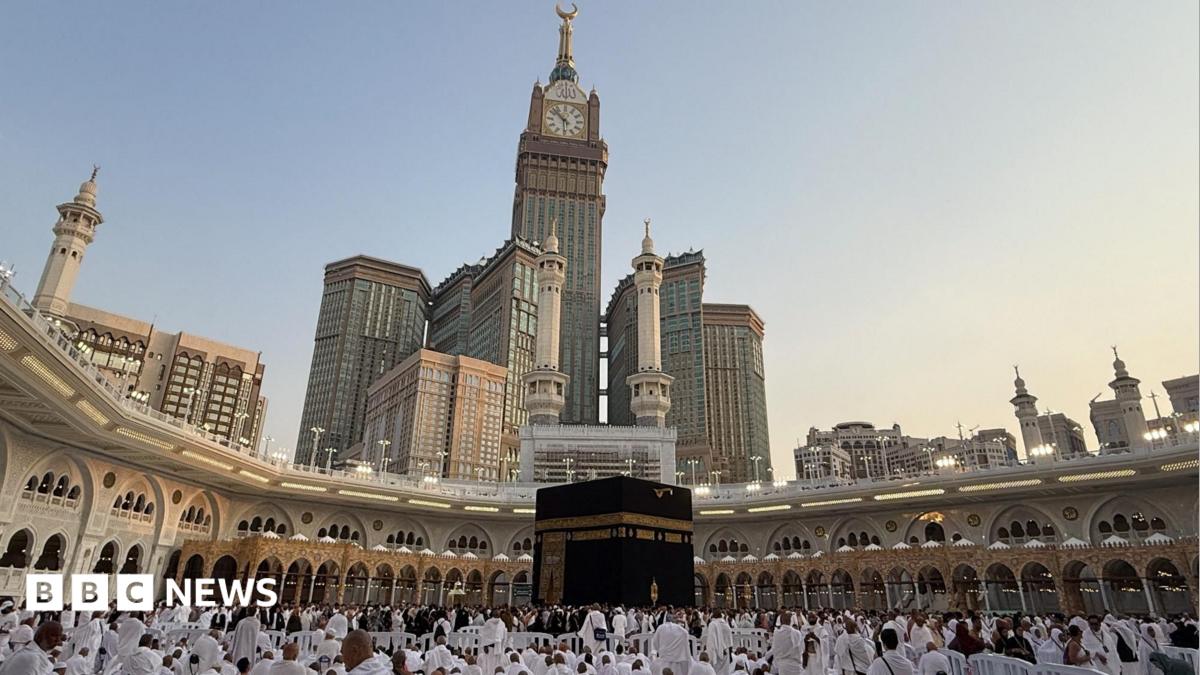
Tensions across the Arabian Peninsula have dramatically intensified following reports from Saudi Arabia that its defensive forces successfully intercepted and eliminated an armed unmanned aircraft south of Mecca on Tuesday evening. Major General Turki al-Maliki, serving as the official spokesman for the Saudi-led military coalition operating in Yemen, strongly condemned the aerial threat. He publicly characterized any aggression directed toward the vicinity of Islam’s most sacred site as a deeply disgraceful action, signaling that allied forces are prepared to take all necessary deterrent measures to counter persistent hostile maneuvers in the region.
The reported attack near the holy sanctuary, which hosts millions of pilgrims annually for the Hajj, provoked a sharp reaction across the wider diplomatic and religious community. The Organisation of Islamic Cooperation, an international body comprising 57 member states, released a stern declaration denouncing threats aimed at Mecca and the surrounding Medina province. The organization emphasized that any military provocation targeting the territory housing Islam’s two primary holy shrines represents an entirely unacceptable and intolerable transgression against the global Muslim community.
In response to the accusations raised by coalition officials, the Houthi movement in Yemen issued a swift and emphatic denial, rejecting claims that their forces were responsible for targeting holy territories. Houthi military spokesman Yahya Sarea dismissed the allegations made by Saudi authorities as completely fabricated lies. He insisted that the insurgent group's strategic operations are confined exclusively to state oil facilities and host nation military installations, maintaining that their offensive campaigns remain geographically and intent-wise distinct from sacred religious centers.
Elaborating on recent military actions, Sarea asserted that the Houthis’ ongoing missile and drone launches across the Saudi border were executed in direct retaliation for intense aerial bombardment by coalition jets. According to the Houthi spokesman, Saudi forces conducted more than 450 air strikes against Houthi-controlled territory over the preceding seven days alone. Sarea further claimed a major tactical success for rebel air defenses, stating that Houthi combat units had downed a Saudi fighter aircraft during operations over Marib province.
The aerial engagement prompted immediate domestic and international safety measures across western Saudi Arabia. Government authorities issued a series of urgent security alerts notifying residents of incoming aerial projectiles near major urban centers, including Mecca and the commercial port city of Jeddah. Simultaneously, the United States Embassy in Saudi Arabia upgraded its regional safety guidance to a "reconsider travel" status, highlighting that Houthi strike capabilities have repeatedly targeted civilian population centers, transport infrastructure, airfields, military bases, diplomatic properties, and energy installations.
This sharp rise in cross-border strikes coincides with substantial territorial advances achieved by Houthi ground forces inside Yemen. Over recent weeks, the Iran-backed movement has captured broad swathes of coastal territory along the Red Sea from pro-government troops backed by Riyadh. Among the most strategic gains was the seizure of the port city of Mokha and Perim Island, a key geographic position situated directly within the Bab al-Mandab Strait that serves as the southern gateway for maritime traffic heading toward the Suez Canal.
While Houthi commanders maintain that their forces pose no inherent threat to international merchant traffic, they have explicitly declared their intent to attack shipping vessels belonging to Saudi Arabia. This threat poses severe economic consequences for Riyadh, which has relied heavily on Red Sea shipping routes to maintain its global petroleum exports. The kingdom was forced to pivot its transport strategy after an ongoing conflict involving the United States, Israel, and Iran led to the effective closure of the Strait of Hormuz in the Persian Gulf.
Saudi Arabia's alternative energy transportation infrastructure has suffered severe operational setbacks. The critical East-West Pipeline, constructed to pump crude oil from eastern fields across the peninsula to the Red Sea port of Yanbu, was forced to cease operations after sustaining severe damage in a strike attributed to Iran-aligned militias in Iraq. While energy industry experts estimate that fixing the pipeline could require over a month of repairs, US Energy Secretary Chris Wright offered a contrasting assessment on Tuesday, predicting that petroleum transport would resume within days.
Faced with spiraling security challenges and disruptions to vital national infrastructure, Saudi Crown Prince Mohammed bin Salman has directly solicited high-level military assistance from Washington. Sources familiar with the ongoing diplomatic discussions informed media outlets that the kingdom's de facto ruler personally urged US President Donald Trump to launch direct American military strikes targeting Houthi positions inside Yemen to restore deterrence.
President Trump has so far declined requests to commit US military forces to direct combat operations against the Houthis, choosing instead to restrict American assistance to intelligence sharing and targeting support for coalition planners. Reflecting the official stance in Washington, a senior Trump administration official affirmed to reporters that the US government remains engaged in continuous diplomatic dialogue with both Saudi Arabian officials and the recognized government of Yemen to address regional stability.
The widening crisis prompted the United Nations Security Council to convene an emergency session in New York on Tuesday. Representatives from both the Yemeni government and Saudi Arabia addressed the council, urging the international community to take decisive measures against Houthi forces accused of blockading the Bab al-Mandab Strait to exert global economic pressure. Council members ultimately voiced consensus on the critical necessity of preserving freedom of navigation throughout the Red Sea to protect global supply chains.
The intensified combat operations are worsening an already grave human emergency across Yemen. Data compiled by the International Organization for Migration reveals that recent fighting between Houthi rebels and pro-government troops has displaced more than 90,000 citizens. Amy Pope, the organization's director general, warned that vulnerable families are being uprooted for the second or third time since the outbreak of hostilities, often forced to flee with almost no essential provisions left.
The human toll has surged in step with the expanding military operations across multiple fronts. Reports from the World Health Organization indicate that at least 500 fatalities have been documented since the beginning of August. The health agency noted a rapid acceleration in casualties, specifying that 297 of those recorded deaths occurred within just the past week as heavy bombardment and ground clashes intensified.
The recent escalation marks a dangerous turn in a devastating civil conflict that originally began in 2014 when Houthi forces seized control of the capital city, Sanaa, and forced the executive government into exile. The conflict deepened into a major regional war in 2015 following the direct military intervention of a Saudi-led coalition. Over the past decade, the fighting has claimed over 150,000 lives and pushed more than 22 million people into requiring emergency humanitarian assistance.
The rapid degradation of security marks the formal collapse of a fragile, four-year informal ceasefire that had largely contained broad hostilities. That truce began to unravel dramatically in July when Houthi authorities declared a unilateral maritime embargo against Saudi Arabia and initiated offensive strikes against Saudi airports and energy infrastructure. The Houthis defended their actions as a necessary response to ongoing Saudi blockades on Houthi-controlled air and sea hubs, including a previous strike that targeted Sanaa’s international airport.









Comments (0)