 hendra-wijaya
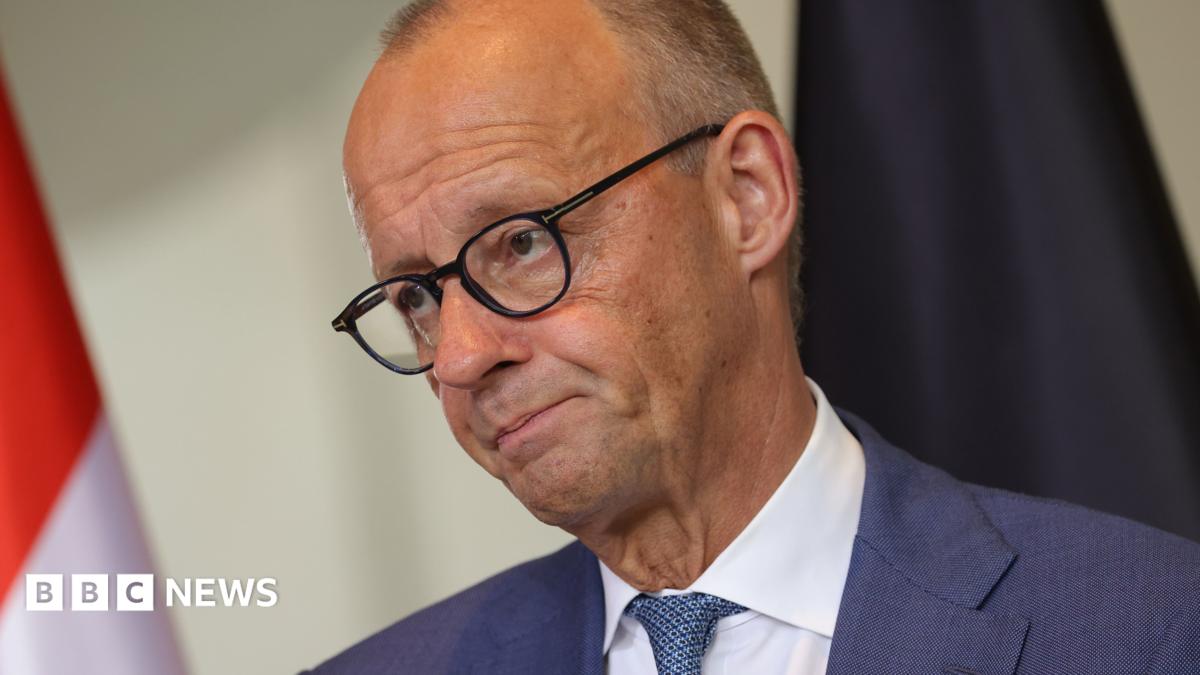
A coalition of eight state premiers from Germany's Christian Democratic Union (CDU) has moved to publicly reinforce Chancellor Friedrich Merz, seeking to tamp down escalating speculation regarding his political standing and future leadership of the nation.
In a unified intervention, the regional leaders emphasized that regaining voter confidence would not come through internal party friction. They asserted that restoring public trust required the party to focus on active listening and delivering tangible political results rather than engaging in continuous debates over personnel.
The joint backing was delivered by the leaders of North Rhine-Westphalia, Berlin, Hesse, Rhineland-Palatinate, Saxony, Saxony-Anhalt, Schleswig-Holstein, and Thuringia. The premiers insisted that Germany's contemporary political climate urgently requires institutional stability, stressing that the federal republic must maintain an effective government backed by a solid parliamentary majority in the Bundestag.
Merz, who has occupied the chancellorship for only 16 months, finds himself under severe scrutiny amid dwindling public support. A recent opinion survey conducted by Bild indicated that just 14 percent of respondents viewed him as the right person for the chancellor's office, with critics increasingly pointing to his abrasive communication style and personal unpopularity as electoral liabilities for the conservative bloc.
The pressure on Merz has intensified significantly following the dramatic rise of the anti-immigration, far-right Alternative for Germany (AfD). The far-right party's recent electoral triumph in the eastern state of Saxony-Anhalt sent shockwaves through the political establishment, reigniting whispered discussions of a potential "Kanzlertausch," or mid-term chancellor swap.
In that pivotal contest at the beginning of September, the AfD surged to capture 43.8 percent of the vote, while the CDU plummeted into a distant second place with just 17.2 percent. The outcome marked the first occasion since the end of the Second World War in which a far-right movement came within reach of governing a German state, falling only three seats shy of an outright parliamentary majority.
Mainstream political groups have collectively maintained a strict refusal to govern alongside the AfD in any formal coalition, leaving the far-right party to potentially contemplate a minority administration. In the wake of the defeat, Merz adopted an aggressive rhetorical posture, attacking the AfD as a "destructive force" aligned with Russian interests and alleging that its platform on migration resembled an "ethnic cleansing" directed at skilled foreign workers.
The Chancellor's forceful condemnation sparked immediate pushback from the AfD, which initiated a formal defamation complaint against Merz. Party representatives furiously rejected his characterization, labeling the chancellor's statements as both completely unfounded and disgusting.
The chancellor's grip on power faces another immediate hurdle with upcoming state elections scheduled for Sunday in both the federal capital of Berlin and the northeastern state of Mecklenburg-West Pomerania. These regional ballots are widely viewed as a definitive test of Merz’s authority and the CDU’s ability to resist further far-right momentum.
Internal preparations are already underway to handle the political fallout from Sunday's voting. According to an unnamed party source cited by the Reuters news agency, senior CDU officials are scheduled to convene on the evening of the vote to coordinate the party's official response to the results in both regions.
Pre-election polling suggests a complex and varied landscape across the two battlegrounds. In Berlin, the contest is tightly divided, with the CDU running neck-and-neck with the leftist Die Linke party, closely pursued by the Greens and the AfD. Conversely, polling in Mecklenburg-West Pomerania shows the AfD holding a lead over the centre-left Social Democratic Party (SPD), though it is projected to fall short of a clean majority.
For Merz and his party strategists, the most damaging outcome on Sunday would involve a double defeat: losing control of the state government in Berlin while simultaneously failing to secure enough votes in Mecklenburg-West Pomerania to cross the threshold required for parliamentary representation.
Despite the mounting challenges, Merz has received additional support from Markus Söder, the premier of Bavaria and leader of the CDU's sister organization, the Christian Social Union (CSU). Nevertheless, persistent whispers about alternative leadership scenarios continue to highlight several prominent figures, including Söder himself, North Rhine-Westphalia Premier Hendrik Wüst, and German Interior Minister Alexander Dobrindt, even though no challenger has officially broken ranks.
Unlike political conventions in nations such as the United Kingdom, German parliamentary tradition rarely witnesses the mid-term removal of a sitting chancellor. While constitutional avenues such as a voluntary resignation under pressure or a formal vote of no confidence theoretically exist, seasoned political observers consider such drastic measures highly improbable at this stage.
Merz's political track record includes notable early achievements, such as assembling broad domestic and international support for a massive €500bn (£420bn; $547bn) defence infrastructure initiative prior to taking office, earning praise abroad for his decisive stance on European security. Yet his path to power was fraught with difficulty, requiring three separate attempts to capture the CDU leadership before stumbling in an unprecedented initial parliamentary vote for the chancellorship despite holding an agreed majority with the SPD.
This history of internal friction underlines Merz's enduring struggle to fully command loyalty within his own conservative base. However, it also illustrates a political figure defined by stubborn persistence, making it highly unlikely that the chancellor will voluntarily step aside from a role he spent decades fighting to achieve.








Comments (0)