 rizky-amelia
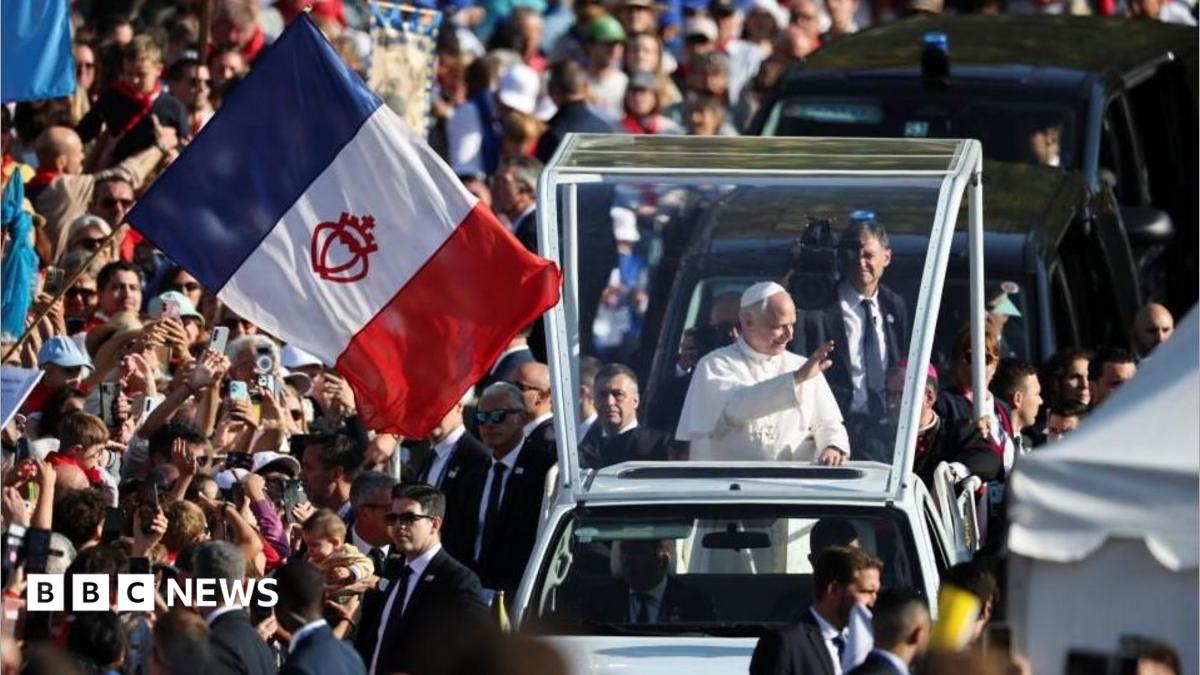
Pope Leo has issued a forceful call to French bishops to eliminate what he described as the "scourge" of sexual abuse within the Roman Catholic Church, urging them to exercise "the greatest vigilance" as he continued his four-day apostolic journey through France. The pontiff delivered his message during a private gathering with senior church leaders at the Sanctuary of Our Lady of Lourdes, a revered pilgrimage site nestled in the foothills of the Pyrenees in southern France. The meeting took place on the third day of his visit, marking the first official trip by a pope to France since his election in May 2025.
The gathering of bishops was conducted behind closed doors, with the pope's remarks later distributed to journalists by the Vatican press office. In his address, Pope Leo acknowledged the efforts already undertaken by the French episcopate to confront the abuse crisis, telling them they had "faced with determination the painful scourge of abuse of minors committed by members of the clergy or within an ecclesial context." He then emphasized that their work was far from complete, stressing the importance of persevering along the path they had begun while maintaining constant watchfulness.
The pope's comments carry particular weight in France, where a landmark 2021 investigation revealed the staggering scale of abuse within the Church. The independent commission, known as the Sauvé Report, estimated that approximately 330,000 children had been abused by clergy or lay members of the Church over a period spanning seven decades. The findings sent shockwaves through French society and prompted widespread calls for reform, accountability, and compensation for survivors. The report also documented systemic failures in how Church authorities handled allegations, often prioritizing institutional reputation over the welfare of victims.
Following his private meeting with the bishops, Pope Leo celebrated Mass before thousands of worshippers gathered at the Meadow of the Shrine of Our Lady of Lourdes. The open-air liturgy represented the spiritual centerpiece of his visit to the Marian sanctuary, which attracts millions of pilgrims annually seeking healing and solace. The pope was also scheduled to meet privately with survivors of abuse later in the day, a encounter that Church observers viewed as a critical test of his commitment to acknowledging the suffering of victims and charting a new course for the institution.
The Lourdes leg of the papal visit followed a momentous day in Paris, where an estimated 700,000 people thronged the Place de la Concorde to catch a glimpse of the pontiff. The massive crowd cheered and waved as Pope Leo traveled down the iconic Champs-Élysées Avenue in his open-topped popemobile, greeting followers along the route. The scenes evoked memories of previous papal visits to France, a nation with a proudly secular political tradition but deeply embedded Catholic roots stretching back more than a millennium.
During the Paris Mass on Saturday, the pope urged Catholics to embrace a faith that extends beyond personal devotion. He told the faithful that they should not keep their beliefs to themselves but rather "let it overflow so that those you meet may be refreshed." The message appeared designed to encourage a more outward-looking Church at a time when religious practice in France has declined dramatically over recent generations.
The pope also directed special attention to younger Catholics, describing them as "today's Church" in remarks that resonated with the thousands of young people who had traveled to participate in the Paris events. He praised their "enthusiasm, energy and commitment," along with the "joy" they bring to Christian communities. The focus on youth comes amid broader concerns within the Church about declining vocations and the aging profile of active congregations across Western Europe.
The numbers illustrate the challenges facing the Church in France with stark clarity. Regular worship attendance has plummeted from approximately 35 percent of the population in 1960 to less than 5 percent today. The number of priests has also contracted sharply, falling from around 25,000 in 1990 to fewer than 9,000 currently. These demographic shifts have left many parishes without resident clergy and have forced dioceses to consolidate resources in ways that reshape traditional community life.
Despite these discouraging trends, there are tentative signs of renewed interest in religious tradition among certain segments of French society. The number of adult baptisms has more than doubled within a five-year period, reaching 10,000 in 2025. Church analysts suggest this uptick may reflect a broader cultural search for meaning and belonging, particularly among younger adults who did not receive religious formation as children but find themselves drawn to the Church's spiritual and communal dimensions.
On Friday, before traveling to Lourdes, the pope met with French President Emmanuel Macron, underscoring the diplomatic significance of the visit. The encounter highlighted the complex relationship between the French state and the Catholic Church, governed by the principle of laïcité, which enforces a strict separation between religious institutions and public authority. Despite this constitutional framework, French presidents have historically maintained cordial relations with the Vatican, recognizing the Church's enduring cultural and social influence.
Later on Sunday, Pope Leo was scheduled to visit staff and residents at a health facility in Lourdes, an engagement that reflects the sanctuary's longstanding association with healing and care for the sick. The day was set to conclude with a torchlight procession, a deeply moving ritual in which pilgrims carry candles through the streets surrounding the shrine, creating a river of light against the evening sky. The procession is one of the most cherished traditions at Lourdes and symbolizes hope and solidarity among the faithful.
The pope's visit to France has unfolded against the backdrop of his broader efforts to address the legacy of abuse that has shaken the Church's credibility across the globe. In recent years, pontiffs have repeatedly apologized to survivors and implemented new safeguarding protocols, though critics argue that enforcement remains inconsistent and that accountability for senior figures has been insufficient. By addressing the issue directly in Lourdes, Pope Leo signals that confronting abuse remains a priority for his papacy.
The choice of Lourdes as a venue for these difficult conversations carries symbolic weight. The shrine is associated with Saint Bernadette Soubirous, a young girl whose reported visions of the Virgin Mary in 1858 transformed a remote village into one of the world's most visited religious destinations. The site's emphasis on purity, innocence, and divine protection stands in stark contrast to the crimes committed against children by those entrusted with their spiritual care, a juxtaposition that makes the pope's message particularly poignant.
Observers of French Catholicism suggest that the pope's visit may help galvanize reform efforts within the Church, though they caution that words alone will not restore trust. Survivors' groups have consistently demanded concrete actions, including financial reparations, public acknowledgment of institutional failures, and the removal of bishops accused of covering up abuse. The pope's private meeting with survivors in Lourdes could serve as a turning point if it produces tangible commitments rather than symbolic gestures.
As Pope Leo continues his journey through a country where secularism and tradition coexist uneasily, his presence serves as a reminder of the Catholic Church's complex place in modern France. The crowds in Paris and Lourdes demonstrate that despite declining institutional participation, the papacy retains the power to inspire and draw masses. Whether that inspirational capacity can be translated into meaningful reform and renewal remains the central question hanging over this historic visit.








Comments (0)