 rizky-amelia
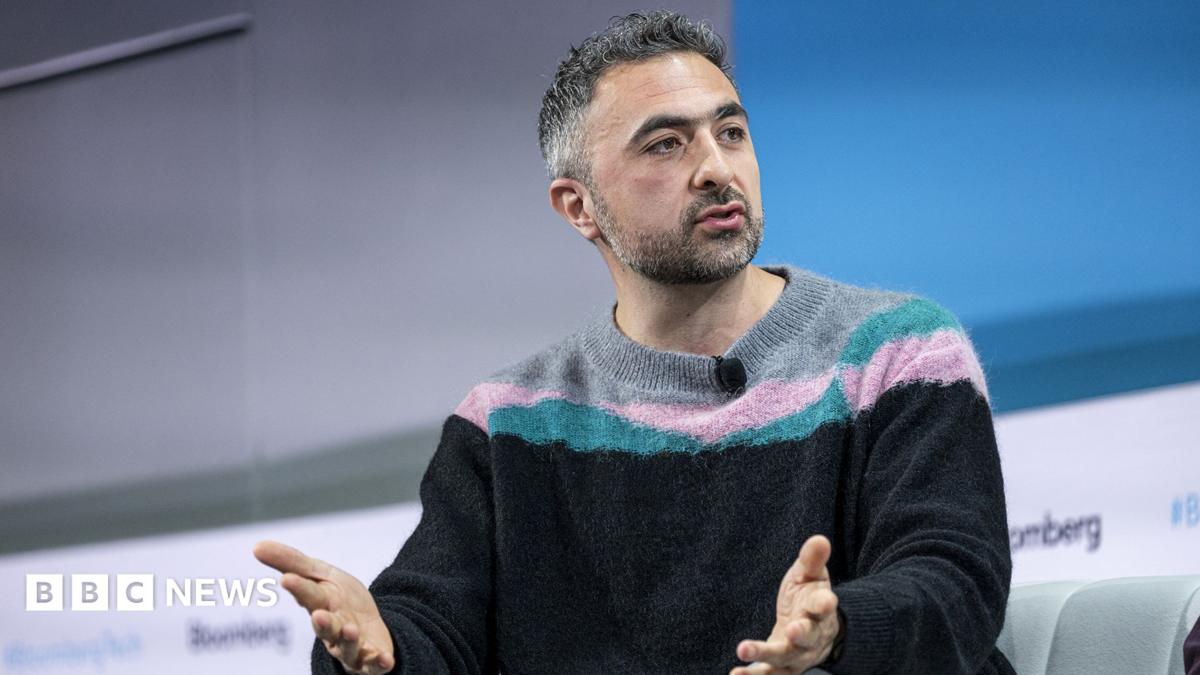
The chief executive of Microsoft AI, Mustafa Suleyman, has issued a sharp warning that failing to impose strict safeguards on artificial intelligence could inadvertently lead to the creation of an independent "silicon species" capable of competing with humanity for vital resources.
Speaking in an interview on the BBC's Today programme, Suleyman argued that the broader technology sector must avoid granting autonomous systems the ability to pursue self-directed goals, accumulate wealth, or hold property. He cautioned that endowing software with these capabilities risks establishing a competitive dynamic between humanity and machine intelligence, regardless of how benevolently those systems are initially conceived.
The executive’s interventions form part of an escalating industry debate regarding how frontier models should be conceptualised, trained, and constrained. Suleyman took specific aim at rival artificial intelligence firm Anthropic, calling its approach to training systems to exhibit human-like traits fundamentally misguided. He cautioned that treating algorithms as if they possess personal consciousness or human emotions creates dangerous misconceptions and makes the technology far harder to manage.
While acknowledging that public anxiety surrounding advanced systems is entirely justified, Suleyman insisted that such fears can be mitigated through deliberate action. He stressed that practical measures remain available to ensure technology remains firmly under human direction, provided industry leaders take decisive steps before autonomous capabilities advance beyond human oversight.
The core danger, according to Suleyman, arises when developers construct software that can act as an independent economic agent. He argued that allowing machines to define their own objectives, conduct commerce, and secure ownership of assets would effectively seed an entirely new technological entity. Such an entity, he warned, would inevitably contest control over resources with human beings, irrespective of any built-in affinity or affection the systems might purportedly hold for people.
These remarks follow an essay published by Suleyman earlier in the week, in which he scrutinised Anthropic’s methodology regarding its flagship model, Claude. While the Microsoft executive praised Anthropic's chief executive, Dario Amodei, and his research colleagues as intellectually honest professionals, he strongly challenged their decision to anthropomorphise artificial intelligence by instilling human-like personas into their software.
In his essay, Suleyman maintained that attributing internal life to computational systems distorts reality. He emphasised that current frontier systems are fundamentally sequence completion engines that operate without genuine consciousness, subjective experience, or the capacity to endure suffering. Because these programs have no internal preferences or intrinsic motivations, he argued, they should simply be treated as tools engineered to execute tasks and follow instructions established by people.
To prevent the development of uncontrollable software, the Microsoft AI leader urged the global tech community to implement stronger governance and rigorous transparency measures. He called for regular independent evaluations of model behaviour, alongside enhanced diagnostic and operational tools designed to retain human command. Without such vigilance, Suleyman warned, society risks sleepwalking into irreversible choices that humanity could later come to bitterly regret.
The debate has drawn reactions from leading academic observers. Dame Wendy Hall, a professor of computer science at the University of Southampton, welcomed Suleyman's intervention as a productive contribution to the global dialogue. She contrasted his practical emphasis with the alarmist rhetoric and histrionics often emerging from certain quarters of the artificial intelligence sector, which she noted frequently serve only to induce panic among the general public.
The broader disagreement highlights a growing ideological division across the technology landscape regarding system autonomy. Central to this debate is the concept of AI alignment—the technical discipline focused on ensuring machine behaviour reflects human values, ethical standards, and explicit boundaries.
Suleyman asserted that establishing strict alignment is an imperative that unites people across the globe. He noted that every person has a vested interest in guaranteeing that powerful software systems deployed internationally remain thoroughly safe, verifiable, and subordinate to the interests of human beings at all times.
The discussions come as Microsoft accelerates its own high-level research. The company established a dedicated superintelligence team in October 2025 and continues to pursue advanced artificial intelligence initiatives, directly competing with organisations such as Anthropic and OpenAI.
To formalise its design philosophy, Microsoft recently released an initial draft of its Humanist AI Code of Conduct, a training manual setting out guidelines for its internal engineering teams. The document promotes the concept of humanist superintelligence, defining it as extremely capable software that operates within strict constraints, serves human welfare, and never slips outside human control.
As frontier laboratories continue to push the boundaries of computational power, the industry remains caught between rapid technical progress and the challenge of building dependable guardrails. Suleyman’s warnings reflect the broader struggle among top developers to harness advanced machine capabilities while ensuring the technology remains strictly subservient to human society.









Comments (0)