 hendra-wijaya
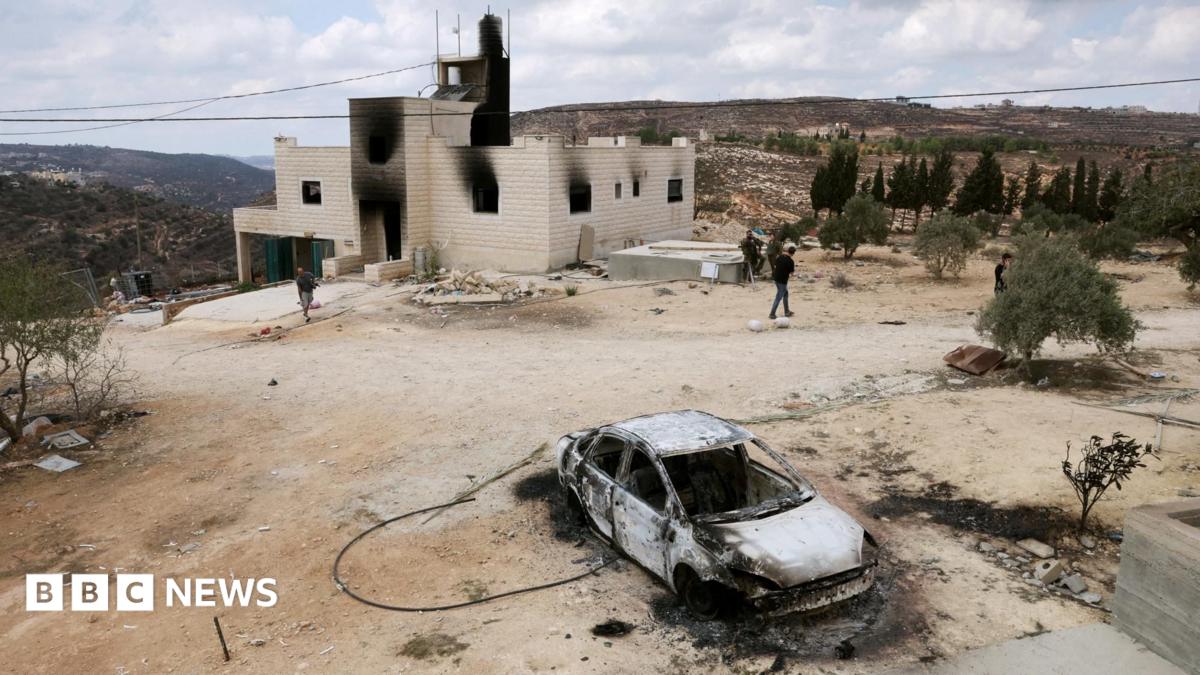
More than 100 Israeli settlers launched a violent attack on a Palestinian village in the occupied West Bank on Monday night, setting fire to two family homes and preventing a displaced family from returning to their properties despite a High Court ruling that ordered their safe return.
The incident in Jalud, located south of Nablus, represents the latest escalation in a pattern of settler violence that human rights organizations say Israeli authorities have consistently failed to address. The al-Tubasi family—Mahmoud, 60, his wife Aida, 51, and their 33-year-old son Wael—had been escorted by Israeli military forces to reclaim their homes when the attack unfolded.
Speaking to the BBC following his escape, Mahmoud al-Tubasi described the harrowing experience. "It was extremely terrifying, beyond words. It's hard to imagine the situation," he said. "My feeling now is that I am happy to have escaped death. I genuinely expected they were going to kill us."
The family had been forced to flee their homes this summer following weeks of sustained harassment and attacks by extremist settlers who had established an illegal outpost near Jalud. The settlers had besieged three houses in the village, including two belonging to the al-Tubasis' married sons who have young daughters.
The return attempt on Monday night came after Israel's High Court issued a strongly worded ruling earlier this month criticizing Israeli authorities for failing to crack down on settler violence. The court mandated that the family be safely returned to their homes by September 20—a deadline that passed more than a week ago without compliance.
According to al-Tubasi, he received a call around midnight informing him that coordination had been arranged with Israel's military for his family to return. Israeli officials sent him a message stating that if he wished to reclaim his property, he needed to go immediately with the army and Israeli border police.
Upon arriving at their property by torchlight, the family discovered that settlers had already extensively damaged one of the homes. Video footage shared with the BBC revealed smashed doors with holes punched through them, torn-out electrical fittings, ripped-up tiles, broken windows, and rubbish scattered throughout the interior. The toilet had been destroyed and appeared to be filled with human waste.
The situation deteriorated rapidly as word spread among settler networks. A large number of extremist settlers descended on Jalud after alerts were posted in WhatsApp groups they use to coordinate their activities, warning that the Palestinian family they had previously forced out was returning and should be stopped.
"As soon as we entered the house, which had already been completely destroyed, settlers started throwing stones at us," al-Tubasi recounted. "The army responded by firing tear gas at them, but there were so many settlers, more than 150, that the army could no longer control them."
The grandfather described how a group of Israeli soldiers attempted to protect his family from approaching settlers, using pepper spray to push them back. However, the settlers slashed the tires of a military van the family had been placed in, forcing their transfer to an armored military vehicle. As the family was being driven away from the scene, the settlers set fire to their car and both of their houses, with video footage captured from a distance showing smoke billowing from the burning structures.
Al-Tubasi acknowledged that Israeli security forces "essentially formed a barrier, took us out safely and got us away from there. But they did not take any action against the settlers themselves."
The Israel Defense Forces issued a statement confirming that "more than 100 Israeli rioters were present in the village, blocking roads, setting tyres on fire, and throwing stones at security forces." The military reported that three police officers sustained minor injuries and a security forces vehicle was damaged during the confrontation.
The IDF described the Tubasi family as victims of a "nationalist crime," adding that "due to the violence, the mission to return the family to their home was not completed." Israel's prime minister subsequently called on law enforcement authorities to prosecute those he characterized as "rioters."
The violence extended beyond the al-Tubasi property. The head of the local council in Jalud told reporters that residents had confronted the settlers, leading to clashes that spread to a nearby village. In that adjacent community, a Palestinian woman was assaulted by settlers and her house was set ablaze.
The attack follows a previous violent incident just one month ago when Aida al-Tubasi was attacked by masked Israeli settlers. She was injured along with American journalists who were interviewing her in Jalud at the time.
The High Court's legal ruling had been unusually blunt in its criticism, describing Israeli settlers' actions as "a completely unacceptable phenomenon that stands in contrast to the basic values" of the country. The court's decision represented a significant rebuke of the state's failure to protect Palestinian residents from settler violence.
Human rights groups point to this latest incident as evidence that Israeli authorities are not taking effective action against settler violence, despite court orders and public commitments. The failure to enforce the High Court's ruling—even with military escort—demonstrates the challenges facing Palestinian families seeking to reclaim properties seized by settlers.
The events in Jalud underscore the broader tensions in the occupied West Bank, where settler violence has intensified in recent years, often with what critics describe as insufficient intervention by Israeli security forces. The al-Tubasi family now finds themselves displaced once again, their homes destroyed by fire, with no clear path forward despite the legal protections they were granted.







Comments (0)