 hendra-wijaya
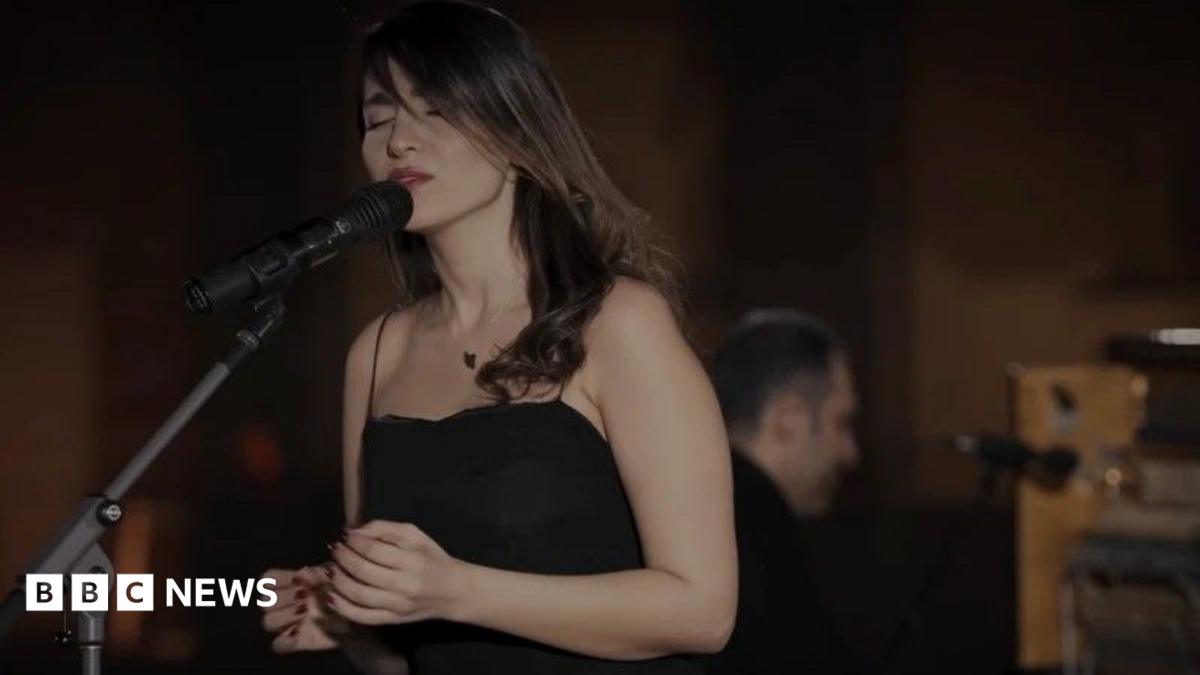
An Iranian appeals court has upheld a sentence of 74 lashes for Parastoo Ahmadi, a prominent singer who was convicted after performing without the country's mandatory hijab, according to her legal team. The ruling, confirmed on Friday, brings an end to the initial phase of a case that has drawn international condemnation and highlighted the intensifying clash between Iran's clerical establishment and women defying the country's strict dress code.
Ahmadi, 29, was arrested and prosecuted after a concert she livestreamed on her YouTube channel in December 2024 went viral, amassing millions of views. During the performance, she sang in a sleeveless dress without a headscarf, accompanied by her band. Under Iranian law, women are prohibited from performing publicly, and all women and girls above the age of puberty are required to cover their hair with a hijab and wear long, loose-fitting clothing that conceals their figures.
Iran's judiciary launched proceedings shortly after the video spread online, declaring that the concert was "in violation of the country's legal and cultural regulations." In June, a criminal court in the holy city of Qom reportedly found Ahmadi and eight members of her band and production team guilty of offences including "offending public decency" through the publication of "obscene and indecent material." Alongside the 74 lashes, the defendants were banned from working in audiovisual activities and from leaving the country for two years.
According to the defendants' lawyers, the appeals court rejected their challenge on Friday without holding a hearing. "In our view, holding the concert was not a crime at all," one of the lawyers told the BBC. "The trial court imposed one of the harshest punishments for these charges, although fines and less severe penalties were also available." The lawyer added that the Court of Appeal declined the opportunity to hear the case and upheld the original judgment, suggesting that the primary aim of the ruling was to deter similar events from occurring in the future.
News of the initial sentence in June provoked widespread outrage among Iranians on social media, with many expressing solidarity with Ahmadi and condemning the punishment as disproportionate. Exiled Iranian singer Googoosh, an iconic figure in Persian music, posted on Instagram: "May these dark days come to an end, and may women regain the freedom to choose how they live and dress, and may artistic expression once again flourish in our precious homeland." Renowned musician Hossein Alizadeh also spoke out, stating that he was "willing to take 70 lashes in Parastoo Ahmadi's place."
Human rights organisations have similarly denounced the sentence. Amnesty International warned that "flogging constitutes cruel, inhuman and degrading punishment, and violates the absolute prohibition on torture and other ill treatment." The organisation's statement underscored the broader concern that corporal punishment in Iran is used not only as a judicial penalty but as a tool of social control and intimidation.
The case has resonated particularly strongly because it echoes an earlier episode in January 2024, when Kurdish-Iranian activist Roya Heshmati was flogged 74 times after being convicted of "violating public morals" over a photograph posted on social media showing her without the hijab. Heshmati described how a female officer forcibly placed a scarf on her head at a prosecutor's office in Tehran before a male officer whipped her shoulders, back, hips, and legs, according to the Kurdish rights group Hengaw. The repetition of the 74-lash figure in Ahmadi's case suggests a deliberate pattern of punishment meant to send a clear message to women who defy the dress code.
The punishments meted out to Ahmadi and her colleagues arrive against the backdrop of the "Woman, Life, Freedom" movement that erupted in 2022 following the death in custody of Mahsa Amini, a 22-year-old Kurdish woman detained by morality police in Tehran for allegedly wearing her hijab improperly. The nationwide protests that followed saw women burning their headscarves and waving them in the air in open defiance of the clerical establishment. Hundreds of people were killed during the security forces' crackdown on those demonstrations.
Since the protests, many women and girls across Iran have stopped covering their hair in public altogether, in what analysts describe as a sustained act of civil disobedience. Authorities have responded with periodic waves of arrests, warnings, business closures, and other punitive measures aimed at enforcing the dress code. Yet the enforcement has been inconsistent, revealing deep divisions within the Iranian establishment over how aggressively to pursue the hijab mandate.
Earlier this month, conservative politician and Expediency Council member Gholamali Haddad-Adel — who is also the father-in-law of Supreme Leader Mojtaba Khamenei — acknowledged that Iran's war with the United States and Israel meant authorities "cannot engage on this front as much as we should for the time being." That war began at the end of February, only weeks after Iranian security forces had violently repressed another wave of mass protests sparked by the country's economic crisis, killing thousands of people.
The Ahmadi case thus sits at the intersection of several overlapping crises facing the Islamic Republic: internal dissent over mandatory hijab, an economy in freefall, and external military conflict. Her lawyers' argument that the concert was not a crime at all highlights the legal ambiguity surrounding artistic expression and women's public performances, which are constrained by a patchwork of statutes and religious edicts rather than a single clear prohibition.
For many observers, the appeals court's refusal to hold a hearing is as significant as the sentence itself. It signals that higher courts are unwilling to challenge harsh lower-court rulings, even when lesser penalties were legally available. The decision to uphold the lashes, the travel ban, and the professional restrictions collectively aims to isolate Ahmadi and her collaborators, both economically and physically.
Ahmadi's case has become a rallying point for Iranian women and artists who see her punishment as emblematic of a system that seeks to control female bodies and silence dissent. The international attention generated by her performance and subsequent sentencing may also complicate Tehran's efforts to present itself as a reasonable actor on the world stage, particularly as it navigates war and economic isolation.
Whether the sentence will actually be carried out remains uncertain, as Iranian authorities have sometimes suspended corporal punishments in response to public pressure or political calculations. Nonetheless, the court's decision stands as a stark reminder of the risks faced by women who choose to defy Iran's dress code, and of the judiciary's role in enforcing a vision of public morality that a growing number of Iranians reject.







Comments (0)