 rizky-amelia
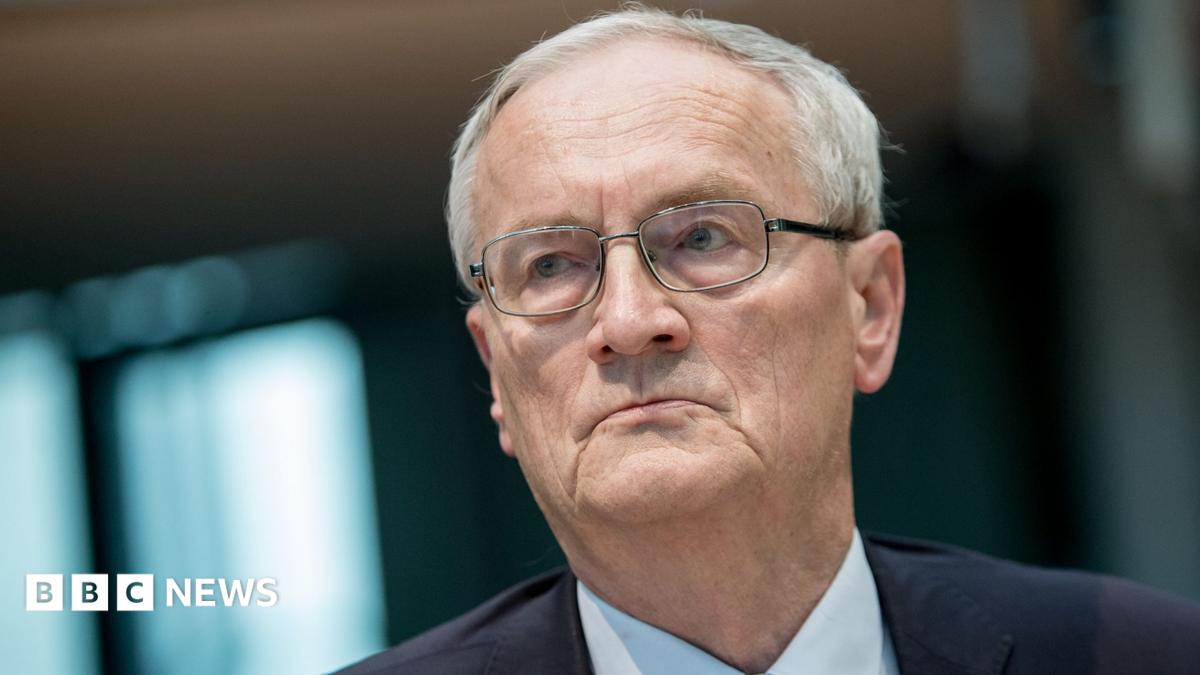
German authorities have arrested August Hanning, the former president of the country's Federal Intelligence Service (BND), on suspicion of espionage, treason and obtaining classified information on behalf of a foreign power. The Federal Prosecutor's Office confirmed the arrest, which marks one of the most dramatic national security cases in Germany in recent memory and raises serious questions about oversight within the country's intelligence apparatus.
Hanning led the BND from 1998 to 2005, a period that spanned some of the most consequential years in modern European security, including the aftermath of the September 11 attacks and the lead-up to the Iraq War. After leaving the agency, he built a second career as a private consultant, a role that prosecutors now allege he may have exploited to funnel sensitive material to foreign intelligence services.
According to prosecutors, Hanning used classified intelligence to prepare what they described as an "analysis" for an officer of one foreign intelligence service, and maintained sustained contact with a representative of a second foreign spy agency over a period of several years. Investigators have not publicly identified which foreign powers are believed to be involved, leaving open the question of whether the alleged recipients were allied nations or adversaries.
Police detained Hanning at his home in Nordwalde, a town near Münster in western Germany, on Tuesday. A second suspect, identified only as Manfred D in line with German privacy conventions, was arrested in Bavaria. The two arrests appear to be closely linked, with prosecutors alleging that Manfred D supplied Hanning with a vast trove of secret material.
Manfred D is a former BND employee who, according to the prosecutor's statement, served as Hanning's bureau chief and remained inside the agency until this year. He is accused of passing roughly 2,000 classified documents to Hanning in exchange for money. The sheer volume of material involved suggests a long-running operation rather than an isolated lapse of judgment.
Prosecutors further allege that Manfred D served as chief of staff to Hanning's successors between 2012 and 2026, a position that gave him routine access to highly confidential information. They say he abused that access to obtain material intended exclusively for internal BND use and then handed it to Hanning "in exchange for remuneration." Manfred D faces charges of aiding and abetting attempted treason as well as treasonous espionage.
The case against Hanning centers on what prosecutors say he did with the documents. On one occasion, they allege, he drew on classified intelligence to draft an analysis for an officer of a foreign intelligence service. Prosecutors noted that it remains unclear whether the material actually reached its intended recipient, a detail that could prove significant as the investigation proceeds.
Beyond that single alleged transfer, Hanning is accused of maintaining close contact with a representative of another foreign intelligence service for several years. Prosecutors say he passed political information to this contact, some of it based on material provided by Manfred D. Taken together, the allegations paint a picture of a former spymaster who may have continued to operate in the shadows long after leaving office.
The investigation reportedly began to take shape through an unexpected route. Local media say Hanning's alleged possession of intelligence documents came to light during a separate case involving Christina Block, the German steakhouse heiress. Hamburg prosecutors accused Block of orchestrating the kidnapping of her two youngest children in 2023 amid a bitter custody dispute.
Investigators reportedly allege that Hanning was involved in an earlier attempted kidnapping of the children, a claim he denies. During the course of that inquiry, state criminal police officers are said to have discovered an electronic data storage device containing sensitive material, including recent BND documents. That discovery appears to have opened the door to the espionage investigation now engulfing the former spy chief.
Court appearances are scheduled imminently. Hanning is due to appear before a judge on Wednesday, while Manfred D is expected in court on Tuesday. German authorities have not indicated whether they will seek pretrial detention, though the gravity of the charges would typically make that likely.
The arrests represent a painful moment for the BND, which has weathered similar controversies before. In 2023, a high-ranking German intelligence officer, identified as Carsten L, was charged with treason for allegedly passing state secrets to Russia. Prosecutors claimed he shared intelligence about the war in Ukraine and the Wagner mercenary group and received roughly €400,000, equivalent to about $450,000 or £340,000, in return. That trial is still ongoing.
The recurrence of such allegations has prompted broader debate in Germany about how effectively the BND vets its personnel and monitors the activities of former officials who retain access to classified networks. Hanning's transition from running the agency to working as a private consultant is precisely the kind of career path that security analysts warn can create vulnerabilities, particularly when former officials maintain relationships with foreign intelligence contacts.
Under German law, treason and espionage charges carry severe penalties, and the involvement of a former agency president adds an unusual layer of political sensitivity. The case is likely to intensify scrutiny of Germany's intelligence oversight mechanisms, which have been criticized in the past for being fragmented across federal and state authorities.
For now, prosecutors have released only limited details, withholding the identities of the foreign services allegedly involved. That silence may reflect the early stage of the investigation, or it may signal diplomatic sensitivities that officials are anxious to avoid inflaming. Either way, the coming court hearings and the continuing inquiry are expected to yield further revelations about how a man who once ran Germany's foreign intelligence operations came to stand accused of betraying them.










Comments (0)