 rizky-amelia
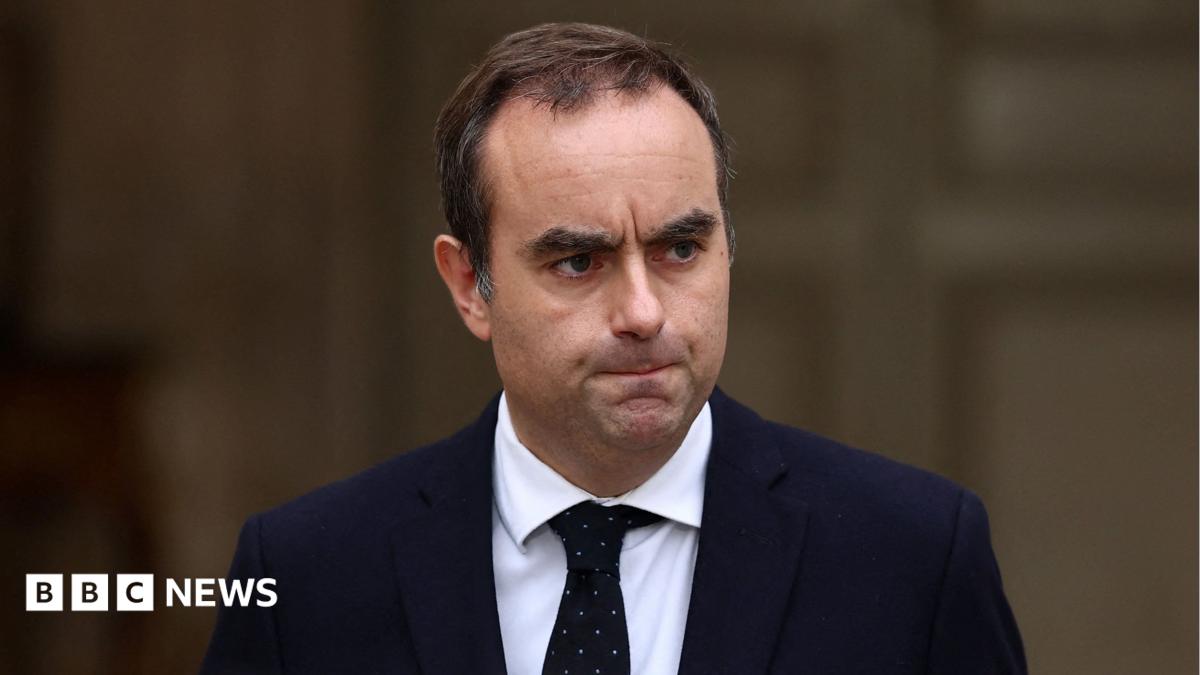
French Prime Minister Sébastien Lecornu has issued a stark warning against any further escalation of the student protests sweeping the country, describing such a move as "irresponsible" after 164 people were arrested on Monday. The demonstrations, which began in the Paris region and have since spread to other parts of France, have seen teenagers blockading their schools for days over grievances including overcrowded classrooms and a shortage of teachers.
The unrest marks a significant challenge for Lecornu's government, which finds itself confronting simultaneous pressures from students, teachers, hospital staff and civil servants. The prime minister took to social media platform X to address reported incidents during the protests, stating that "fireworks, fires, violence near high schools: nothing justifies endangering students, staff, or police officers." His comments signalled a delicate balancing act, acknowledging the legitimacy of student concerns while condemning the disorder that has accompanied the blockades.
A French union representing high school students pushed back against the government's characterisation of the movement. The Union Syndicale Lycéenne argued that the protests constituted a "legitimate response" to the conditions students endure daily. In a social media post, the union listed a litany of complaints: "Lack of teachers and staff, dilapidated schools, overcrowded schedules and classes, stress caused by Parcoursup," referring to the national web platform through which French students apply to higher education. The union attributed these problems not to inevitability but to "10 years of Macron's policies and the lack of resources in the national education system."
Interior Minister Laurent Nuñez provided a breakdown of the toll from Monday's unrest, reporting that 12 members of the security forces, 12 students and three school staff members were injured. He also confirmed that 180 schools across the country had been affected by the protests. Nuñez did not offer additional details regarding the circumstances of those arrested, leaving questions about the nature of the charges they might face.
The movement traces its origins to last week in the Île-de-France region surrounding Paris, where lycée students – equivalent to sixth formers in the United Kingdom or high school students in the United States – began organising blockades. What started as a localised action has since expanded geographically, with protests now reported in Marseille, the northern Lille area, and Sedan in the north-eastern Ardennes department. According to the AFP news agency, four high schools were blockaded in the southern regions of Alpes-Maritimes and Var.
Alongside the blockades, authorities have reported incidents of vandalism and the targeting of police with fireworks. The interior minister characterised the demonstrations in unusually blunt terms, saying they were "not very typical protest movements." He added: "It is much more like urban violence, with a number of individuals who were masked, equipped with fireworks in tubes, equipped with projectiles, who clearly wanted to confront the internal security forces." Nuñez concluded that the unrest "wasn't about making demands; it was really violence in its purest form."
The Union Syndicale Lycéenne, however, urged students to continue blockading their schools on Tuesday, framing the action as a defence of "their rights and against budget austerity." The call to sustain the movement suggests that the grievances driving the protests remain unresolved and that the standoff between students and the government could persist. The union's language reflects a broader frustration with resource constraints in France's education system, a theme that has resonated beyond the student body.
Tuesday is set to become a focal point of broader social discontent, as unions representing teachers, hospital staff and civil servants have called for a day of walkouts. These strikes are intended to protest issues including low wages and deteriorating working conditions, meaning the government faces a convergence of labour and student activism on a single day. The alignment of these movements could amplify pressure on Lecornu's administration, which has already faced widespread demonstrations over pension reform and other unpopular policies in recent years.
Lecornu sought to strike a conciliatory tone even as he condemned the violence. He stated that "the difficulties of high schools must be heard and addressed," acknowledging the validity of some student complaints. However, he paired this acknowledgment with a firm stance: "violence must be condemned unequivocally, and its perpetrators must answer for their actions." This dual message reflects the government's effort to avoid appearing dismissive of students' concerns while maintaining public order.
The prime minister also directed blame at the far-left France Unbowed (LFI) party, accusing it of encouraging students to expand the movement. LFI leader Jean-Luc Mélenchon responded by blaming the Lecornu government for having "ordered the crackdown" on the protests, insisting that the high school students involved were "harmless." The exchange highlights the political dimension of the unrest, with opposition figures positioning themselves as defenders of students against what they portray as an overreaching state.
Since the protests began, multiple incidents involving violence between students and police have been reported. In one particularly alarming case, a police officer reportedly fired a round from a grenade launcher used for crowd control, injuring a high school student, according to France's BFMTV. Investigations have been launched into these incidents, the broadcaster added. Such episodes are likely to intensify scrutiny of police tactics and could further inflame public opinion.
The unrest unfolding in France mirrors a broader pattern of youth-led protest movements across Europe, where grievances over education funding, housing costs and economic opportunity have periodically erupted into sustained demonstrations. In France specifically, the lycée has historically served as a flashpoint for social movements, with student activism often aligning with labour unions to challenge government policy. The current wave appears to fit that tradition, drawing energy from long-standing structural complaints about the education system.
For the government, the coming days will test its ability to manage multiple simultaneous crises without appearing either heavy-handed or permissive. The interior minister's rhetoric suggests a security-focused response, while the prime minister's comments leave room for dialogue. Whether that combination can defuse the protests remains uncertain, particularly with unions preparing to join the fray on Tuesday.
At the heart of the dispute are concrete conditions in French schools: too few teachers, overcrowded classes, ageing facilities and the stress of a competitive higher education admissions system. These are not abstract grievances but daily realities for many students, and the union's messaging has sought to frame the blockades as a rational response to neglect. The government's challenge is to address those underlying issues in a way that persuades students to abandon their barricades.
With 180 schools affected, 164 arrests made and injuries reported among police, students and staff, Monday represented one of the most intense days of the current movement. How the situation evolves will depend on whether Tuesday's walkouts broaden the coalition of discontent and whether authorities can prevent further clashes. For now, both sides appear entrenched, with students vowing to continue and the government warning of consequences for those who resort to violence.








Comments (0)