 rizky-amelia
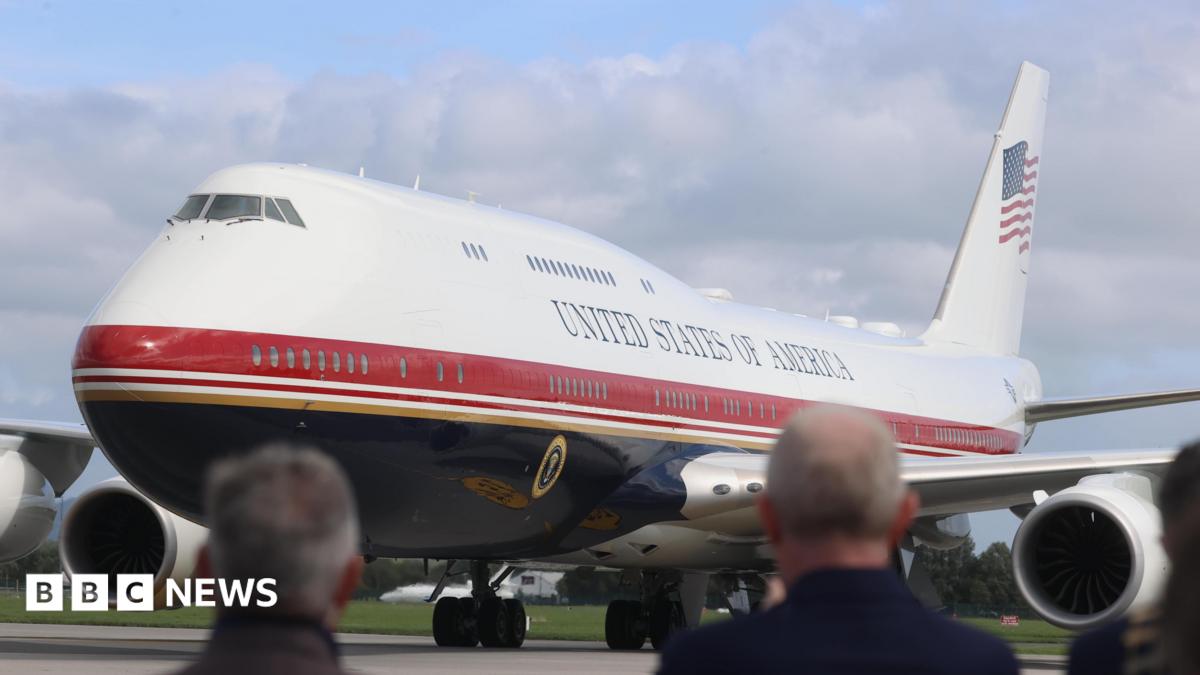
The White House has blocked CNN from joining President Donald Trump aboard Air Force One for a weekend trip to Tennessee, according to the US broadcaster, in the latest twist in an escalating dispute over media access to the administration.
Trump was due to travel to the state on Saturday to attend a college American football game. CNN had been scheduled to fly with the president until a media note released by the White House late on Friday failed to include the broadcaster on the list of outlets cleared for the journey.
CNN said no other news organisation appeared on the president's tentative schedule in CNN's place, suggesting the exclusion was not simply the result of a reshuffle in travelling arrangements. The BBC has asked the White House for comment on the decision and on the circumstances surrounding it.
The trip itself is a marquee assignment. The president is expected to watch a match between the University of Tennessee and the University of Texas College at Neyland Stadium in Knoxville, with the game due to begin around midday local time. Any president in attendance would be surrounded by a large pool of accredited reporters and camera crews — the kind of access that generates hours of rolling footage and pictures for networks at home.
That is precisely what makes the exclusion significant. Air Force One is a far more restricted space than the White House press briefing room, and access to it is not normally distributed by rotation in the way a press pool is. Being left off the manifest means CNN would not simply lose a seat on a bus or a slot in a filing pool; it would lose the chance to produce its own footage of the president travelling, and to supply live pictures to other outlets through the wire services.
The move extends a campaign that began last week, when Mr Trump barred journalists from CNN, Politico and MS NOW from the White House after accusing the outlets of writing "fiction or lies" about his administration. All three said at the time that they were pursuing legal action, and each argued that the exclusions violated their constitutional rights to freedom of speech and freedom of the press.
The backlash was immediate across the US media. Four television networks that share a daily rotation of White House coverage alongside CNN — ABC, CBS, Fox News and NBC — paused their broadcasts of the president in solidarity with the banned outlets. The walkout left a hole in rolling television news coverage of the White House at a moment when the administration's messaging was already unusually centralised.
In response, the White House launched its own streaming channel, Trump TV, ahead of the United Nations General Assembly in New York. Officials framed the new platform as a way of distributing the president's remarks directly to the public, bypassing the traditional press corps.
The confrontation then moved into the courts. A federal judge ruled that Mr Trump barring news outlets from the White House was likely unconstitutional, and that the administration had to allow them back in — at least, in the judge's words, for now.
That ruling did not, however, end the disruption. Even after the order, the White House continued to deny entry to some CNN and MS NOW reporters who had been assigned to cover arrivals at a state dinner for Chinese leader Xi Jinping on Thursday. A White House communications account posted on X that, contrary to what the "Fake News" wants the public to believe, the outlets do not simply get free rein into every part of the White House, every event and every press call.
Regular US television coverage resumed on Friday after White House officials permitted reporters to return to the building, and the judge appeared to have secured access for the bulk of the press corps. Yet the pattern of the past week has been uneven enforcement: general access has been restored while individual events, and now travel, continue to be handled at the discretion of officials.
Analysts of the dispute say the episode illustrates the limits of a court order that speaks to building access but cannot easily reach every area of presidential activity. Entry to the White House complex is one question; access to the presidential aircraft, and to specific arrivals and state events, is another. The Tennessee trip will test that distinction in real time, because a formal exclusion from Air Force One is harder to characterise as a case-by-case security decision than the denial of entry to a single dinner.
For CNN, the immediate cost is practical. The network has already argued its case in court and lost little ground there, but the images of a president flying to a football game without its cameras will be carried by rivals, and its audience at home will see the trip through the lens of competitors it says are writing "fiction or lies" about the White House.
For the administration, the travel exclusion offers a way to keep an unwanted network away from the president without re-running the confrontation that drew a judge's ruling and a television boycott. It is, in effect, access by another means.
Attention now turns to the weekend. It remains unclear whether the White House will respond to the BBC's request, whether CNN will formally challenge the omission from the media schedule, and whether other outlets named on the tentative list will actually travel. The football game at Neyland Stadium, whatever else it delivers, is likely to be played before a heavily reduced media contingent — and a president whose own network remains a subject of a constitutional argument rather than a fixture of the travelling press.







Comments (0)