 hendra-wijaya
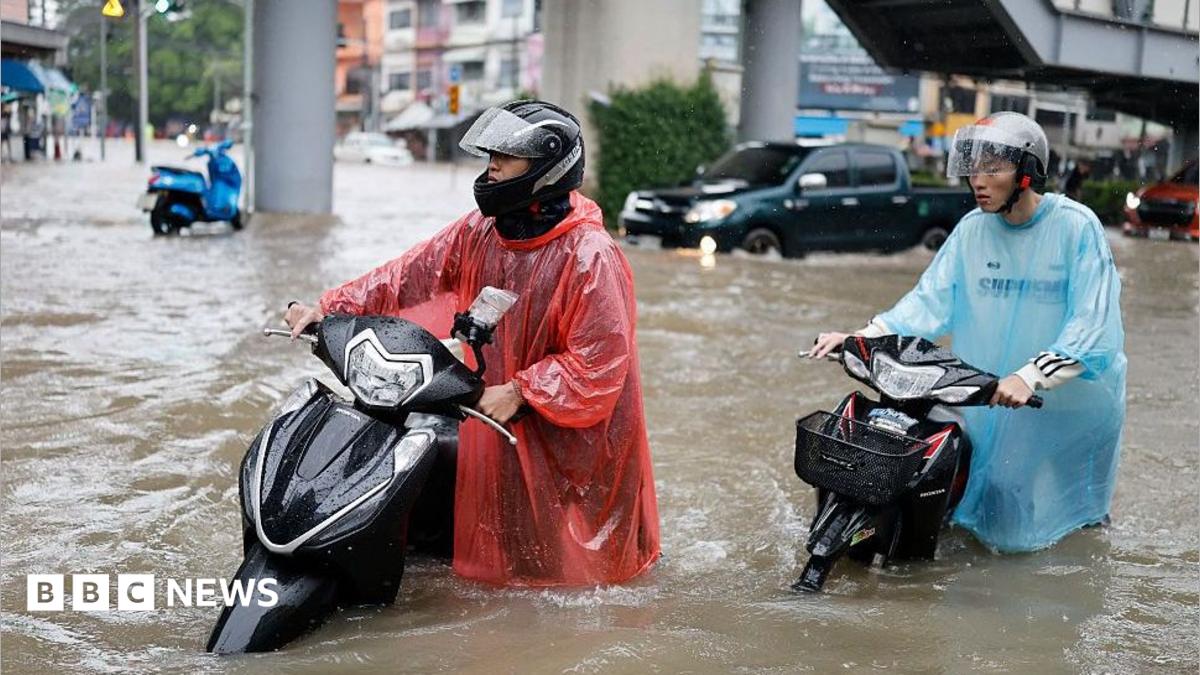
Bangkok's authorities have declared a flood emergency across the Thai capital after two days of torrential rain left stretches of roadway underwater and the city's canal network threatening to overflow. The announcement, made after 48 hours of relentless downpours, signals a crisis far beyond the ordinary seasonal storms that regularly disrupt daily life in the city.
All 50 of Bangkok's districts have now been designated emergency zones. Residents have been urged to remain at home where possible, and those living beside the capital's dense web of canals have been advised to shift their belongings to upper floors in anticipation of further rising water. The guidance amounts to an implicit warning that homes and ground-floor shopfronts close to waterways may become inaccessible.
Thunderstorms are a familiar feature of the Thai calendar at this point in the year, but the weather of the past two days has been exceptional in both intensity and duration. The volume of rain overwhelmed Bangkok's drainage infrastructure, which normally copes with heavy bursts. The result has been severe disruption on roads that residents and commuters long regarded as congested even in dry conditions.
Canal banks have given way in multiple locations across the capital, leaving the streets that run alongside them submerged. Photographic evidence published with the report shows two men wading through deep water while pushing scooters along a flooded road, and residents carrying umbrellas down a narrow street where water fills the width of the pavement. Aerial footage of the inundation has also circulated, documenting the spread of the flooding across the metropolitan area.
One resident, 67-year-old Somkid Pheuk-ngam, lives near a canal just north of central Bangkok and described a steadily worsening situation. Speaking to the AFP news agency, she said the water "keeps coming in" and had reached roughly waist height, leaving her unable to venture outside. She has been forced to keep her shop shut for the past two days, a direct illustration of the economic cost the flooding is exacting on small traders even before any official assessment of damage is complete.
Her assessment was that conditions in the city now appear more severe than in 2011, when Thailand was gripped by nationwide flooding. That earlier disaster killed hundreds of people across the country and unfolded over a period of roughly three months. This time, however, no casualties have been reported in Bangkok, despite the intensity of the rainfall and the widespread inundation of roads and low-lying neighbourhoods.
The city's governor, Chadchart Sittipunt, acknowledged the scale of the challenge and said the eastern part of the city had been the worst affected. He said officials were working to pump water out of flooded areas but faced a fundamental obstacle: with the canals themselves already full, there is limited capacity to discharge floodwater away from the city. He warned that the greatest danger lies with residents living near canals, stating that every canal in the capital is now filled to capacity.
Forecasters are not expecting an immediate break in the weather. The Thai Meteorological Service has predicted further heavy rain through the remainder of the week, and the rain is expected to persist into Sunday. The area of low pressure responsible for the recent downpours is forecast to shift towards central Thailand, which could prolong or intensify conditions in the capital. Officials have expressed particular concern that additional canals could burst their banks as the system approaches full capacity.
The emergency declaration is significant because it unlocks a more formal response framework, allowing agencies to coordinate evacuations, deploy pumping equipment and mobilise resources across district boundaries in a way that ordinary weather warnings do not. For residents, the practical implications are immediate: disrupted transport, inaccessible homes and businesses, and the need to secure possessions and avoid moving through floodwater, which can be deceptively deep and fast-moving on streets that are the city's principal evacuation and supply routes.
Bangkok's vulnerability to this kind of flooding is closely tied to its physical geography. Much of the city is low-lying and flat, with waterways threaded through dense residential and commercial districts. That same canal network functions as the drainage backbone, which means that when the canals fill, the pressure on urban streets rises as well. Roads famously choked with traffic become impassable at exactly the moment residents most need to move.
Comparisons with 2011 are likely to dominate official and public discussion in the days ahead, but the episode carries its own distinct risks. In the earlier disaster, prolonged exposure over weeks was the principal killer, with drowning and the spread of disease the main threats. In a fast-moving urban flood of this scale, the immediate dangers are different in character: accidental entry into fast currents, electrical hazards in standing water, and the breakdown of access routes for emergency services.
For now, officials are focused on the next hours rather than the longer term. Pumping operations continue, further rainfall is being monitored closely, and residents in canal-side neighbourhoods remain under advice to stay put and move valuables upstairs. The decisive question for the coming days is whether the forecast downpours arrive before flood levels begin to recede — and whether the city's full canal system can hold.










Comments (0)