 putri-anggraini
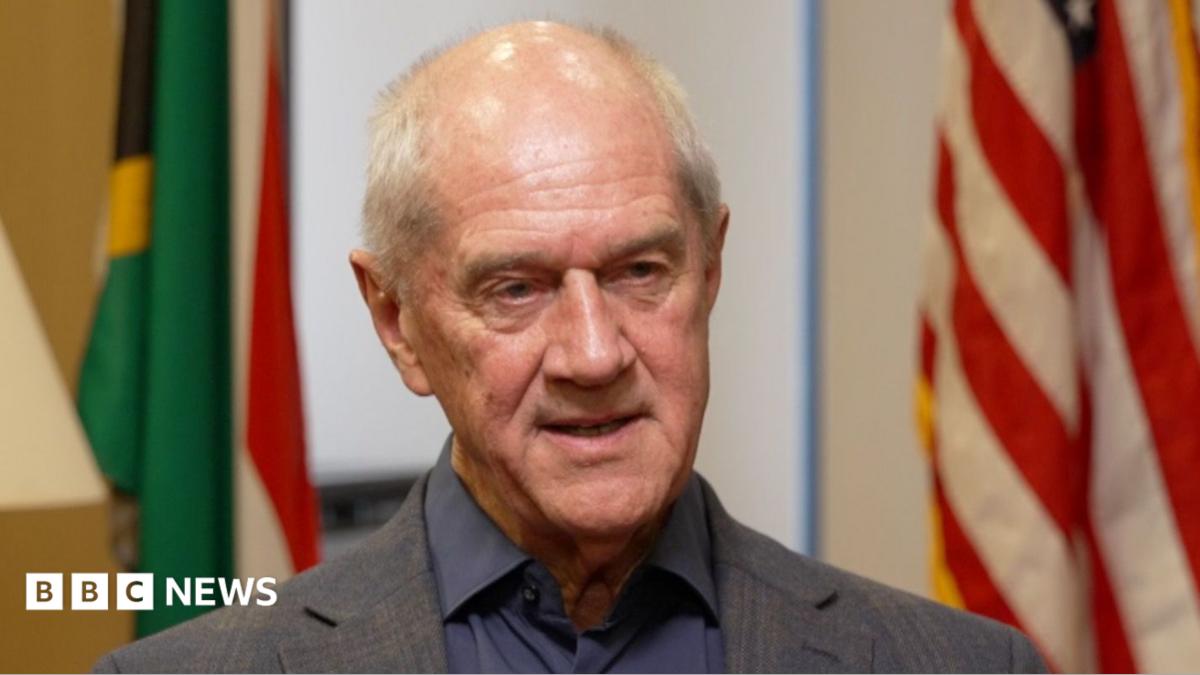
Roelf Meyer, South Africa's newly appointed ambassador to Washington, has flatly rejected President Donald Trump's claim that a genocide is being committed against white Afrikaners, telling the BBC that no such mass attack on the minority community exists. Meyer said the facts about violence in his country had been deliberately or accidentally "misdirected", and that despite asking repeatedly, he has never received a clear explanation of where that misdirection of information originated.
The denial carries particular force because of who Meyer is. He describes himself as "a born Afrikaner" — a member of the white minority community his own government acknowledges is exposed to alarmingly high levels of violent crime — and he was appointed to the Washington post in April, after diplomatic relations between Pretoria and the Trump administration soured. Asked what went through his mind when he first heard the president's assertion, Meyer recalled a simple question: whether Trump was talking about people like him and his neighbours.
Meyer said that standing inside the community makes him both better placed and more obliged to speak. He has never experienced anything resembling a coordinated campaign against Afrikaners, he said, and he doubted that anyone inside South Africa had seen the kind of systematic attack the US president describes. Because of that background, he argued, he holds the "legitimacy" to address the subject directly — and he said he would welcome the chance to sit down with Trump and explain the reality of the situation as he sees it.
His credentials are unusual. Meyer was one of the chief mediators who negotiated an end to white-minority rule, or apartheid, in the 1990s, working on behalf of the National Party — the party that had architect of apartheid. Cyril Ramaphosa, now president, was a key negotiator on the other side, for the African National Congress. Meyer said the personal "trust" that developed between the two men, along with Ramaphosa's view that an Afrikaner envoy had added value, was part of the reason he was chosen for the most delicate diplomatic assignment in South Africa's foreign service. He was careful, however, to add that he is not in Washington to represent Afrikaners alone.
Meyer's comments come amid a dispute that has escalated steadily since Trump first raised the issue. Last year the US president confronted Ramaphosa at the White House over what have been widely discredited claims of a genocide against white South Africans, and his administration opened a United States refugee pathway aimed at Afrikaners seeking to leave. According to the BBC's reporting, nearly 13,000 refugees have been admitted to the US since the scheme began, and all but three of them are South African.
The administration is not close to closing the programme. According to a notice sent to Congress on Tuesday, the Trump administration plans to admit up to a further 17,500 white Afrikaners as refugees over the coming 12 months. A White House spokeswoman defended the expansion, saying Trump has "provided a lifeline" for Afrikaners whom she described as being raped, maimed, killed and driven off their property, and accusing the South African government and much of the media of dismissing "the horrific lived experiences of this community". She said the administration continues processing refugee applications because the president "has a humanitarian heart".
Behind the policy are individual stories that cannot be dismissed as fabrications. One woman, who goes publicly by the name Lielie, moved with her family from South Africa to Texas, where they had lived on her stepfather's farm growing macadamia nuts and bananas. Even with walls around the house, an electric fence and eight bull terriers, she said she lived in fear throughout, and on three separate occasions saw people enter the property. Nothing was taken from the farm and she and her family were not harmed, she said, but friends of her husband and neighbours were, in her account, brutally attacked. Since resettling in the US, she said, her life has changed: she feels safer walking outside, and her children can play outdoors.
Not everyone seeking refuge shares the ambassador's view of the country. SJ Du Venage, who lives on South Africa's west coast and is a council member of the right-wing Afrikaner party Freedom Front Plus, is trying to move to the US under the scheme. He argues there is a "political drive towards killing white people" and farmers in particular, and says flatly that there is an agenda to wipe out Afrikaners. His testimony underscores a central difficulty in the dispute: credible fear of rural and farm violence sits alongside sweeping claims of a planned extermination that no one in South Africa — including the parties that represent Afrikaners — accepts.
Meyer stressed that genocide claims have been discredited by every political party in South Africa, including those that speak for Afrikaner communities. Official police data on crime, which forms part of the contested picture, has not supported the existence of an organised campaign against white South Africans, even as it documents severe, geographically concentrated violence against farmers. The argument between Pretoria and Washington is therefore less about whether crime occurs than about whether individual attacks, however grave, add up to a state-directed genocide.
The diplomatic stakes are growing. Last week the Trump administration announced visa restrictions for South African individuals it accused of responsibility for "race-based discrimination" against white people, and warned of further punitive measures if South African leaders failed to address the issue. Domestic and diaspora advocacy is also pressing the case: an Afrikaner lobby group is due to hold a vigil on Saturday on Washington's National Mall, where thousands of white crosses are to be placed in memory of what organisers describe as victims of farm attacks.
For Meyer, the task is to separate those allegations of specific crimes from the larger political narrative built on top of them, and to convince an audience in Washington that has largely accepted the second framing. His appointment suggests Pretoria believes the argument is best made by an Afrikaner who helped bury apartheid and can speak to both Ramaphosa and Trump. Whether that combination of credibility and candour is enough to defuse the row remains uncertain, with further visa measures, refugee admissions and a high-profile vigil all still in the offing.








Comments (0)