 putri-anggraini
The Australian federal government has announced a comprehensive package of migration reforms aimed at substantially reducing overseas arrivals. The new measures specifically target international students, serial visa applicants colloquially known as "visa hoppers," and backpackers on working holiday programs. Ministers framed the sweeping overhaul as an essential step to regain oversight of national population growth and alleviate pressure on domestic infrastructure.
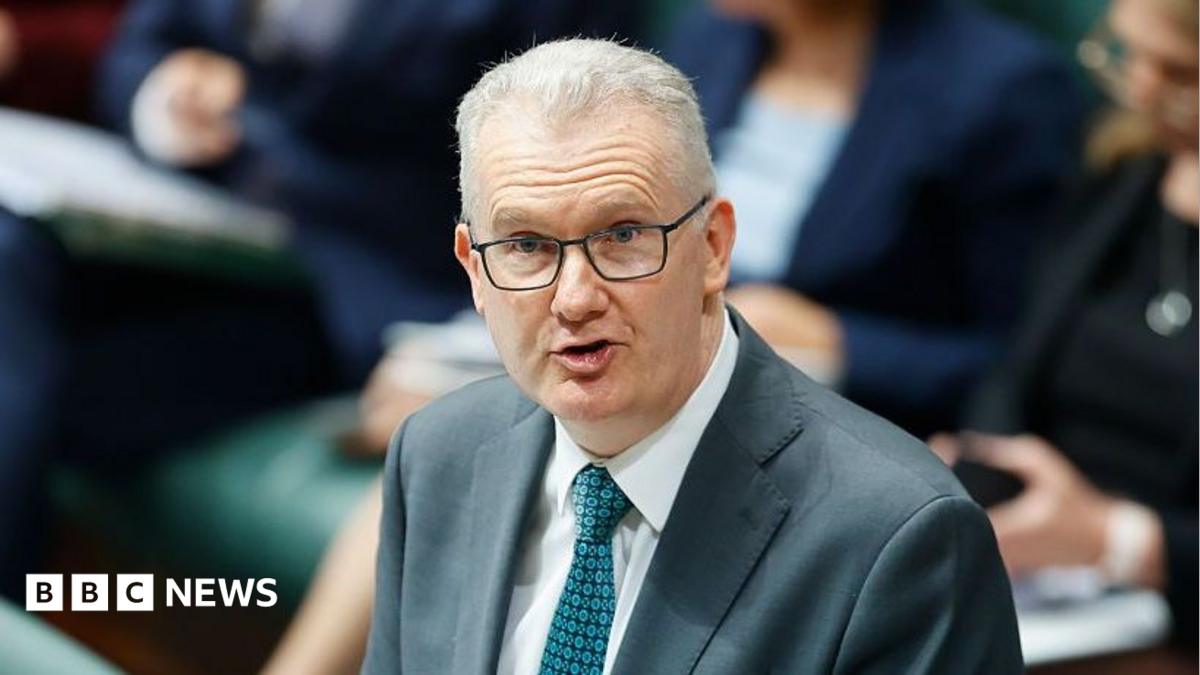
Delivering the policy outline during a keynote address titled "The work of managing the migration program: who arrives, who stays, who leaves," Home Affairs Minister Tony Burke stressed the need for strict border management. While acknowledging that migration historically represents an enduring strength for the nation, Burke asserted that maintaining public confidence requires the government to enforce a high degree of regulatory control over incoming cohorts.
Under the multi-year strategy, the Commonwealth aims to drive net overseas migration down to an annual target of 225,000 people by 2028. To meet this benchmark, authorities are implementing immediate curbs across key temporary visa streams that have seen rapid post-pandemic expansion, beginning with the tertiary education sector.
Under the newly tightened regulations, foreign students will no longer be granted the automatic right to bring family members or dependants into the country alongside them. The policy change is designed to halt the compounding growth of dependant temporary visa holders who arrive attached to primary student applications.
The government confirmed several specific exemptions to the student dependant ban. Current international students already residing within Australia will not face retrospective restrictions on their existing arrangements. Additionally, prospective applicants from Southeast Asian countries and the Pacific region remain exempt, as do postgraduate research candidates pursuing PhDs, whom Burke noted typically possess vastly different life circumstances than standard undergraduate students.
Federal authorities are also taking aggressive steps to eradicate "visa hopping." This practice involves foreign nationals completing one educational qualification and subsequently enrolling in successive courses—often at lower credential levels and occasionally through disreputable education providers—solely to extend their stay in Australia.
Under the updated framework, educational visa renewals will be restricted strictly to genuine academic progression. Students seeking to extend their residency must demonstrate they are moving upward through the qualifications ladder, such as graduating from a bachelor's degree program to pursue a master's qualification, rather than moving laterally or downward.
Significant structural shifts have also been outlined for the Working Holiday Maker program, which permits travellers aged between 18 and 30 to undertake employment in Australia for an initial 12-month period. Under the long-standing arrangement, backpackers could earn second- and third-year visa extensions by performing designated regional work, such as three months of regional employment for a second year and six months for a third.
To rein in participant numbers, the government is replacing the open renewal pathway with an annual ballot system. The quota for second-year working holiday renewals will be capped at 45,000 spots, representing a notable reduction from the 57,000 working holidaymakers who qualified in the previous year.
The curbs are even more severe for third-year extensions, where the ballot quota has been capped at just 5,000 places—a sharp decline compared to the 31,000 backpackers granted extensions last year. Despite the major role backpackers play in supplying seasonal labour to Australia's agricultural and regional industries, these quotas will significantly shrink the overall working holiday pool.
British nationals, however, will be entirely exempt from the new ballot restrictions and regional caps. This exemption is maintained under the bilateral provisions established by the free trade agreement negotiated between Australia and the United Kingdom.
The policy announcements coincide with fresh data from the Australian Bureau of Statistics, which revealed that the country's population expanded by 1.4 percent across the 12-month period ending in March 2026, reaching a total of 27.9 million people. Net overseas migration accounted for 292,100 of that growth, alongside natural increases from births and deaths.
Migration has become an intensely debated political issue across Australia, where widespread public concern is growing over escalating living expenses, scarce housing availability, and overburdened public services. Political opponents have capitalized on these anxieties, creating immense domestic pressure on the government to demonstrate decisive action on immigration numbers.
Among the vocal critics is the right-wing populist party One Nation, which secured its first lower house parliamentary seat in May and has recently enjoyed a surge in public polling. The party published an aggressive policy proposal earlier in the week advocating for a cut of 750,000 temporary migrant visas over a three-year period, as well as a hard cap on net overseas immigration of 130,000. Minister Burke firmly rejected One Nation's targets, warning that such drastic reductions would devastate critical sectors of the Australian economy.
The latest announcement builds upon restrictive measures implemented by the government in July. Those earlier interventions gave processing priority to onshore family visa applicants and domestic skilled permanent visa seekers over offshore candidates, alongside pausing working holiday visa processing for 24 specific nations, excluding the UK.
The government's hardline approach has nevertheless drawn criticism from advocacy groups. Violet Roumeliotis, chief executive of Settlement Services International, cautioned that current migration discourse is increasingly governed by short-term political expediency rather than long-term national interest. Roumeliotis argued that barring family members from accompanying international students threatens Australia's global standing and risks undermining its capacity to attract top international talent.









Comments (0)