 rizky-amelia
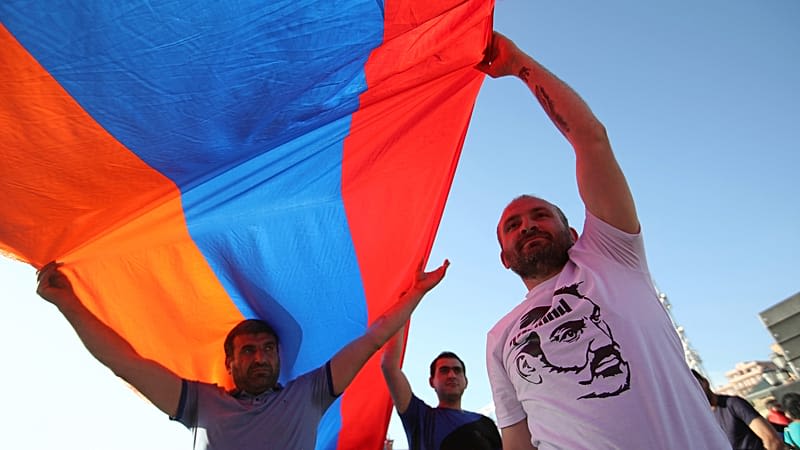
Armenian Prime Minister Nikol Pashinyan announced Monday that his government will start preparations to seek membership in the European Union, marking a dramatic realignment for a nation long considered part of Moscow's sphere of influence.
Addressing parliament in Yerevan, Pashinyan laid out a carefully sequenced plan: Armenia will formally submit its application in the near future, await a response from Brussels, negotiate the framework for accession talks, and only then put the question of EU membership to voters in a national referendum.
The announcement escalates a standoff within the Russia-led Collective Security Treaty Organisation (CSTO), of which Armenia is still a member. Months earlier, fellow alliance members pressed Yerevan to choose between staying in the bloc or pursuing European integration through a public vote. At that stage, Pashinyan called such a decision premature, as the Kremlin squeezed Armenia economically and President Vladimir Putin warned bluntly of a "Ukrainian scenario" if the country sought to straddle both camps.
On Monday, however, the prime minister struck a markedly different tone. He said he would welcome it if the CSTO expelled Armenia outright, remarking that such a move would at least spare his country the burden of deciding whether to walk away. For now, though, he confirmed Armenia intends to stay in the alliance until a final choice becomes unavoidable.
Pashinyan also reflected candidly on the collapse of the old security arrangement. Noting that Russian-Armenian ties rested for two centuries on Moscow's role as guarantor of the country's safety, he argued that events between 2021 and 2023 — spanning Armenia's wars with Azerbaijan over Karabakh — exposed serious limits in Russia's capacity to fulfil that promise. His remarks follow a peace agreement signed with Azerbaijan in August 2025, which has opened the door to economic cooperation backed by the EU and the United States.
In a further challenge to Russian interests, Pashinyan urged Moscow to surrender its railway concession in Armenia, which runs through 2038, so the country's rail network can link into international corridors — with Kazakhstan and the United Emirates floated as potential investors. The request targets one of the last pillars of Russian leverage over an economy still dependent on Russian energy and infrastructure.
The Kremlin reacted quickly. Spokesman Dmitry Peskov cautioned that aligning Armenian regulations with EU standards could produce what he termed deep trade contradictions that would hurt Armenia first, while adding that Yerevan was free to exit the CSTO if it no longer saw value in membership — signals pointing to a rocky road ahead for the two former allies.



Comments (0)