 hendra-wijaya
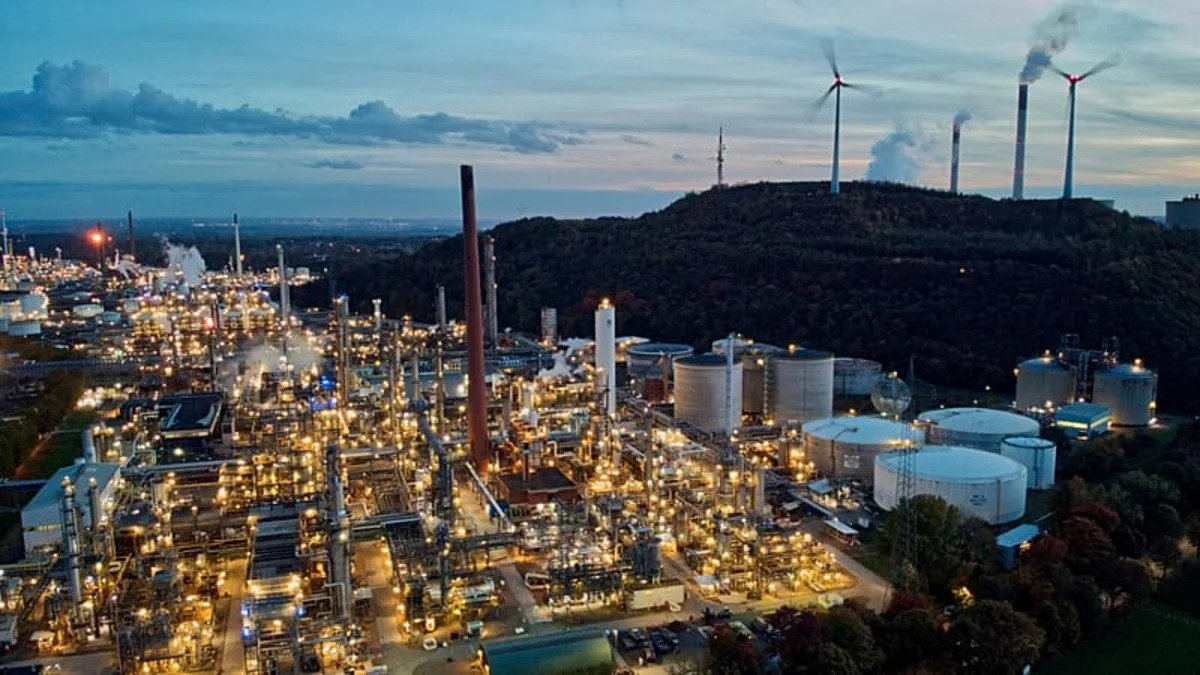
European households could see their energy bills rise this winter, as wholesale natural gas prices have more than doubled since the start of the year and storage sites across the continent sit at unusually low levels heading into the heating season.
The Dutch TTF front-month contract, Europe's benchmark wholesale price, traded above €66 per megawatt-hour on Tuesday after touching €68 earlier in the session — a sharp contrast with the roughly €29/MWh recorded in early January. The surge is being driven largely by fears that the Strait of Hormuz will remain effectively shut for months, choking off a waterway that normally handles close to a fifth of the world's LNG trade.
Storage data underscores how precarious the supply picture has become. According to Gas Infrastructure Europe, EU gas facilities were just under 63% full at the end of the gas day on 24 August, well short of the five-year average of 79%. Natasha Fielding, who oversees gas coverage at Argus Media, noted that the last time inventories were similarly depleted was 2021 — shortly before the continent's most recent energy crisis. Germany's reserves stood at around 51%, while the Netherlands had filled only about 44%.
There is some comfort in reduced demand. Oxford Economics calculates that the bloc now consumes 15%–20% less gas than it did in 2021, meaning lower stockpiles are survivable — but at a cost. Filling the gap would require heavier reliance on LNG shipments during winter, exposing Europe to bidding contests with Asian buyers for limited cargoes. Goldman Sachs analysts Samantha Dart and Laura Cyr argue that current price levels simply won't attract enough fuel, estimating that December 2026 TTF contracts could need to exceed €100/MWh in a scenario where Middle East exports recover only slowly through 2027 — more than double the bank's €50 baseline.
Politics could add another wrinkle. If supplies tighten further, Oxford Economics suggests Brussels might have to pause elements of its ban on Russian gas, which took effect in stages from 18 March 2026 and is set to become total by the end of 2027. Russia still accounted for roughly 12.5% of the EU's pipeline and LNG imports in 2025, according to European Commission figures.
For consumers, the pain will arrive unevenly. A short-lived spike would barely register on bills, but a sustained rally gradually seeps into household tariffs as old hedges and supply contracts expire. Fielding said customers on variable-rate gas plans will feel the impact soonest, while markets with liberalised retail pricing adjust faster than those dominated by long fixed-term deals. Oxford Economics puts the average lag at about six months, though the range is wide: the Netherlands sees near-instantaneous pass-through, France, Italy and Spain respond within months, and Germany and Austria can take close to a year because 12- to 24-month fixed contracts prevail there.
Among major economies, Italy looks most vulnerable to the shock — a combination of quick retail pass-through and an above-average dependence on gas — even though its storage tanks happen to be among Europe's fullest right now. Ultimately, forecasters say, much hinges on the weather: with gas remaining the backbone of European home heating, a prolonged cold snap could push demand, and prices, sharply higher. Oxford Economics warned even before the latest rally that eurozone consumer energy costs could run as much as 15% higher year-on-year by the fourth quarter.




Comments (0)