 rizky-amelia
Heavy combat around the northern Ethiopian town of Alamata has left at least 52 civilians dead over three days, according to hospital sources who spoke to the BBC, in a sharp escalation of hostilities between federal forces and fighters loyal to the Tigray People's Liberation Front (TPLF). Medical staff at Alamata General Hospital reported that the violence, which unfolded between Saturday and Monday, involved heavy explosives and artillery, with some munitions striking residential homes.
The death toll reflects the indiscriminate nature of the fighting. Among those killed were children as young as three days old, mothers, and cattle herders caught in the crossfire. A single strike on the town's marketplace alone claimed twelve lives, according to the medic, who requested anonymity for security reasons. The figures could not be independently verified because communications to the region have been severed and the BBC is unable to report from Tigray and surrounding areas.
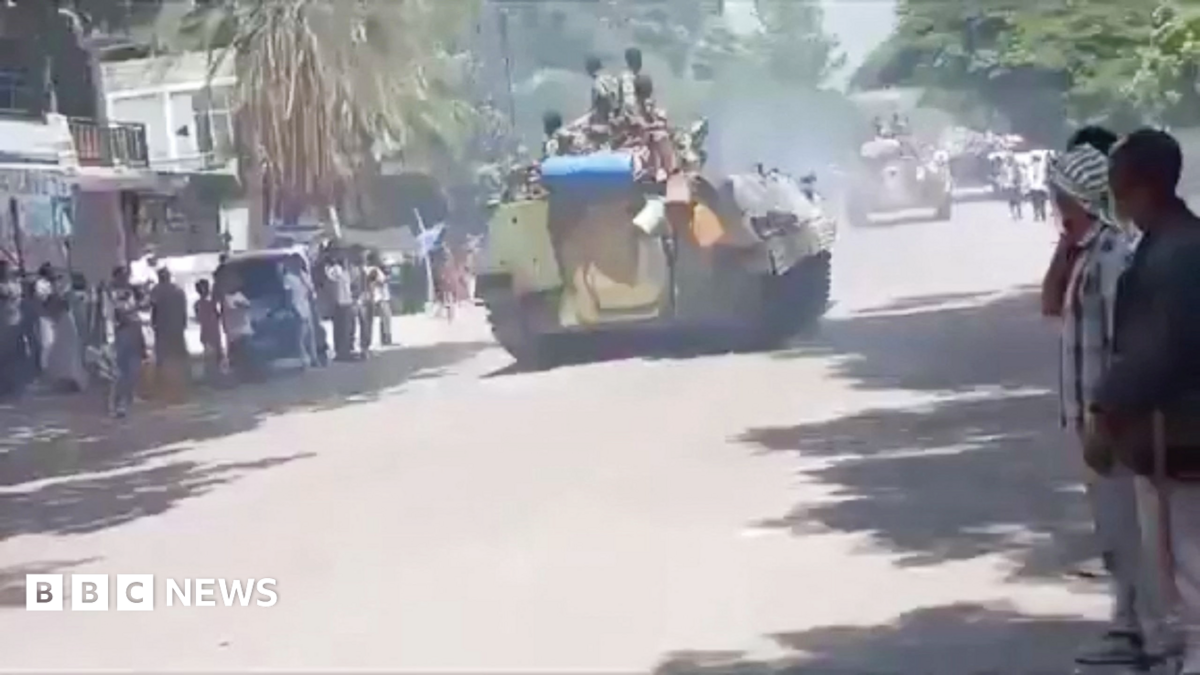
The strategic picture suggests federal troops have gained the upper hand in Alamata, wresting control of the town from regional fighters. Social media footage circulating online showed army tanks and armoured vehicles moving through Alamata's streets, imagery that appeared to corroborate accounts of a government advance. Analysts believe the capture of Alamata positions federal forces to push north toward Mekelle, Tigray's regional capital and the symbolic heart of the territory.
The renewed violence marks a dramatic collapse of the fragile peace established by the 2022 Pretoria agreement, which ended a devastating two-year civil war that killed hundreds of thousands and displaced millions. Tensions had been mounting for months before clashes erupted last week, with both the federal government and the TPLF accusing each other of violating the terms of that ceasefire. The mutual recriminations have now given way to open warfare once more, raising fears of a return to the kind of widespread destruction the region suffered between 2020 and 2022.
The two sides offer sharply conflicting accounts of how the latest round of fighting began. The TPLF maintains its forces were responding to a federal offensive that included drone strikes, while the government in Addis Ababa insists Tigrayan fighters attacked first after seizing control of airports in the region. With independent verification impossible under current conditions, the competing narratives have deepened an information vacuum that has left observers struggling to establish a clear sequence of events.
The humanitarian consequences are compounding rapidly. Médecins Sans Frontières (MSF) reported that more than 700 wounded people have been admitted to hospitals it supports across Tigray in recent days, a figure that likely represents only a fraction of the true casualty count. Banking services throughout Tigray have been suspended by the federal government, while internet access has been cut, though it remains unclear who ordered the shutdown. The telecommunications blackout has severely hampered efforts to document abuses or coordinate relief.
A separate source in Alamata described a worsening humanitarian emergency as the town swelled with people fleeing violence in surrounding areas. "All the residents of the surrounding areas entered the town of Alamata by walking on foot for as long as an hour, hoping the town would be safe," the source told the BBC. "Unfortunately, everything is blocked - no banking service, no money transfer, no power, no internet, no phone. Hence people are in crisis, simply suffering, everyone is desperate and frustrated."
The fighting has not been confined to Tigray. In the neighbouring Amhara region, 33 tourists remain stranded in Lalibela, a UNESCO World Heritage site renowned for its 13th-century rock-hewn churches and a holy destination for millions of Orthodox Christians. Most visitors to the town have been unable to leave since the airport closed to commercial flights last Wednesday, though 14 Israeli tourists were evacuated by military helicopter on Monday and another five departed a day earlier via an NGO convoy despite warnings against road travel.
A British tourist, who asked not to be named, described the situation to the BBC's Newsday programme. "We have heard fighting, gunfire and artillery cannons firing throughout the week," he said, noting a substantial military presence in Lalibela. He reported that the situation around the town had calmed in the last two days and that the airport, still being used by the military, might reopen on Thursday. Among those still stranded are Americans, Israelis, Britons, South Koreans, South Africans, an Ethiopian-New Zealander, and a Mexican.
The clashes near Lalibela have pitted the army against an Amhara militia that has aligned itself with Tigrayan fighters. In September, these forces joined with other Ethiopian armed movements to form a seven-member alliance explicitly aimed at removing the government in Addis Ababa. The broadening of the conflict beyond Tigray's borders into Amhara and Afar signals that what began as a bilateral dispute has evolved into a multi-front confrontation threatening wider regional stability.
TPLF fighters are also engaged in the Afar region, a strategically vital corridor that connects landlocked Ethiopia to the ports of neighbouring Djibouti. Control over this territory carries enormous economic significance, as Ethiopia depends on Djibouti's ports for the overwhelming majority of its imports and exports. Any sustained disruption to that trade route would compound the country's existing economic pressures and could have knock-on effects across the Horn of Africa.
Regional spillover remains a serious concern. The Ethiopian government has accused neighbouring Eritrea of supporting the armed groups arrayed against it, allegations that Asmara denies. Eritrea fought alongside Ethiopian forces during the earlier Tigray war but has since fallen out with Addis Ababa over the terms of the peace agreement. If Eritrea were to be drawn into the current conflict, it would dramatically expand the scale of the fighting and further destabilise a region already grappling with multiple overlapping crises.
For those cut off in Tigray by the telecoms shutdown, the Tigray Broadcasting Service (TBS), based in Addis Ababa, has launched an initiative to help reconnect families. The broadcaster said it will collect video messages via its Telegram channel from people outside the region and air them via satellite TV, offering a rare lifeline for relatives desperate for news of loved ones trapped in the blackout zone.
The international community has thus far responded with familiar calls for restraint, but with limited leverage and attention divided among other global crises, diplomatic pressure appears unlikely to halt the fighting in the near term. For ordinary civilians in Alamata, Mekelle, Lalibela, and the surrounding countryside, however, the immediate reality is one of flight, fear, and an uncertain future as the region slides back toward a war many had hoped was behind them.








Comments (0)