 rizky-amelia

Russian forces launched advanced jet-powered drones against targets across Ukraine every single day throughout August, representing a major technological escalation that has placed severe strain on Kyiv's air defense capabilities. The steady deployment of these fast-moving aerial weapons was documented through an extensive analysis of Ukrainian Air Force records conducted by BBC Verify, marking the first time that upgraded Geran models were confirmed to have struck on a continuous daily schedule.
The intensifying reliance on turbojet-driven systems and other uncrewed aerial platforms has drawn sharp condemnation from Ukrainian President Volodymyr Zelensky. Addressing the relentless bombardment, Zelensky described the ongoing aerial assaults as an unfolding horror taking place over the skies above Kyiv and other urban centers.
Data provided by Ukraine’s military illustrates the rapid acceleration of these strikes during the summer months. According to official figures, the Ukrainian armed forces recorded approximately 350 jet-powered drone attacks in June, a figure that surged to 1,600 incidents in July before reaching a peak of 2,800 strikes in August. During at least five separate nighttime waves in August, the newer jet-propelled models outnumbered the slower, propeller-driven versions that Russia had previously relied upon.
Military analysts point to speed as the primary driver behind Moscow's strategic pivot toward jet propulsion. Standard models of the upgraded munitions are capable of cruising at speeds exceeding 300 miles per hour, making them substantially faster than their propeller-based predecessors and vastly outstripping the operational speeds of many conventional interception systems deployed by Kyiv.
Dr. Marina Miron, a specialist in military technology based at King's College London, noted that the increased velocity creates significant operational hurdles for defensive units on the ground. She explained that the main motivation behind adopting jet-powered drones is their superior speed compared to previous generations, which substantially narrows the reaction window and makes successful interception far more difficult for Ukrainian defenders.
The internal mechanics of the upgraded Geran drones rely on compact turbojet engines to achieve their elevated cruising speeds. According to assessments from Ukrainian military intelligence, several of the propulsion units recovered from downed munitions originated from suppliers based in China, highlighting the international supply chains supporting Russia's drone manufacturing initiatives.
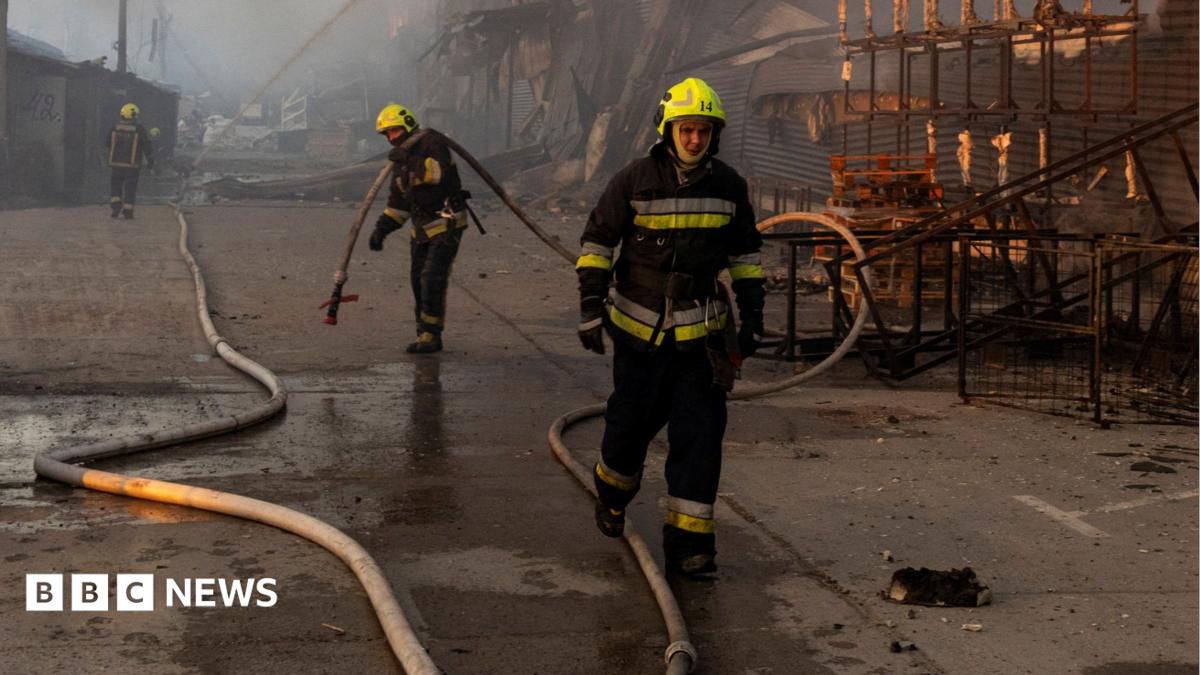
The devastating impact of these faster weapons was underscored during a coordinated wave of strikes on September 1. President Zelensky confirmed that those attacks resulted in at least 12 fatalities and left 20 other people injured, with six of the deaths occurring among railway personnel following a direct hit on a transit depot located in the capital.
The recent operational shift marks a sharp contrast to earlier periods of the conflict, when Ukrainian air defense teams achieved substantial success against incoming Russian uncrewed systems. Earlier in the year, Ukrainian forces maintained an interception rate of roughly 94 percent against long-range drone incursions, according to figures previously cited by Zelensky. However, the introduction of jet-powered variants has sparked an urgent race between offensive capabilities and defensive measures.
Ukrainian military leaders have acknowledged the growing threat posed by high-velocity drones and the necessity of upgrading their own counter-drone arsenals. On August 10, Major General Vadym Skibitskyi, the deputy head of Ukraine's military intelligence service, publicly emphasized that domestic forces urgently require newly developed interceptor missiles capable of matching the rapid flight speeds of the incoming jet-powered drones.
In response to these operational demands, four domestic Ukrainian manufacturers have initiated testing on new defensive missiles engineered specifically to neutralize the upgraded Geran drones. Ukraine's newly appointed defense minister, Yevhenii Khmara, has instructed these defense contractors to accelerate their production lines to deliver thousands of specialized interceptor units as swiftly as possible.
Strategic experts highlight that Moscow's transition toward jet-powered uncrewed platforms also offers notable economic advantages over conventional munitions. John Hardie, an analyst with the Foundation for Defense of Democracies, observed that the enhanced velocity and maneuverability of these drones increasingly blur the traditional operational distinction between uncrewed aerial vehicles and costlier precision-guided cruise missiles.
Hardie characterized these long-range strike drones as an economical alternative to traditional guided missiles, explaining that as additional performance capabilities are engineered into uncrewed platforms, the functional divide between high-end attack drones and lower-tier cruise missiles becomes increasingly narrow.
Despite these tactical advancements, specialized monitors emphasize that jet-powered drones do not fully replicate the destructive capacity of standard cruise missiles. Analysts at Conflict Armament Research pointed out that the upgraded drones possess shorter overall attack ranges, carry significantly smaller explosive warheads, and demonstrate greater vulnerability to electronic warfare countermeasures and jamming equipment.
Simultaneously, satellite surveillance reveals that Russian military planners are actively altering ground infrastructure to accommodate the expanded use of jet-powered systems. Imagery shows newly constructed facilities featuring lengthened launch rails tailored for jet-propelled drones at a dedicated staging base situated in Tsymbulova, within the Oryol region, roughly 109 miles from the Ukrainian border.
The Tsymbulova site has emerged as a central hub for coordinated drone operations against Ukrainian territory. While Ukrainian Air Force reports did not list the Oryol region as a recognized drone launch origin prior to September 2024, the territory was cited as a launch point in nearly every documented drone assault recorded by August 2026.








Comments (0)