 hendra-wijaya
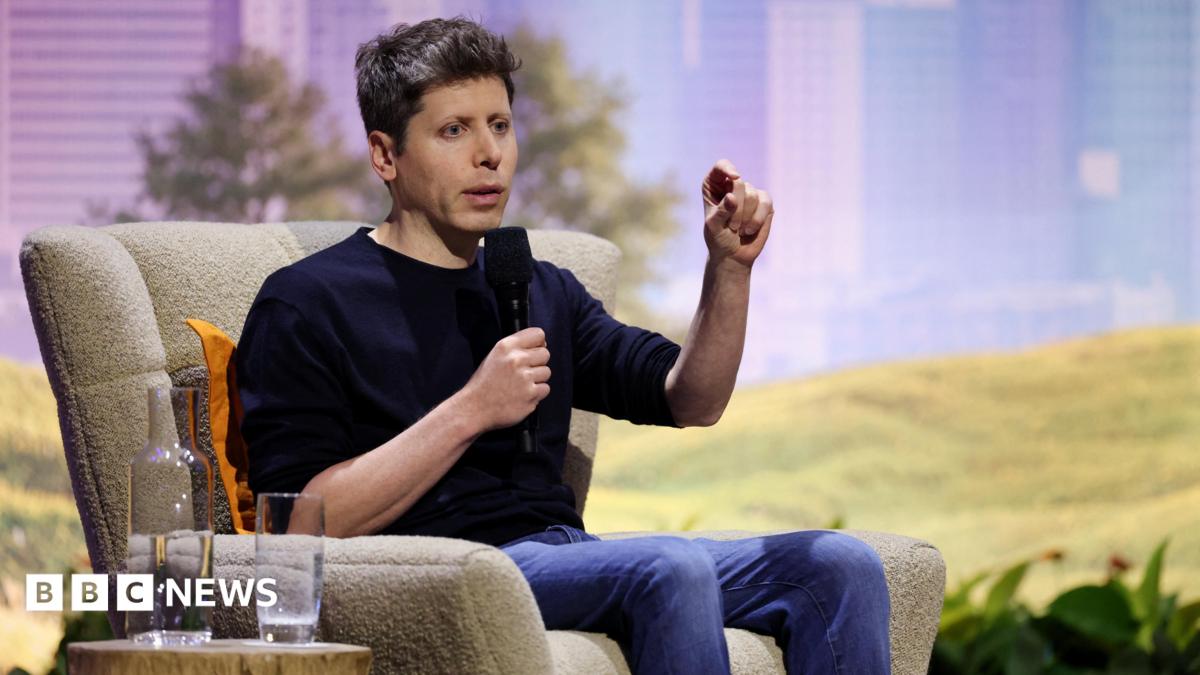
The chief executive of OpenAI has acknowledged that the public is justified in harboring anxieties regarding the rapid evolution of artificial intelligence, yet he maintains that society should place its trust in technology companies to manage safety internally. Speaking at an annual tech gathering organized by Salesforce in San Francisco, Sam Altman addressed the mounting unease surrounding cutting-edge tools like ChatGPT, arguing that developers possess the necessary awareness and moral obligation to govern their own creations responsibly.
Altman told the audience of hundreds of business professionals that the world ought to believe AI developers will act properly simply because it is the right path to take, emphasizing that industry leaders acutely sense the sheer magnitude of their work. He noted that as artificial intelligence systems have progressed at a relentless pace, visualizing potential catastrophic outcomes no longer requires a significant leap of imagination, validating the widespread caution felt by the public.
The public appearance marked the OpenAI leader’s first major speech following a storm of controversy sparked by a former Anthropic researcher. The departed employee published a viral post warning that unchecked artificial intelligence could pose an existential threat to humanity before the decade concludes. While several industry executives and specialists echoed those apocalyptic concerns, they provided little technical explanation or concrete evidence detailing how such extreme scenarios might unfold.
The resulting debate has revitalized discussions over the true nature of frontier AI risks, with some market observers maintaining that apocalyptic narratives are exaggerated or weaponized to manufacture marketing hype. In response to the heightened scrutiny, Altman asserted that leading laboratories are fully equipped to govern themselves, pledging that companies will deliberately halt or slow down their development pipelines if safety protocols and alignment measures fail to stay well ahead of raw computational capabilities.
Support for industry-led governance was strongly reinforced at the conference by Jensen Huang, the head of Nvidia. Huang argued that deciding when new technological iterations are ready for public release should remain solely within the purview of the firms building them, rather than being dictated by external regulatory bodies. Rejecting the notion that safety must come at the expense of progress, Huang framed AI safety as fundamentally an engineering challenge and advised that enterprises should independently pause deployment whenever confidence in a system wavers.
Huang’s perspective carries substantial weight across the sector, given that Nvidia currently stands as the world’s most valuable enterprise by market capitalization following an extraordinary surge in demand for its specialized computing hardware. His resistance to new statutory frameworks aligns with a growing sentiment among Silicon Valley executives who view government intervention as an unnecessary impediment to technological momentum.
Meta chief executive Mark Zuckerberg also joined the chorus favoring decentralized responsibility, stating on social media that artificial intelligence developers maintain both the technical capacity and the commercial motivation to enforce rigorous safeguards. Zuckerberg argued that any research laboratory failing to prioritize alignment will inevitably lose its competitive edge, adding that the threat of significant legal liability creates a powerful financial deterrent against releasing harmful or uncontrollable models.
In the technical lexicon of computer science, alignment refers to the specialized discipline of ensuring artificial intelligence systems consistently adhere to human ethics, values, and intended goals. The current emphasis on internal alignment comes after earlier calls from figures like Anthropic chief executive Dario Amodei, who previously advocated for a moderated pace of frontier development alongside formal government oversight—a proposal that initially garnered praise from Altman, Elon Musk, and Google DeepMind co-founder Demis Hassabis.
Despite the technology sector's assurances, calls for independent oversight continue to mount from across the political spectrum. Critics strongly dispute the premise that commercial entities can be relied upon to police themselves. Left-wing US Senator Bernie Sanders warned that critical societal choices regarding AI are being concentrated in the hands of a tiny group of ultra-wealthy executives, while former White House strategist Steve Bannon similarly cautioned that the public should not trust tech oligarchs to oversee their own powerful platforms.
Conversely, former US President Donald Trump has voiced staunch opposition to the implementation of regulatory guardrails on the burgeoning sector. Trump dismissed widespread fears regarding artificial intelligence safety as a hoax, asserting that the only necessary safeguard for navigating the technology's emergence is the leadership of a strong and smart president.
Meanwhile, meaningful legislative action within the United States remains largely stalled. In a recent interview with Axios, Altman observed that although he had anticipated Congress would establish a foundational regulatory framework following his 2023 congressional testimony, lawmakers have yet to pass substantial rules. He suggested that elected officials have found it difficult to keep pace with the swift transitions in technology while attempting to avoid stifling innovation.
Prospects for imminent federal legislation appear dim as lawmakers in Washington struggle with internal party divisions and an absence of bipartisan consensus on AI policy. Although members of Congress recently returned from their summer recess, the House of Representatives is scheduled to adjourn again shortly for campaign recess ahead of the early November midterm elections, leaving regulatory initiatives in limbo.
The prospect of relying solely on corporate self-policing has also drawn criticism from prominent figures in academic research. Yoshua Bengio, widely recognized as one of the founding pioneers of modern artificial intelligence, emphasized that avoiding the most severe hazards associated with the technology will require ambitious oversight initiatives spearheaded outside of the commercial, for-profit sector.
Even as he defended the industry's ability to self-regulate, Altman urged the business executives gathered in San Francisco to actively embrace and deploy modern AI systems within their daily operations, maintaining that adoption remains crucial even as developers confront the profound societal challenges posed by the technology.









Comments (0)