 rizky-amelia
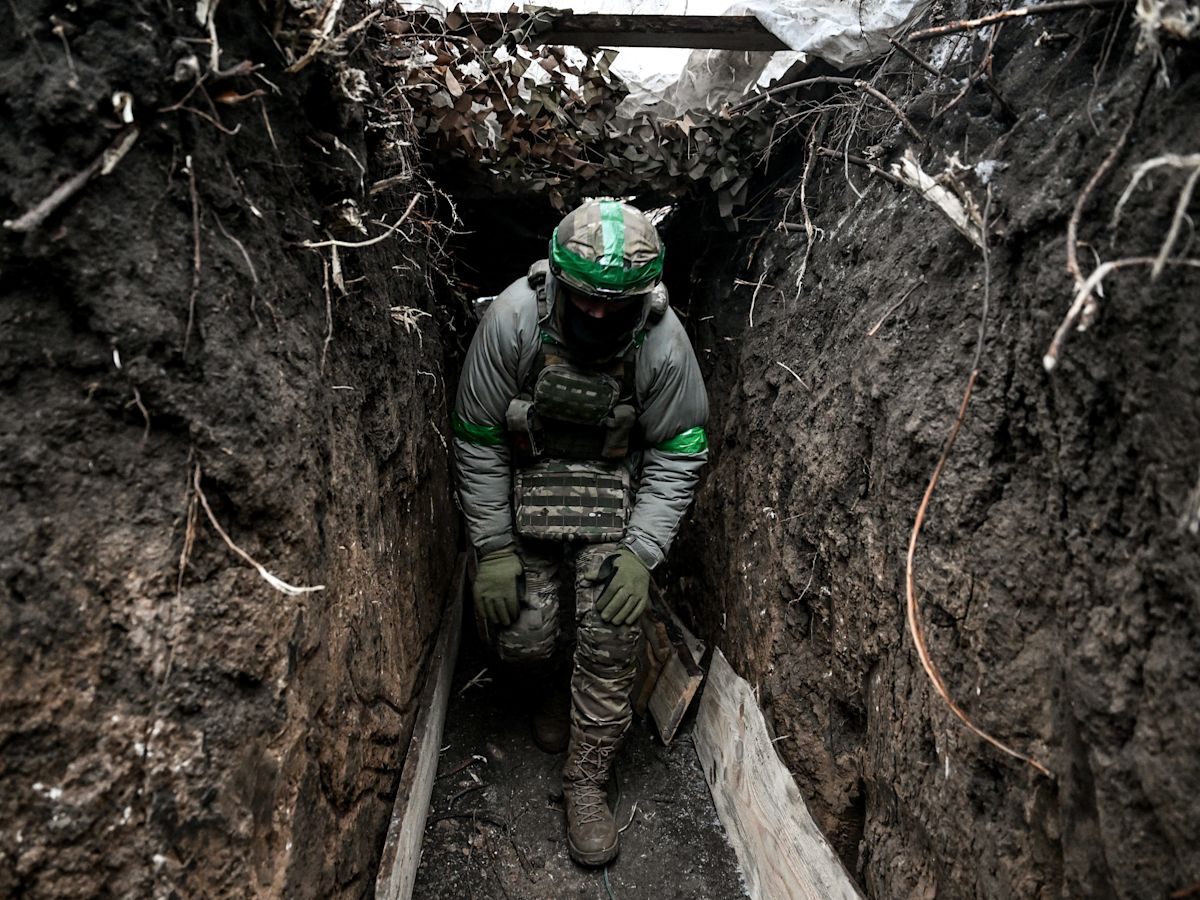
Norwegian military officers helping to train Ukrainian soldiers say the single biggest takeaway from their work is a warning aimed at their own armed forces: Norway cannot allow itself to become entangled in the kind of grinding, positional conflict now playing out across Ukraine.
The officers lead Operation Legio, a multinational training program headed by Norway and hosted at Camp Jomsborg, a purpose-built facility in Poland, a fellow NATO ally. Speaking to Business Insider there, commanders from the operation described how the war next door is reshaping how Oslo thinks about its own defense planning.
Maj. John, the S3 operations officer responsible for coordinating the overall training effort, said the priority for a country of Norway's size is ensuring any future conflict never settles into the static, attritional stalemate that has defined fighting between Russia and Ukraine. His unit, he explained, is actively searching for ways to preserve mobility so that Norwegian forces can remain agile rather than pinned in place.
The arithmetic behind that concern is stark. John noted that Russia is believed to be absorbing losses of roughly 35,000 personnel each month — figures consistent with widely cited estimates from the war. A nation of five million people such as Norway simply could not endure casualties at that rate and survive, he argued, which is why sidestepping that kind of fight altogether has become the central objective.
Brigadier Atle Molde, who commands Task Force Legio, framed the lesson even more bluntly. The crucial insight, he said, is to never end up in Ukraine's position — battling for national survival year after year while suffering enormous casualties. Preparation, in his view, is what makes the difference, and he warned that neither Norway nor any other Western nation currently meets that bar.
Molde said readiness must span every level of society, from national structures all the way down to the individual soldier learning to bring down a hostile drone with a shotgun — and, as he put it, everything in between.
Not every battlefield practice deserves to be copied, however. Norwegian trainers emphasized that they sift through what Ukraine has learned, adopting tactics and technologies that genuinely apply while setting aside improvisations born of necessity — methods Kyiv uses because better options are unavailable, not because they represent best practice.
For Norway specifically, the focus falls on capabilities that would keep its mechanized formations rolling in a future war. John pointed to the air defense expertise in which Ukraine has become world-leading, along with counter-drone systems and electronic warfare tools, all intended to shield maneuvering units from the sensors and weapons that have made movement so deadly in Ukraine.
The conditions those systems are designed to defeat have hardened over nearly five years of combat. Both armies have dug layered defensive networks, and clouds of surveillance and strike drones now watch virtually every stretch of the front, making it extremely difficult for either side to concentrate troops and armor undetected for large-scale offensives. The terrain near the line of contact has become so lethal it is routinely described as a kill zone.
Allied analysts are drawing similar conclusions. NATO's Future Force Study, published in June, concluded that militaries must learn to operate and maneuver even under relentless observation by enemy drones and sensors.
Still, some officials caution against betting everything on staying mobile. Many defense experts continue to warn that heavy attrition may prove unavoidable in a major war, meaning Western armies must also be capable of weathering a long, punishing conflict of the very kind Norway hopes desperately to avoid.
--- END ---





Comments (0)