 rizky-amelia
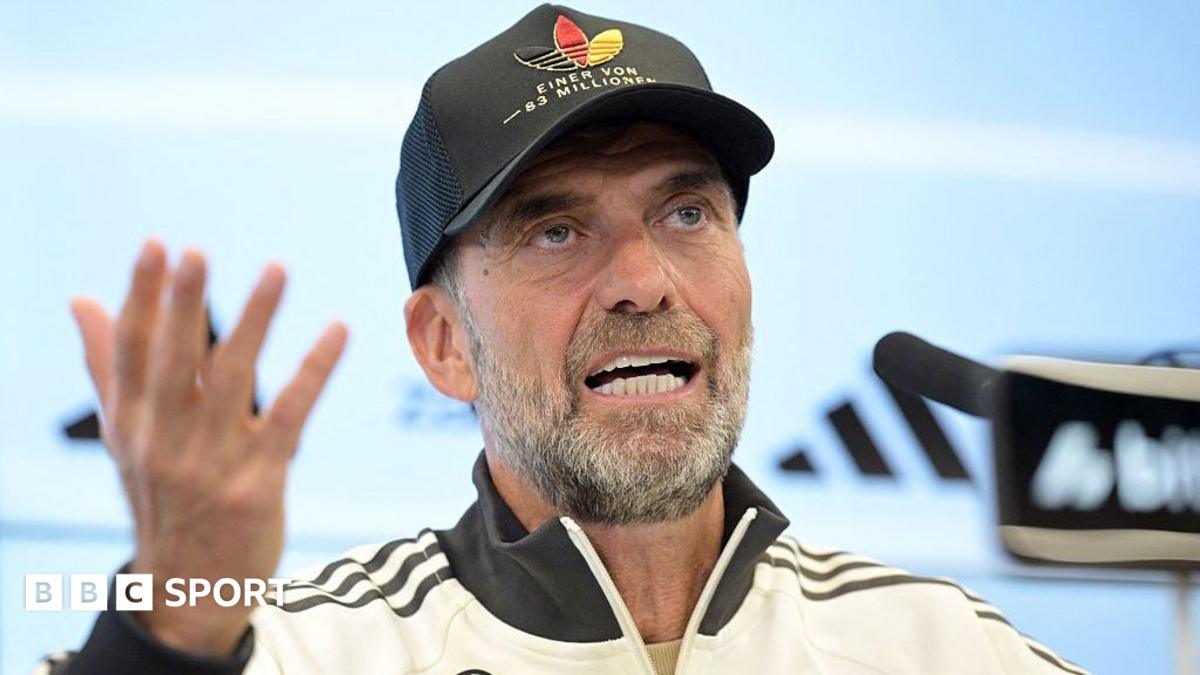
Jurgen Klopp has utilized his introductory squad announcement as the new Germany head coach to deliver an impassioned message regarding national identity and unity, urging the public to reclaim their national flag from extremist political elements. Addressing the media during a scheduled press conference, the manager spoke extensively on the intersection of sport and civic life, arguing that athletic pride should serve as a collective force for inclusion rather than an instrument of societal division.
The German manager's remarks arrived against the backdrop of significant regional election developments across the country, most notably highlighted by the Alternative for Germany (AfD) party securing 43.8 percent of the vote in the eastern state of Saxony-Anhalt. That electoral outcome left the anti-immigration political party narrowly short of claiming an outright absolute majority within the regional parliament, with the party further anticipating strong polling figures in upcoming votes in Berlin and Mecklenburg-Western Pomerania.
These regional political outcomes carry immense historical resonance within modern Germany, given that no far-right political party has held executive control of a German state since the end of World War Two and the devastation of the Holocaust carried out under Nazi rule. Acknowledging the polarized atmosphere, Klopp noted that while some individuals in the country might have viewed the election outcome indifferently, many others were left deeply distressed by the political shift.
While candidly clarifying that he does not consider himself a political analyst or expert, Klopp articulated a vision centered around what he termed "positive patriotism." The former Liverpool boss explained that he consciously favors this specific phrasing over the broader concept of national pride, expressing concern that traditional patriotic language can easily be misunderstood, distorted, or co-opted by the wrong political factions.
In detailing his viewpoint, Klopp stated that he hopes to transform how displaying the German flag is perceived by everyday citizens and the wider world. He emphasized that waving the national flag should never prompt observers to question a person's motives or character, but should instead reflect an open celebration of the good fortune of living in a kind, welcoming, and diverse nation, whether an individual was born there, raised there, or chose to move to Germany.
Reflecting on wider national priorities, Klopp acknowledged that ensuring the country is equipped with sufficient numbers of healthcare professionals, doctors, and caregivers is of greater objective importance than football. Nevertheless, he asserted that sports retain an unparalleled power to unite communities, maintaining that the national squad can actively cultivate social cohesion by demonstrating the positive influence of collective athletic ambition.
Klopp’s appointment marks the beginning of an entirely new cycle for the German national team following a turbulent period of international transition. The German Football Association moved to secure the services of the former Liverpool manager—who had been operating as the global head of soccer for the Red Bull sports group—following the departure of Julian Nagelsmann after Germany suffered a disappointing second-round exit against Paraguay at the recent World Cup.
This managerial transition arrives alongside a comprehensive changing of the guard within the squad's playing personnel. The aftermath of the early World Cup exit in the summer prompted the international retirements of veteran goalkeeper Manuel Neuer and central defender Antonio Rudiger, leaving Klopp to rebuild the team's core and establish a renewed collective identity on and off the pitch.
In response to these sweeping structural changes, Klopp unveiled an unusually large and ambitious 44-man squad featuring 16 uncapped players for the team's upcoming international window. The expansive selection is designed to navigate a demanding slate of four UEFA Nations League matches scheduled across a tight two-week timeframe, allowing the coaching staff to assess new talent while mitigating fixture congestion.
Under Klopp's rotational strategy, the squad will be divided into two distinct operating groups throughout the international break. An initial 24-man group will assemble to contest Germany's opening fixture against the Netherlands in Amsterdam on 24 September, before returning to domestic soil to face Greece in Augsburg three days later, after which the majority of those players will return to their club teams.
The opening 24-player contingent includes a notable Premier League contingent, featuring Arsenal attacker Kai Havertz, Brentford forward Kevin Schade, and Leeds midfielder Anton Stach. Bayern Munich playmaker Jamal Musiala has also been included in this initial selection, earning a call-up despite having suffered two separate collapsing episodes during pre-season fixtures for his club side.
Following the conclusion of the first two matches, a second cohort comprising 20 players will report for international duty to complete the remaining fixtures. This refreshed group will prepare for Germany's home clash against Serbia in Munich on 1 October, before traveling to Thessaloniki to take on Greece in the final fixture of the Nations League sequence on 4 October.
Headlining the second roster selection is Brentford midfielder Vitaly Janelt, who has earned his first senior international call-up to the German squad. The second group also features Liverpool playmaker Florian Wirtz and Newcastle defender Malick Thiaw, providing Klopp with an extensive look at Germany's top-tier talent performing across both the Bundesliga and English domestic competitions.
By pairing an innovative structural squad management model with a message advocating tolerance, openness, and civic unity, Klopp has established a distinct tone for his new managerial era. As Germany prepares to embark on this dense run of Nations League fixtures, the new coach remains focused on demonstrating that sport can provide a welcoming platform for positive national identity.










Comments (0)