 rizky-amelia
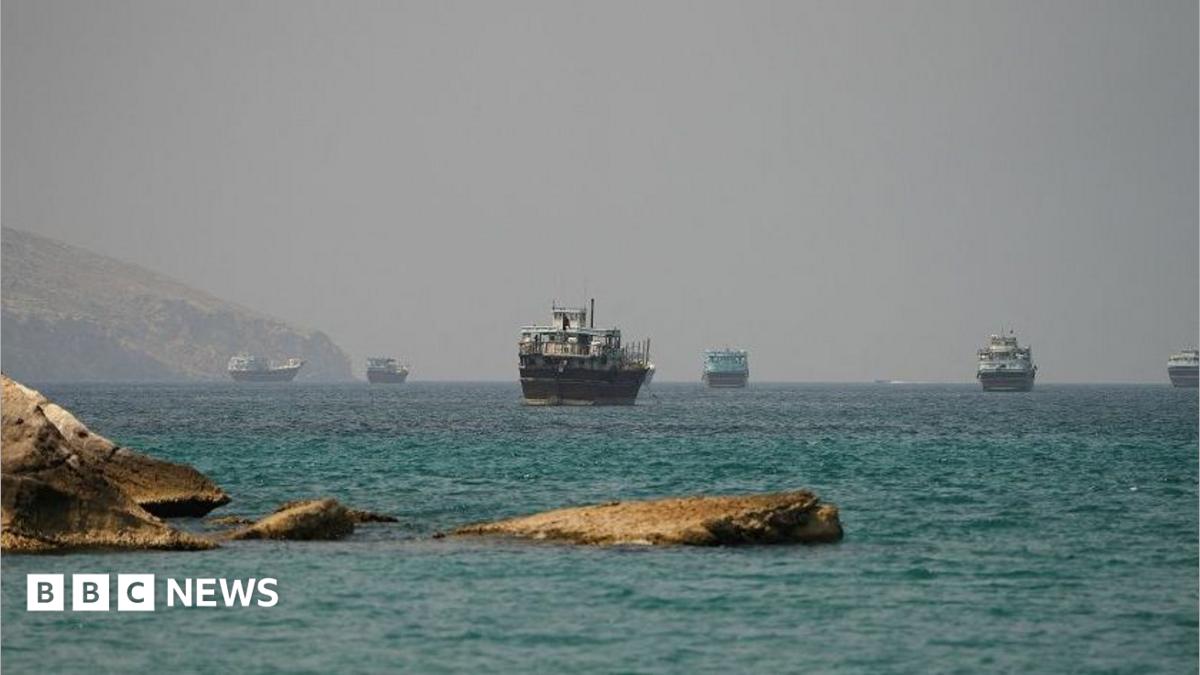
Iran has put forward a proposal to the United States that would see the Strait of Hormuz reopened within seven days, according to Iranian Foreign Minister Abbas Araghchi, who outlined the offer while speaking to reporters at the United Nations in New York. Araghchi indicated that the reopening could be achieved provided certain conditions are fulfilled, which he said are already spelled out in a memorandum of understanding signed between the two countries in June.
The foreign minister stressed that the initiative had been conveyed to Washington through Qatari intermediaries, and he framed the decision as one that now lies squarely with the American side. "The choice now rests with the United States," he said, adding that the steps Iran expects Washington to take are not novel but rather are contained within the existing MOU. He expressed confidence that if the US demonstrates genuine seriousness, preparations for restoring maritime passage are already complete.
A US official, responding to queries about the Iranian overture, told the BBC that constructive conversations were underway via mediators, touching on matters that include nuclear questions. However, no formal American reply to the proposal has been issued so far. In the meantime, the Wall Street Journal, quoting US officials, reported that President Donald Trump has turned down the deal. According to that account, Trump is privately doubtful that Iran will satisfy his conditions and has told his staff he anticipates a fresh bombing campaign as a probable development.
The backdrop to these diplomatic maneuvers is the conflict that erupted on 28 February, when the United States and Israel launched air strikes against Iran. Tehran retaliated by targeting Israel, US bases in the Gulf, and American Arab Gulf allies, while also shutting down the Strait of Hormuz. Before the war, roughly one-fifth of the world's oil and liquefied natural gas passed through the waterway, and its closure has triggered sharp swings in energy prices across global markets.
The disruption has added to the pressure on Trump to find an exit from the conflict, particularly with US Congressional elections approaching in November. Araghchi's remarks suggest that Iran sees a narrow window for de-escalation, telling reporters that "if the necessary conditions are met, the strait can be reopened, a normal maritime passage restored within seven days." He did not enumerate specific American actions but reiterated that they are already documented in the signed memorandum.
"I can tell you if there is seriousness in the US side to come to a deal and reopen the Strait of Hormuz, everything is now prepared," Araghchi added. His comments were echoed by Iranian President Masoud Pezeshkian, who told CBS News, the BBC's US partner, that the ceasefire process "will begin from the very day they accept it." Pezeshkian referenced the earlier agreement based on the MOU signed in Pakistan, saying that if Washington agrees to proceed along those lines, conditions would revert to what they were before hostilities resumed.
Pezeshkian also signaled a potential opening on nuclear oversight, stating that Iran would now permit United Nations nuclear inspectors to enter the country. He dismissed assertions that Tehran is pursuing a nuclear weapon, saying, "If they wish to come in and have inspections, we can reach accords and agreements vis-à-vis that specific topic within the negotiations." That offer could prove significant in a standoff where Western powers have long demanded greater transparency regarding Iran's atomic program.
The MOU signed on 18 June was intended to establish a ceasefire and at least partially reopen the Strait of Hormuz. The 14-point document stipulated that Iran would never acquire a nuclear weapon, noted that the US, Iran, and their allies would halt military operations on all fronts, and included provisions for ending a US naval blockade as well as providing sanctions relief. It further stated that Iran would make best efforts to ensure the safe passage of commercial vessels through the strait and would hold discussions with Oman on future shipping arrangements.
Despite those commitments, the agreement collapsed shortly afterward when both sides resumed strikes. Iran has since targeted vessels it claims attempted to traverse the Strait of Hormuz without authorization, while the US has struck Iranian sites in the strait and Iranian tankers off the coast. Washington has also kept a blockade on Iranian ports, inflicting severe damage on the Iranian economy.
Trump has asserted that his country has succeeded in getting oil out through the Strait of Hormuz. Yet shipping data tells a more complicated story. According to Kpler, a commodities data and analytics firm cited by Reuters, a recent 10-day average showed about 18 transits per day, with daily figures falling as low as nine vessels on certain days. Those numbers illustrate how far traffic remains below normal levels, even as Washington claims progress.
Complicating the picture further, Yemen's Houthis, who are aligned with Iran, have stepped up attacks aimed at disrupting oil exports from Saudi Arabia via the Red Sea on the opposite side of the Arabian peninsula. This month the group seized large, strategically important stretches of the Red Sea coast in a rapid offensive, including the port of Mokha, which overlooks the Bab al-Mandab Strait, another critical chokepoint for global shipping.
The situation has been worsened by Houthi strikes on Saudi oil installations. US media has reported that Saudi Crown Prince Mohammed bin Salman has requested military assistance, underscoring how the conflict has rippled outward to threaten the security of energy infrastructure across the region. With two of the world's most important maritime corridors now under pressure, the diplomatic initiative from Tehran faces a narrow path, contingent on whether Washington views the proposal as a genuine route to de-escalation or as a tactical pause amid a broader confrontation.






Comments (0)