 putri-anggraini

Global crude oil prices breached the $100-a-barrel threshold on Wednesday for the first time since late July, spurred by a sharp escalation in military hostilities across the Middle East. The dramatic price surge followed a series of coordinated military actions, including United States strikes on Iranian-linked oil tankers, Iranian retaliatory attacks on regional targets, and sustained assaults by Yemen's Houthi movement on energy installations in Saudi Arabia.
Trading on Wednesday afternoon saw Brent crude, the international pricing benchmark, rise by 2.83 percent to reach $100.70 (approximately £74) per barrel. The benchmark had previously hovered near $70 (£52) a barrel prior to the outbreak of direct conflict involving the US, Israel, and Iran in February. While market tensions had briefly cooled during a one-month lull, the resumption of armed confrontation in late July set off a steady climb in crude valuations that culminated in Wednesday’s sharp spike.
The mounting geopolitical instability has had an immediate cascading effect on consumer energy markets worldwide. Motorists around the globe are facing steep increases in retail petrol prices, as logistical bottlenecks, insurance risks, and direct damage to transport fleets continually constrain the international movement of fossil fuels.
At the center of the supply crunch is the effective shutdown of the Strait of Hormuz, a critical maritime chokepoint through which roughly one-fifth of the world’s petroleum and liquefied natural gas shipments typically transit. Iranian missile and drone operations against commercial vessels, coupled with an assertive US naval blockade enforcing restrictions on Iranian ports, have virtually paralyzed regular merchant navigation through the Gulf waterway.
The latest wave of maritime turmoil began overnight when the US military launched punitive strikes against vessels associated with Tehran’s security apparatus. According to US Central Command (Centcom), American forces destroyed five Iranian oil tankers connected to the Islamic Revolution Guard Corps (IRGC). Centcom stated that its forces issued warnings instructing crews to abandon ship prior to delivering the kinetic strikes.
Four of the targeted Iranian vessels—identified by the US military as the Kaviz, Charminar, Horizon 1, and Riesco—were struck in the Gulf of Oman. Video material released by Centcom documented the Riesco heavily ablaze and sinking following the operation. A fifth tanker, the Derya, was destroyed farther north in the Gulf near Kharg Island, a heavily fortified energy hub that houses Iran's primary crude export terminal.
Centcom confirmed that the offensive against the IRGC-linked fleet was carried out in direct response to repeated Iranian provocations. Over the preceding forty-eight hours, the IRGC had fired ballistic missiles at an American warship operating in regional waters on two separate occasions. Centcom reported that the targeted warship successfully evaded the incoming ordnance, resulting in no injuries to US service members and no damage to the vessel.
In response to the destruction of its tankers, the IRGC Aerospace Force initiated retaliatory strikes against American military infrastructure. Iranian forces launched a barrage of ballistic missiles directed at aircraft, maintenance facilities, and hangars situated at the Muwaffaq Salti Air Base in neighboring Jordan.
Jordanian military officials confirmed that their air defense systems engaged the incoming Iranian barrage, intercepting twenty missiles in the skies over the kingdom. Two additional projectiles impacted unpopulated desert terrain, and authorities confirmed that the incident resulted in no casualties or critical damage on the ground.
Concurrently, the IRGC Navy claimed to have broadened its counter-strikes across the maritime theater, asserting that it had targeted two US Navy destroyers and eight commercial oil tankers within the Strait of Hormuz, allegedly inflicting heavy damage on the vessels. However, Centcom swiftly dismissed these claims regarding American naval losses, declaring that reports of strikes on its destroyers were entirely false.
Despite conflicting military accounts, the commercial shipping sector reported widespread disruption and distress across Gulf waters. The United Kingdom Maritime Trade Operations (UKMTO) agency announced that it had logged multiple reports of civilian merchant vessels coming under disabling fire amid the unfolding cross-theater military operations in both the northern Gulf and the Gulf of Oman.
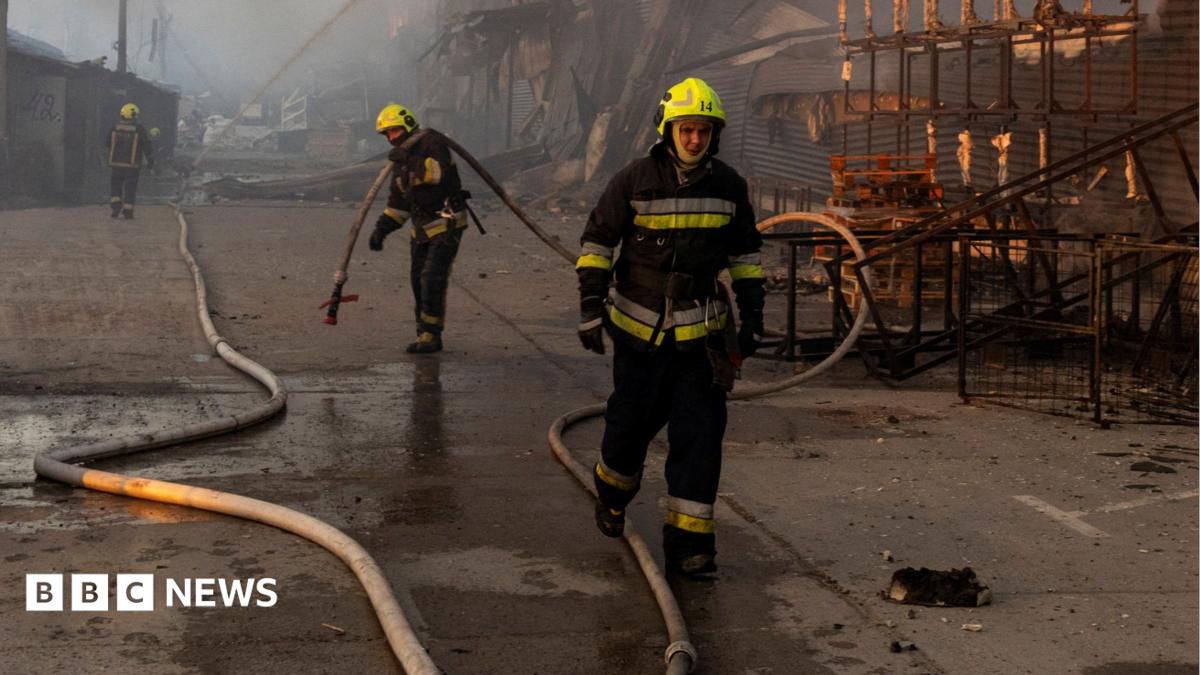
Among the specific maritime incidents detailed by UKMTO was a commercial vessel anchored roughly 24 nautical miles (45 kilometers) northwest of Port Rashid in the United Arab Emirates. The ship was observed listing heavily in the water, pointing to potential hull breach and water ingress following an impact from an unidentified projectile. In another incident, Iraqi emergency personnel were dispatched to extinguish a blaze on the Panama-flagged tanker New Andros, which had been carrying two million barrels of fuel oil when it was struck by an aerial drone in the Gulf.
The maritime crisis appears poised to widen further following statements from Iranian military officials. IRGC spokesman Hossein Mohebi announced on Iranian state television that Tehran will establish an expanded "prohibited zone" for commercial navigation. Mohebi indicated that the designated zone would reach past the Strait of Hormuz to encompass sections of the Sea of Oman and the Arabian Sea, cautioning that any vessel entering these maritime corridors without prior coordination would be subjected to Iranian sanctions.
The volatility in energy markets has been further compounded by the deteriorating security environment in the southern Arabian Peninsula. In Yemen, Iran-aligned Houthi forces reported enduring dozens of Saudi airstrikes, which were launched in retaliation for Houthi drone and missile attacks that ignited fires at several major Saudi Arabian oil facilities a day earlier. The renewed exchange marks a severe unraveling of the four-year ceasefire that had previously held in Yemen until hostilities reignited in July.
Addressing the continuous cycle of military engagements in the region, US Secretary of State Marco Rubio characterized the American response as direct and unavoidable. Rubio noted that Iran continues its attempts to target US naval assets in the region, affirming that any such hostile efforts against American forces will consistently be met with decisive military countermeasures.









Comments (0)