 hendra-wijaya
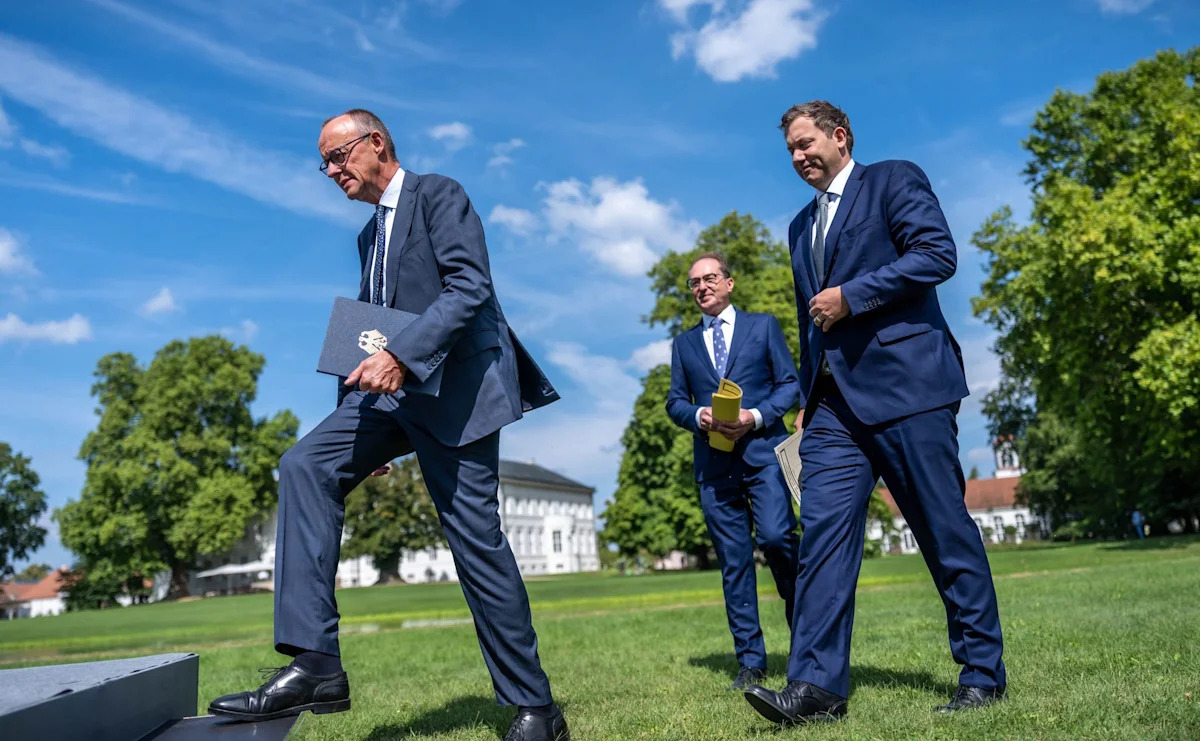
German Chancellor Friedrich Merz has declared that Germany's economy is expanding once again, bringing to a close a three-year recession that strained the foundations of Europe's largest economy. The announcement marks a symbolic and material turning point for a country that has spent recent years contending with shrinking output, weakening industry and eroding confidence in its economic model.
For decades, Germany served as the anchor of the eurozone, admired for its export strength and manufacturing depth. The downturn that took hold in 2023 chipped away at that standing. Consecutive years of contraction — a rarity in the country's postwar history — fueled talk of structural decline and prompted uncomfortable comparisons with faster-growing peers in Europe, Asia and North America.
The origins of the slump are well documented. An energy crisis triggered by the loss of cheap Russian natural gas sent wholesale power and fuel costs soaring, forcing energy-intensive producers of chemicals, metals and glass to curtail output. The powerful automotive sector, meanwhile, found itself squeezed between a costly transition to electric vehicles and intensifying competition from Chinese manufacturers, while elevated interest rates chilled construction activity and dampened investment across the board.
The recovery carries enormous political weight for Merz, who took office in 2025 promising to restore Germany's competitiveness. Reviving growth was the centerpiece of his campaign and remains the defining test of his chancellorship. A returning upswing strengthens his hand as he presses ahead with an ambitious reform agenda, while a relapse would hand ammunition to critics who doubt his coalition's ability to deliver lasting change.
Since taking power, Merz's CDU/CSU–SPD coalition has moved aggressively to stimulate the economy. Lawmakers relaxed the constitutionally anchored limits on public borrowing to unlock hundreds of billions of euros for infrastructure modernization and defense spending. The government also introduced investment incentives for companies, laid out plans for corporate tax relief and pledged to slash red tape and bring down electricity costs for industry.
Business groups, which had repeatedly warned that Germany risked deindustrialization as firms shifted production abroad, greeted the news with cautious relief. Employer associations have long argued that the country's high energy prices, dense regulation and slow permitting were pushing companies toward friendlier locations, and they have urged policymakers to treat the turnaround as an argument for accelerating reforms rather than pausing them.
The implications extend well beyond Germany's borders. As the biggest economy in the European Union, accounting for roughly a quarter of eurozone output, Germany's fortunes shape those of its neighbors. Its prolonged stagnation weighed on supply chains and export orders from France to Central and Eastern Europe, and a sustained rebound is expected to lift demand for components, services and goods across the continent.
Even so, economists urge restraint in celebrating. They note that a brief return to expansion does not erase the deep challenges confronting the country: uncertainty surrounding United States trade policy, persistent Chinese competition, acute shortages of skilled workers and an aging population. Structural weaknesses in rail networks, digital infrastructure and the electricity grid also remain unresolved and could cap the pace of any recovery.
Merz himself has consistently argued that growth must be locked in through further deregulation, faster planning approvals and sustained private and public investment. In his view, the exit from recession is a starting point rather than a finish line, and consolidating the upswing will require discipline from both government and industry in the months ahead.
Attention will now turn to whether the momentum carries through the remainder of the year, with households' sentiment, corporate order books and the labor market serving as key indicators. For Merz, converting a fragile rebound into a durable boom is the central promise of his tenure. For Germany, the stakes are equally clear: demonstrating that its economic model, written off by skeptics only recently, can adapt and thrive again.




Comments (0)