 hendra-wijaya

German Foreign Minister Johann Wadephul has reaffirmed the federal government’s resolute solidarity with the nation’s Jewish population after a targeted death threat was directed against Charlotte Knobloch, one of the most prominent and respected Jewish community leaders in Germany. The minister's public pledge comes amid heightened domestic concern over the safety of community leaders who face intimidation from right-wing extremist factions.
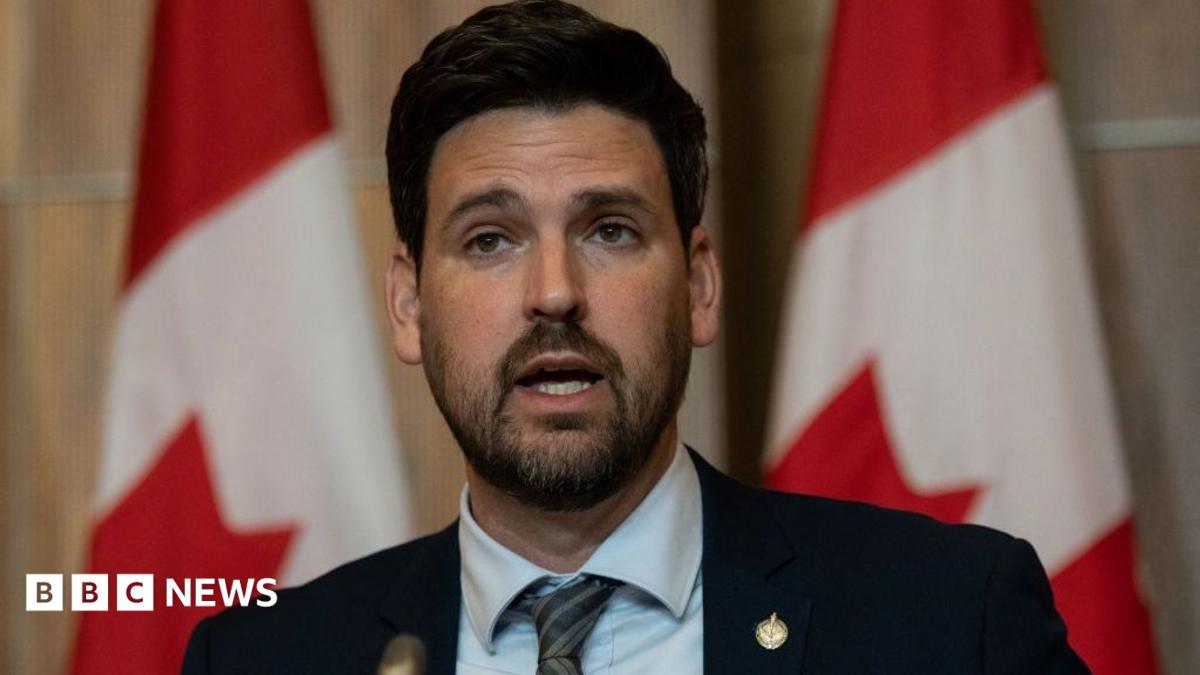
Appearing at a joint press conference in Munich alongside Bavarian Premier Markus Söder, Wadephul delivered an unequivocal message regarding the safety and security of Jewish citizens in modern Germany. He firmly stated that Jewish individuals must never again be forced to live in fear anywhere in the country, underscoring the state's fundamental responsibility to protect religious and ethnic minorities from ideological hostility and intimidation.
Prior to addressing members of the press, Wadephul held an in-person meeting with the 93-year-old Knobloch at the community center located within the Jewish Center in the Bavarian capital. Knobloch currently serves as the president of the Jewish Community of Munich and Upper Bavaria, and she previously led the Central Council of Jews in Germany. Wadephul remarked that their conversation on Tuesday had moved him deeply, reinforcing his resolve to confront hostile intimidation head-on.
The foreign minister openly condemned the threats directed at Knobloch, describing the menacing actions as abhorrent and completely unacceptable. He emphasized that the German government stands firmly behind the Jewish community and will not tolerate any attempts by radical elements to intimidate public figures, undermine social cohesion, or destabilize the country's democratic fabric.
The hostile incident came to light last Thursday when an alert member of the public spotted threatening graffiti scrawled across public property in Munich’s English Garden, one of the city's largest and most heavily frequented urban parks. The intimidating messages were discovered written directly onto a park bench and an adjacent rubbish bin within the grounds.
After discovering the disturbing text, the witness quickly reported the matter to local law enforcement authorities. Representatives of the local Jewish community subsequently confirmed that the threatening message explicitly singled out Knobloch by name, creating an immediate security concern that prompted the veteran community leader to cancel her scheduled participation in an upcoming public event.
The death threat emerged in the wake of Knobloch's recent public calls for the federal authorities to initiate a formal ban against the far-right Alternative for Germany (AfD) political party. Knobloch has long been an outspoken defender of democratic norms and an uncompromising critic of right-wing extremism, regularly warning against the normalization of radical ideologies within the nation's political landscape.
Authorities and community representatives noted that the graffiti discovered in the Munich park was explicitly linked to the AfD's recent electoral victory in the eastern state of Saxony-Anhalt. The explicit connection between the party's regional electoral triumph and the direct threat against Knobloch has intensified national scrutiny regarding the emboldening of extremist sympathizers following political gains.
In response to the discovery of the graffiti, law enforcement authorities in Bavaria initiated an immediate criminal inquiry to identify and apprehend those responsible. The case has been placed under the direct supervision of Andreas Franck, the specialized anti-Semitism commissioner serving within the public prosecutor’s office, reflecting the gravity with which the justice system is approaching the matter.
Speaking to the German news agency dpa, Franck confirmed that prosecutors have formally opened judicial investigations focused on several serious criminal offenses. The ongoing probe specifically encompasses allegations of suspected incitement to hatred, the issuance of unlawful threats, and criminal property damage inflicted on public park amenities.
Knobloch’s prominent standing within the country adds significant weight to the unfolding investigation. Her decades of leadership in Munich, Upper Bavaria, and at the helm of the Central Council of Jews in Germany have established her as an enduring voice against intolerance, making any direct threat against her safety particularly resonant throughout the country's civic and political spheres.
The incident has also cast a sharp spotlight on the broader climate of political hostility facing vocal critics of right-wing populist movements in Germany. Political leaders and civil society organizations have expressed growing apprehension over the escalating aggression directed toward community advocates and civic institutions following polarized regional election outcomes.
Wadephul’s trip to Munich and his subsequent discussion with Knobloch took place as a scheduled stopover during the foreign minister’s official transit toward Geneva, Switzerland. Despite the brief nature of his time in Bavaria, the foreign minister utilized the stop to deliver a strong, visible statement of institutional support on behalf of the federal government.
Before concluding his official program in the Bavarian capital, Wadephul underscored the historical gravity of the moment by visiting the White Rose memorial. The site commemorates the courageous student resistance movement that actively fought against the Nazi regime during the Second World War, serving as an enduring symbol of resistance against authoritarianism.
The federal government's swift outreach to Jewish community leadership, combined with high-level coordination alongside Bavarian state officials, highlights an intensified national commitment to safeguarding democratic principles and protecting minority communities from extremist intimidation across Germany.








Comments (0)