 rizky-amelia
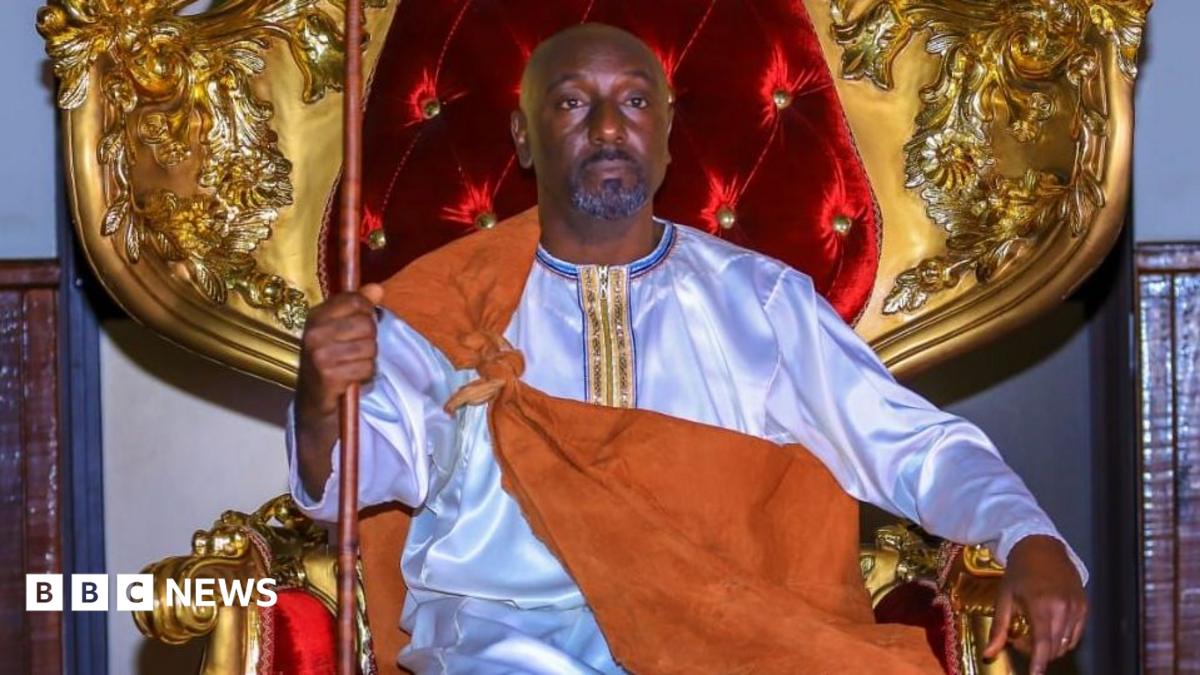
A veteran Ugandan broadcaster who spent years delivering the news has become the story himself, as Edward Rukidi Kijanangoma Nyabongo I is set to be crowned king of the Tooro kingdom in a ceremony steeped in tradition, ritual and no small amount of controversy.
For decades, the 56-year-old was a reassuring presence on Ugandan television screens, a long-serving anchor and editor at the state broadcaster whose face was familiar to millions. Few who watched him read the headlines could have imagined that he was destined for a crown. Yet that is precisely the path he has taken, culminating in a coronation that has divided the royal family and captivated the nation.
Tooro is one of Uganda's four principal officially recognised historical kingdoms, a cultural institution that commands deep loyalty among its subjects even though it wields no formal political power. Its throne fell vacant last month when King Oyo Nyimba Kabamba Iguru Rukidi IV died of cancer at the age of just 34, ending a reign that had begun three decades earlier in extraordinary circumstances.
Oyo had ascended to the throne in 1995 at the age of three, following the death of his father. He was, at the time, the youngest monarch anywhere in the world, a "boy king" whose childhood unfolded under the gaze of a kingdom and a country alike. His death in his mid-thirties shocked many Ugandans who had grown up watching him grow into the role.
The coronation itself is an elaborate affair rooted in customs that stretch back generations. According to Charles Mwanguhya, the Tooro kingdom's information minister, the traditional practices begin at midnight. The new king then walks roughly four kilometres to the official Karuziika royal palace, where the crowning takes place. A mock fight is staged to symbolise that kingship is never easily won. Members of the royal Babiito clan then bless him, before further ceremonies mark his assumption of the throne. Only then does he sit upon it and have an actual crown placed on his head, signifying his new authority.
What should have been a moment of seamless continuity, however, has instead exposed a bitter rift within the royal household. By tradition, a recognised son of the late king would normally inherit the throne. Close members of the royal family maintain that Oyo left behind a young son and a will instructing that the child should succeed him. But that son has never been presented publicly, and the committee of 21 Babiito clan members responsible for choosing the next king declined to recognise him, ultimately settling on Kijanangoma instead.
Adding to the uncertainty, the late king was never publicly married, and remarkably little is known about his wife or their son. His mother, Queen Best Kemigisa, has argued forcefully that her son's will should have been honoured. The succession committee brushed aside her objections, insisting that its selection process complied fully with Tooro customs and traditions.
Kemigisa has spoken with evident pain about the outcome. She described Kijanangoma's selection as the "announcement of a second king" made after her son's will had been read to members of the royal family. "As a mother, that was extraordinarily painful," she said, recalling that celebrations for the new king unfolded only metres from where her son's body lay.
She later revealed that Oyo's son had been in the US state of Texas and was due to return home, but that the plan could not proceed amid what she called a tense and polarised succession dispute. "No child should be placed in circumstances where returning to his father's homeland could mean being drawn into hostility and conflict," she wrote in a post on X. Her words underline how personal and raw the disagreement has become.
The kingdom's information minister, however, has offered a different reading of events. Mwanguhya told the BBC that the son in question "hasn't been presented anywhere, which means there is a growing acceptance that sad as it may be, King Oyo didn't leave a son behind." In his account, the crown has simply moved to a different line within the ruling clan, a shift he framed as consistent with tradition rather than a break from it.
Royal palace sources say a king must come from the Babiito clan, specifically from the lineage of King George David Matthew Kamurasi Rukidi III. Kijanangoma and the late King Oyo were cousins, both grandsons of Rukidi III, the 11th Omukama, who ruled Tooro from 1928 until 1965. That shared ancestry places the new king firmly within the accepted bloodline, even as questions linger over the process that elevated him.
Kijanangoma was not the only candidate considered. Prince George Desmond Kamurasi, a footballer who captains and keeps goal for one of the UK's best-known amateur clubs, was also in the frame. According to the succession committee, he declined the offer of the throne, citing other responsibilities. His decision left the path clearer for Kijanangoma, though it did little to quiet the broader dispute.
Upon being formally announced, the incoming king struck a conciliatory tone. He promised that the palace would be open to the people and vowed to concentrate on unity and development. "I ask you for one thing – they have given me this title as king but I cannot work alone, I have to work with you," he said, a remark that appeared designed to reassure a kingdom unsettled by the rows surrounding his rise.
Uganda's traditional monarchs occupy an unusual space in the country's political landscape. They hold no formal political authority, yet they retain considerable cultural influence and inspire significant loyalty in the communities they lead. President Yoweri Museveni restored the traditional kingdoms in the 1990s, and the relationship between the central government and these cultural institutions has remained delicate ever since. A disputed succession in one of the four main kingdoms therefore carries implications beyond Tooro's borders.
For Kijanangoma, the journey from broadcasting studio to royal palace is complete. He inherits a kingdom mourning a young king, a royal family divided over his own legitimacy, and a public watching closely to see whether he can unify a throne that has become the subject of national debate. The crown will be placed on his head, but the arguments surrounding it show little sign of fading.







Comments (0)