 hendra-wijaya
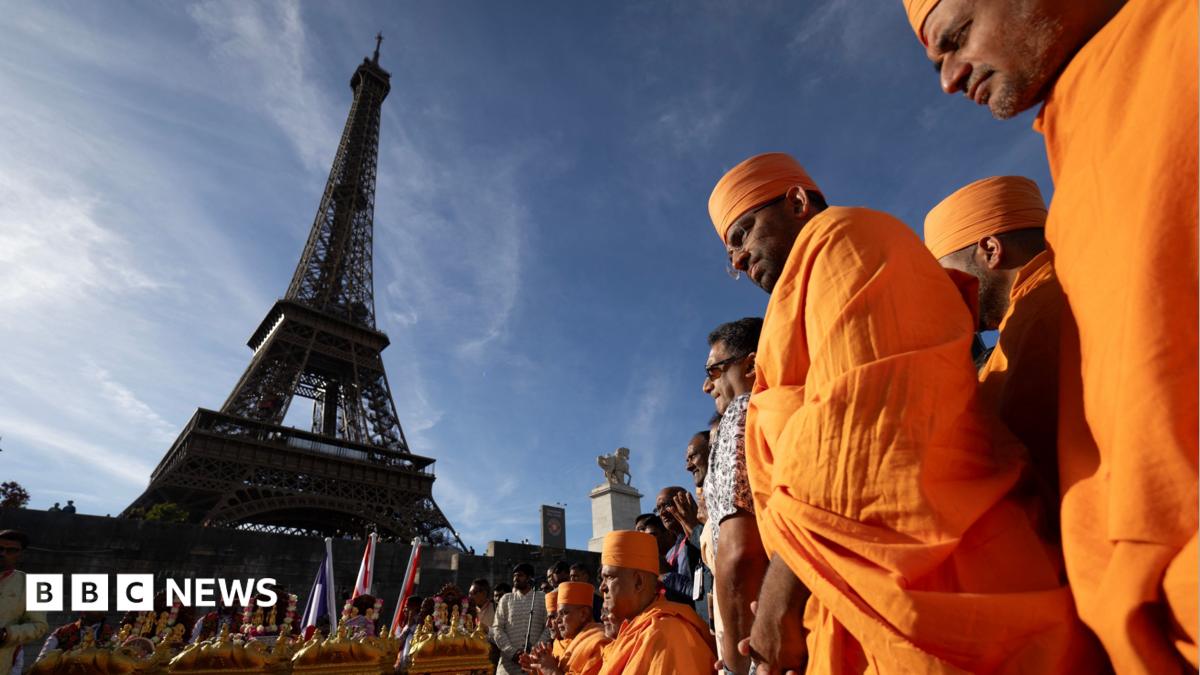
The head of the company responsible for operating the Eiffel Tower is set to leave his position at the end of the year, following a significant controversy that arose when female employees were replaced by male counterparts during a visit by a Hindu religious delegation. Patrick Branco Ruivo, who has served as director general of the Parisian landmark since 2018, will depart from his role, as confirmed by SETE, the company that manages the iconic monument, in an official statement released on Tuesday.
The incident that triggered this leadership change occurred earlier this month when a delegation of approximately 100 individuals associated with the Bochasanwasi Akshar Purushottam Swaminarayan Sanstha, commonly known as BAPS, toured the Eiffel Tower. During this visit, female staff members were instructed to step aside and were substituted by their male colleagues. This arrangement was reportedly made in response to a request from the Hindu group to minimize what they described as "interactions with women."
An internal investigation conducted by SETE concluded that there were "operational flaws and shortcomings" in the way the visit was organized. The company characterized the removal of female staff as "unacceptable." SETE had previously stated that while the Hindu delegation had requested the visit be organized to limit interactions with women, "these conditions should not have been accepted." The company's acknowledgment of these failures highlights a breakdown in protocol that allowed discriminatory practices to occur within one of the world's most visited monuments.
The repercussions of this event were immediate and widespread. Staff at the Eiffel Tower expressed their outrage, leading to a strike that resulted in the closure of the monument. A representative from a staff union reported that "women were asked to leave their places of work" and felt "humiliated" by the experience. Furthermore, employees noted that female workers were also "instructed not to go through or cross certain areas while the delegation was present," effectively segregating them within their own workplace.
The incident quickly escalated into a national conversation about gender equality and the limits of accommodating religious practices in public institutions. Politicians from across the spectrum condemned the events. Yaël Braun-Pivet, the president of France's National Assembly, voiced her strong disapproval, stating, "I refuse to allow women to be compelled to step aside in order to meet the demands of foreign visitors." Her comment underscored a growing sentiment that the principles of the French Republic, particularly gender equality, should not be compromised for the sake of religious customs.
The Socialist mayor of Paris, Emmanuel Gregoire, also weighed in, describing the situation as an "absurd, unjust and unacceptable decision." He subsequently ordered two separate investigations into how the situation was allowed to unfold. This political pressure likely contributed to SETE's decision to reevaluate its leadership and implement corrective measures. The incident became a flashpoint for debates surrounding secularism, or laïcité, in France, a core principle that emphasizes the separation of religion from state affairs and public life.
In response to the findings of the internal investigation, SETE chair Ariel Weil announced that he had requested the implementation of specific measures and training programs aimed at promoting gender equality within the organization. "The coming months will allow us to prepare for the leadership transition under the best possible conditions," Weil stated, signaling a desire to move forward while addressing the systemic issues that were exposed. The organization is now tasked with rebuilding trust among its workforce and the public.
The BAPS organization, for its part, issued an apology earlier this month "for any pain or inconvenience caused." In their statement, they added, "we believe in the universal values of mutual respect and service." The group, which describes itself on its website as a "spiritual, volunteer-driven fellowship dedicated to improving society" through Hindu values, has a global presence with temples in major cities such as London, Los Angeles, and Sydney. The delegation's visit to Paris was part of a trip to open a new temple in the city.
BAPS draws its beliefs from the teachings of Lord Swaminarayan, a late 18th-century celibate ascetic regarded by his followers as an incarnation of Vishnu, the Hindu god of preservation. The movement strictly separates men and women, including in temple activities and at building entrances. While BAPS maintains that the segregation of men and women was introduced for the benefit of women, critics argue that such 18th-century beliefs have no place in today's world and that keeping women out in the name of religious practice is inherently discriminatory.
The departure of Patrick Branco Ruivo marks a significant moment for SETE, which is majority-owned by the City of Paris. Since taking the helm in 2018, Ruivo has overseen operations at the Eiffel Tower during a period that included the COVID-19 pandemic and subsequent recovery in tourism. However, this controversy proved to be a defining challenge that ultimately led to his exit. The timing of his departure, set for the end of the year, allows for a transitional period to ensure stability at the monument.
This incident has also sparked a broader conversation about the treatment of women in the workplace and the potential conflicts between religious accommodations and secular values. The Eiffel Tower, a global symbol of France and a beacon of modernity, became an unlikely backdrop for a debate rooted in traditional religious practices. The fact that a monument synonymous with enlightenment values was the site of such an event added a layer of irony and intensified the public reaction.
As the company prepares for a leadership transition, the focus will likely shift to how SETE can prevent similar incidents in the future. The promised training programs and measures on gender equality will be closely watched by staff, unions, and the public alike. The goal will be to ensure that the values of the French Republic, particularly equality and dignity in the workplace, are upheld without exception, regardless of the requests of any visiting group.
The Eiffel Tower is one of the most recognizable structures in the world, attracting millions of visitors annually. Its management is not just a commercial enterprise but also a custodian of a national symbol. The controversy has therefore damaged more than just the internal morale of the staff; it has also raised questions about the governance and ethical standards of one of France's most prominent cultural institutions. The new leadership will inherit the task of restoring the monument's reputation as a place of inclusion and respect.
The BAPS visit was intended to be a cultural exchange, part of a series of events surrounding the opening of a new temple in Paris. Instead, it became a case study in the clash between religious tradition and modern secular values. While the group has apologized, the incident has left a lasting impression on the staff of the Eiffel Tower and has ignited a debate that extends far beyond the monument's iron lattice. It serves as a reminder that the accommodation of religious practices in public or commercial spaces must be balanced against the fundamental rights of employees and the values of the host nation.









Comments (0)