 hendra-wijaya
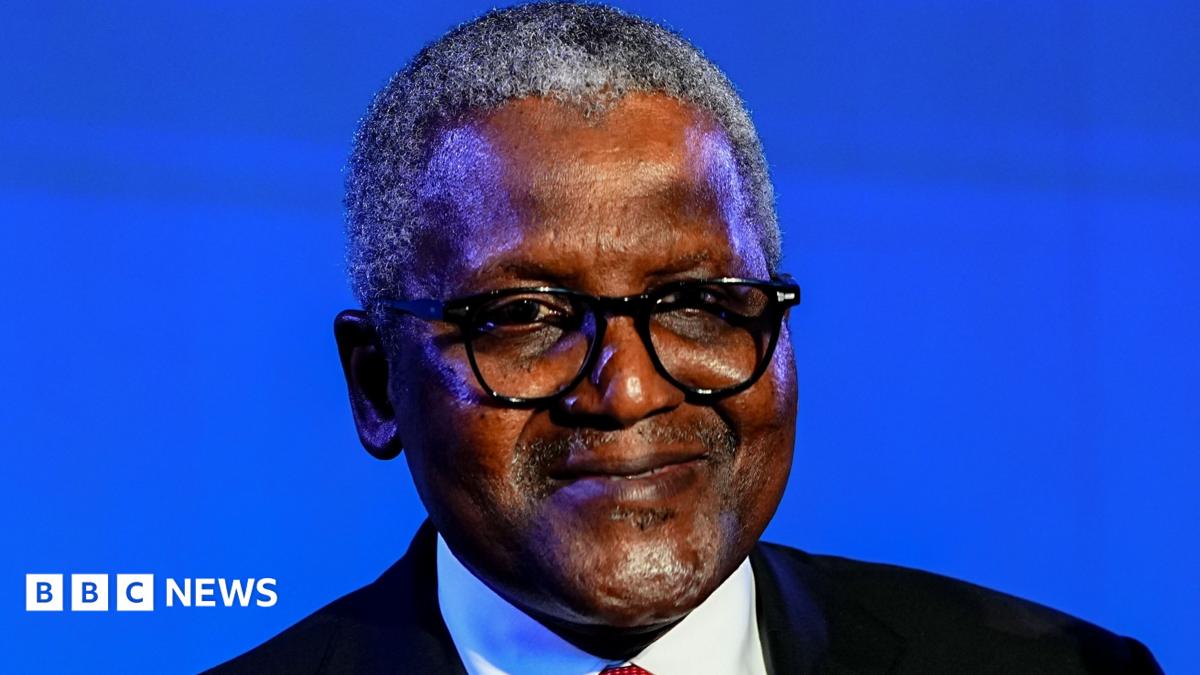
Groundbreaking ceremony plans for one of Africa's most ambitious industrial projects move a step closer this week, with Nigerian billionaire Aliko Dangote and Kenyan President William Ruto expected to break ground on a $16bn (£12bn) oil refinery in Lamu, on Kenya's northern coast. When finished, the plant is designed to process 700,000 barrels of crude oil each day — a throughput that would make it the largest industrial project in East Africa by capacity.
The scale of the announcement has done little to settle a local dispute. In the days before the launch, some residents took to the streets in Lamu to press for higher compensation for the land taken for the refinery. Dangote, speaking to the BBC's Focus on Africa programme, brushed the demonstrations aside, characterising them as games played by local marketers and international players. He insisted the project would proceed and would be on schedule to be ready by 2030.
Dangote, who made his fortune in cement before expanding into oil and is widely described as Africa's richest man, directly challenged the protesters' motives. Questioning what the demonstrators were actually protesting about, he asked: "Have you ever seen people demonstrating against themselves in terms of development?" The remarks underline a wider tension between the investor's push to accelerate construction and residents who feel they have not been adequately rewarded for the land they have surrendered.
On the compensation claims themselves, the businessman disputed them, saying the company took only the portion of land it needed from the area made available by the government. That distinction matters: the grievance is not that land was taken, but that locals believe the terms offered for it were too small relative to the value of the mega-project landing on their doorstep.
The economic stakes are difficult to overstate. The refinery is being billed as Kenya's biggest infrastructure build since independence, eclipsing the $5.1bn (£3.9bn) Standard Gauge Railway, which has been the country's flagship construction project of recent years. It is also entering a region with no domestic refining capacity at all — East Africa currently has no oil refineries of its own, meaning crude produced or imported in the area has historically been processed elsewhere.
Critics have questioned the decision to site the plant in Kenya, which produces no oil of its own. Alternative locations have been floated, including Tanzania and Uganda, both of which are progressing towards oil exports through the East African Crude Oil Pipeline. That would, on one reading, place a refinery closer to regional feedstock.
Kenya's Energy and Petroleum Minister Opiyo Wandayi rejected that logic. Explaining why a non-producing country should host such a facility, he said: "Refineries get crude oil from the market. And the market is open." Dangote made a parallel argument, pointing to Singapore, which he noted produces no oil itself yet operates several refineries. The principle being defended is that refining is a commercial activity driven by trade and logistics rather than by proximity to crude.
Beyond the refinery itself, the project includes a 1,000-megawatt power plant — a component Dangote has emphasised throughout. He regards reliable electricity as one of the binding constraints on industrialisation across Africa, particularly in mineral-rich countries that continue to export raw materials rather than processing them at home. In Lamu, the new generating unit is designed to serve Dangote's operations and to attract other industries to the region, an approach he describes simply: "The power is there and what you do is what we call plug and play."
On employment, Dangote said that at the height of construction the project would create 60,000 jobs, with the economic effects expected to extend beyond those directly employed. He was dismissive of the idea that automation would hollow out the opportunity, asking rhetorically whether robots were going to be brought in, and concluding: "Of course, the people will benefit." Employment figures of this kind are central to the project's political case in a region where the distribution of mega-project benefits is a persistent source of public distrust.
The refinery is the latest leg of a much wider Dangote build-out. The Lamu scheme is his largest proposed investment outside Nigeria, with construction due to begin on 1 November. Alongside it he has roughly $50bn (£38bn) of projects in the pipeline, including plans to develop 10,000 megawatts of power generation capacity across Africa by 2030 — a figure he says could double depending on demand.
Consumers may eventually see a benefit at the pumps. Kenya has relatively high fuel prices, and greater domestic refining capacity could help ease them. The caveat, acknowledged in the reporting, is that crude oil — the main raw material for fuel — is priced in international markets, and that price remains a major factor in what motorists pay.
Financing on the Nigerian side is also moving. Dangote's existing refinery in Nigeria has a processing capacity of 700,000 barrels a day, the same as Lamu's planned design, and he plans to double that figure after floating 4.1 million ordinary shares to raise up to $2.1bn earlier this month. Taken together, the Lamu groundbreaking, the power build-out and the Nigerian expansion illustrate a single industrial strategy: build refining and generation capacity at continental scale, and capture value closer to the end market rather than shipping unprocessed raw materials abroad.
Whether that vision is judged a success in Lamu will likely be decided as much in the villages around the site as in the boardrooms. The groundbreaking ceremony sends a clear signal of confidence in the venture; the protests on the ground signal an unresolved question over who bears the cost of hosting it.









Comments (0)