 rizky-amelia
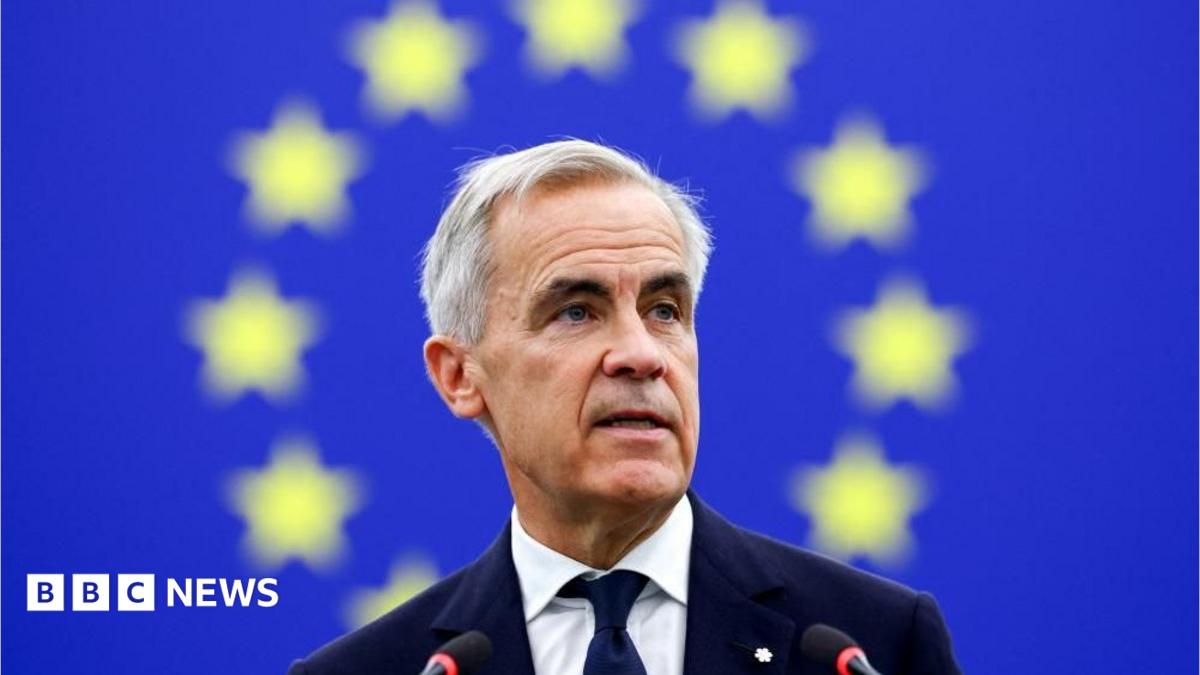
Canadian Prime Minister Mark Carney has formally embraced an unprecedented initiative by the European Union to establish an "associate member" status for Canada. Addressing members of the European Parliament in Strasbourg, the Canadian leader advocated for significantly deeper transatlantic integration spanning national defence, critical minerals extraction, and continental energy security, framing the initiative as a collective necessity in an increasingly volatile international landscape.
The prime minister’s address followed an announcement by European Commission President Ursula von der Leyen, who proposed opening the bloc’s doors to Canada under a new bespoke framework. The suggested relationship aims to foster extensive coordination across vital sectors, including manufacturing, technological development, defence infrastructure, critical supply chains, and broader economic resilience.
However, the path toward formalising such an arrangement faces considerable diplomatic and institutional hurdles. Associate membership represents an entirely new concept within the European Union's constitutional framework, meaning the legal mechanism does not currently exist. Implementing this novel tier of alignment could take years of negotiation and would necessitate unanimous consent from all 27 EU member states, several of which have previously expressed skepticism toward creating supplementary tiers of union affiliation.
The transatlantic rapprochement unfolds against a backdrop of deteriorating trade relations between Canada and the United States. Following the breakdown of bilateral negotiations last month, Washington and Ottawa entered an escalating cycle of tit-for-tat tariffs, fundamentally altering North American commerce and prompting Canadian leadership to diversify international economic partnerships.
The prospect of an expanded Canada-EU partnership quickly drew a sharp rebuke from US President Donald Trump. Characterising the associate membership concept as laughable, the American president cautioned that the United States could retaliate by introducing severe tariffs or severing trade across numerous sectors with European nations if he determines the alliance to be a hostile act against American interests.
Speaking to journalists during a post-address press conference in Strasbourg, Carney firmly dismissed the warnings from Washington. The prime minister stated that the burgeoning partnership with Europe represents an inherently constructive pursuit, affirming that the Canadian public stands united against external pressure regarding domestic policy, national culture, or sovereign international alliances.
During his legislative address, Carney presented a sober assessment of contemporary international challenges, describing democratic societies as navigating severe geopolitical disruptions. He cited the accelerating impacts of climate change, the gradual erosion of democratic practices, and the deliberate exploitation of trade networks and international supply chains for economic coercion as urgent shared threats.
Addressing the broader strategic implications of the pact, Carney underscored that the proposed collaboration is not intended to fashion an aggressive third geopolitical power bloc to counter existing superpowers. Instead, he framed the alliance as an anchor of stability and sovereignty designed to safeguard democratic freedoms and demonstrate how like-minded nations can collaborate without seeking dominance over others.
The Canadian prime minister also drew a firm distinction between associate affiliation and standard membership. He made clear that Canada is neither seeking nor structurally positioned to apply for full membership within the European Union, reiterating that the transatlantic initiative constitutes a distinct, tailor-made bilateral model.
Central to the envisioned partnership is the strategic supply of natural resources and high-tech manufacturing inputs. Carney highlighted Canada’s extensive deposits of critical minerals as an essential component for reinforcing joint strategic autonomy, reducing mutual vulnerabilities in global supply networks that have increasingly been subjected to geopolitical leverage.
Energy security forms another key pillar of the proposed cooperation. Under the discussed roadmap, Canada could dramatically bolster European energy reserves through shipments of liquefied natural gas and emerging hydrogen fuels. In return, Canadian industries stand to benefit from Europe’s advanced capabilities and leadership in clean-energy technologies.
Beyond commercial and industrial integration, the prime minister proposed deepening social and educational connections across the Atlantic. He suggested expanding bilateral youth mobility by enabling Canadian participation in the EU's flagship Erasmus+ exchange programme, which would allow young citizens to study, work, and reside more freely across both jurisdictions.
The initiative builds upon a foundational partnership already established between the two sides. The European Union and Canada currently maintain an active free-trade agreement alongside collaborative pacts in research, technological development, and shared security protocols.
Despite the momentum in Strasbourg, both Canadian and European officials acknowledge that considerable groundwork remains before the partnership can be formally instituted. Carney noted that the proposals will be submitted for full legislative debate and a vote in the Canadian parliament, characterising current developments as merely the initial phase of a lengthy process.
Detailed bilateral discussions are scheduled to progress later this autumn. Both parties are preparing to convene at a dedicated Canada-EU summit in Montreal at the end of October, where negotiating teams intend to work through the specific legal, political, and economic mechanics of the associate membership proposal.










Comments (0)