 rizky-amelia
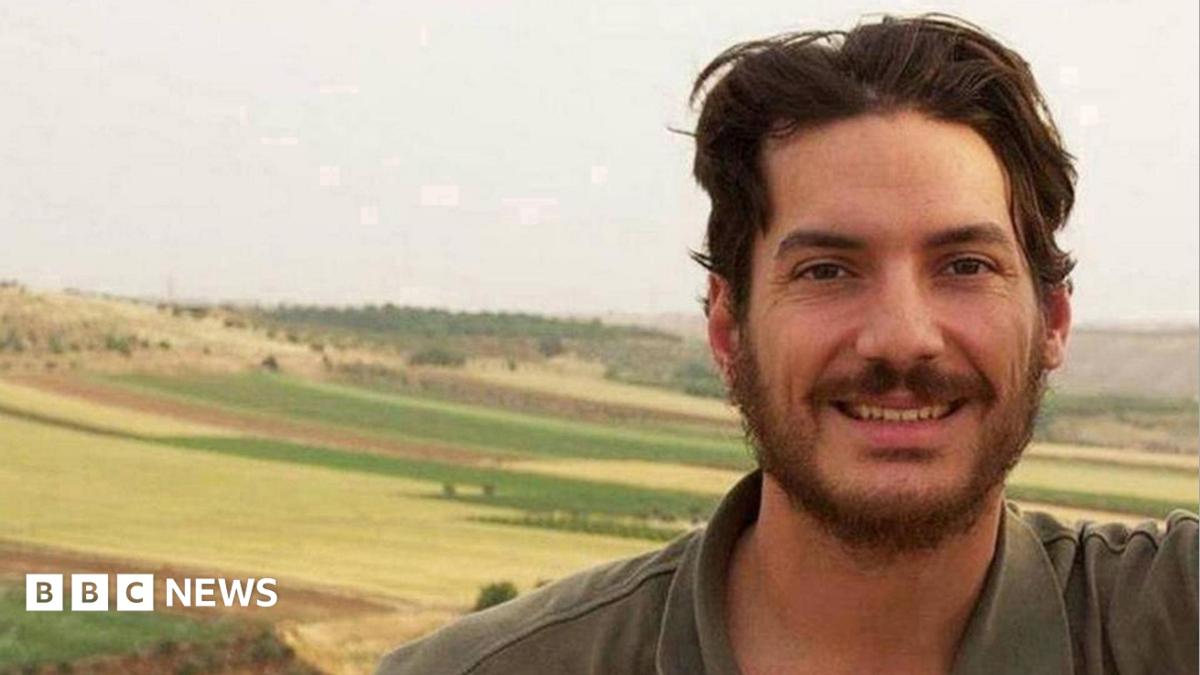
The 2012 disappearance of American journalist Austin Tice in Syria was not a random or opportunistic capture, but the result of an intricate, weeks-long abduction plot authorized at the highest level of the Syrian government by then-President Bashar al-Assad, a comprehensive investigation has revealed.
For over twelve years, prevailing assumptions suggested that Tice had inadvertently run into a regime checkpoint while traveling through the war-torn country. However, newly uncovered testimonies and internal records demonstrate that state forces meticulously coordinated his seizure well in advance, dispelling longstanding theories of a chance capture.
The findings, published by the BBC following a multi-year probe and featured in its investigative podcast series *Where is Austin Tice?*, shed critical new light on one of the most prominent missing-person cases in modern journalism. Tice's disappearance has remained a high-priority diplomatic issue, repeatedly cited by successive United States presidents and followed closely across international media.
Prior to his capture, Tice was a Georgetown University law student and a former captain in the United States Marine Corps who traveled to Syria to report on the intensifying civil war. Working as an independent freelance correspondent, he pushed into dangerous opposition-controlled territories that most foreign reporters avoided, writing high-profile, front-page dispatches for *The Washington Post* documenting the unrest.
According to insider testimony from Abu Ali, a former operative within the pro-Assad National Defence Forces (NDF) militia, the plot against Tice was initiated after the journalist’s personal driver contacted regime loyalists. The driver, whom Tice regarded as a trusted associate, had secretly been feeding intelligence to Syrian authorities over an extended period.
The driver informed Sakr Rustom, a senior official within the NDF, that Tice was actively traveling across rebel-held sectors and documenting the opposition movement. At the time, the Assad regime was aggressively cracking down on journalists and observers who brought international attention to state-sponsored human rights abuses.
The intelligence moved quickly up the regime’s chain of command. Rustom was the nephew of Bassam al-Hassan, head of the NDF and one of Assad’s most trusted security confidants. Hassan escalated the report directly to the Syrian president via telephone, prompting Assad to issue an explicit directive to bring the American reporter into regime custody.
Abu Ali stated that he was subsequently called into Hassan's office, where commanders confirmed that the president had formally sanctioned the capture operation. Rather than seizing Tice immediately, however, the security network chose to delay the detention following a strategic proposal from the driver.
The driver persuaded regime handlers to maintain ongoing surveillance, pointing out that Tice placed complete trust in him and arguing that further observation would uncover more details about the journalist's work and contacts. The operation consequently shifted into an active intelligence-gathering mission spanning more than a month.
During this surveillance period, regime operatives grew increasingly suspicious of Tice's military background. Witnesses revealed that Tice, drawing on his Marine Corps background, occasionally shared tactical knowledge with rebel fighters and corrected their weapons handling. To the operatives shadowing him, this behavior led them to suspect that Tice was an operative for the Central Intelligence Agency rather than a civilian reporter.
The BBC’s investigation uncovered no evidence whatsoever to substantiate claims that Tice was engaged in espionage. Furthermore, a former high-ranking United States official who held direct oversight of Tice's missing-person case explicitly denied that the journalist had been serving as an intelligence operative.
As the surveillance deepened in the days leading up to the abduction, the driver carried out an audacious breach of trust. While Tice was conducting interviews with rebel personnel, the driver secretly took Tice's backpack—which contained his MacBook computer, a satellite transmitter, and personal belongings—and handed it over to regime operatives for inspection.
On August 11, 2012, shortly before he prepared to exit Syria, Tice celebrated his 31st birthday alongside Free Syrian Army fighters at a rebel safehouse on the western edge of Damascus, located only a few miles from Assad’s presidential palace. In what became his final post on social media, Tice described the gathering featuring a pool, whiskey, and music by Taylor Swift, calling it the best birthday he had ever had.
Following his disappearance days later, the only public proof of life emerged more than a month afterward in a video showing a blindfolded and visibly distressed Tice held by armed captors. In the years that followed, his mother, Debra Tice, consistently campaigned across Washington, pressing successive administrations to maintain active search efforts for her son.
When the Assad regime collapsed twelve years later, tens of thousands of prisoners were liberated from state-run detention facilities, but Tice was not among them. Investigative teams subsequently obtained intelligence coordinates to search multiple suspected holding sites for more than a month, yet found no trace of him. While a former Syrian commander claimed that Tice had been executed, that account remains disputed, and no physical remains have been recovered.
Despite the lack of clarity regarding his ultimate fate, the aftermath of the regime's collapse yielded a major breakthrough: the discovery of hundreds of pages of classified Syrian intelligence files. These internal documents provided the first definitive documentary evidence confirming that Austin Tice had indeed been detained by Assad's security apparatus, cementing state responsibility for his abduction.








Comments (0)