 rizky-amelia
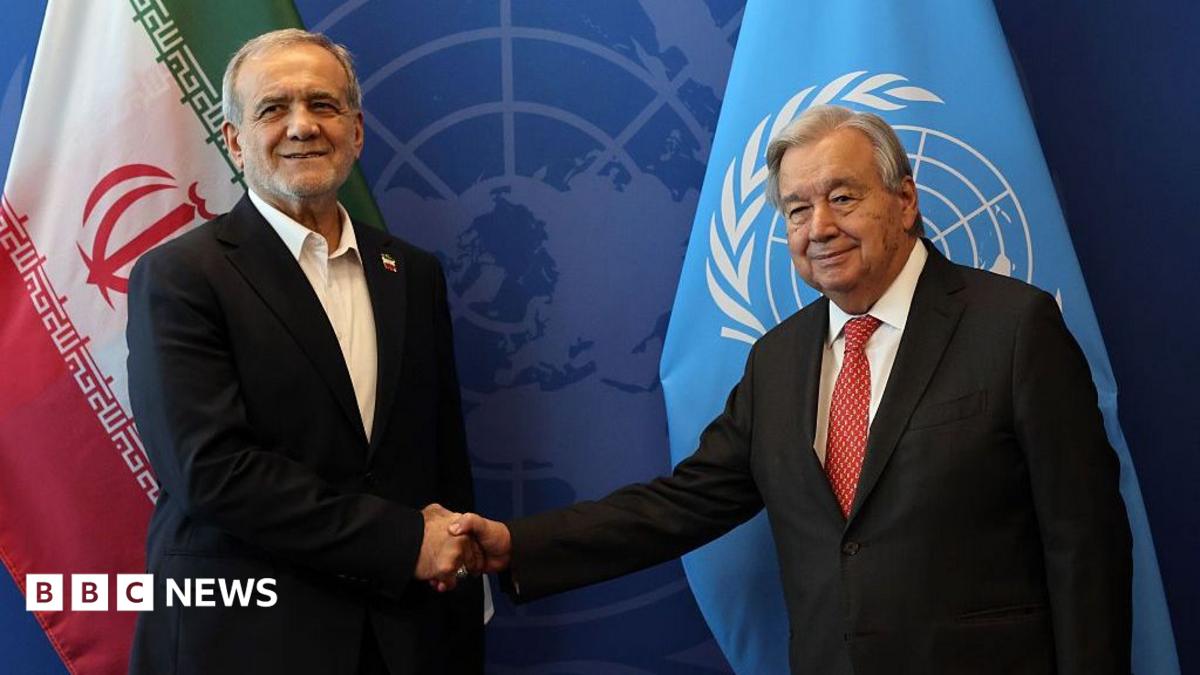
The United States has formally approved travel visas for high-ranking Iranian officials to attend the upcoming United Nations General Assembly in New York, even as direct military hostilities between Washington and Tehran enter their seventh month.
The core group cleared to travel to the United States includes Iranian President Masoud Pezeshkian alongside Foreign Minister Abbas Araghchi. Their scheduled arrival marks a rare diplomatic intersection between two warring nations whose armed confrontation has steadily escalated across the Middle East.
On Thursday, a spokesperson for the US State Department confirmed the decision, explaining that the move aligns with the legal obligations of the United States as the host nation for the United Nations headquarters. Under international agreements governing the international body, the host country is required to facilitate the participation of member states in major diplomatic assemblies.
However, the State Department emphasized that the visiting delegation will not enjoy unrestricted movement while on American soil. Officials confirmed that the Iranian representatives will be placed under rigorous travel boundaries and will face explicit prohibitions regarding the acquisition of particular American merchandise and luxury products throughout their stay in New York.
According to US authorities, the size of the delegation traveling from Tehran has been substantially reduced compared to delegations permitted in previous years. The administration has historically enforced strict limits on Iranian diplomats, and this visit will see similar protocols applied under far more volatile geopolitical conditions.
During last year's assembly, Iranian delegates were barred by US authorities from entering wholesale shopping outlets such as Costco. Furthermore, visiting officials were subjected to strict oversight, requiring prior authorization from the US government before acquiring any luxury items, an embargo that specifically included vehicles, jewelry, and alcohol.
The visit unfolds during an intensely delicate period, as the armed conflict between the two adversaries shows no sign of abating. The war initially erupted on February 28, when the United States and Israel conducted coordinated military strikes across Iranian territory.
Since those opening attacks, the conflict has widened considerably, spreading into neighboring nations and causing major disruptions across the international economy. Global energy markets have experienced sustained price shocks as hostilities have persisted across the region over the past six months.
In response to the initial Western and Israeli operations, Iranian forces have repeatedly launched retaliatory attacks against Israeli targets, allied nations across the Gulf, and American military installations. Evidence from these clashes has shown extensive damage inflicted on US operational sites throughout the theater of war.
The conduct of the war has also drawn increasing scrutiny from international observers. United Nations human rights and legal experts recently noted that there are credible grounds to believe that the United States may have committed war crimes during military strikes inside Iran, including an operation that caused fatal civilian casualties at the Shajareh Tayyebeh Primary School located in Minab, southern Iran.
At home, the White House is confronting an intensifying wave of political and public pressure to de-escalate the confrontation. Lawmakers and public observers have increasingly urged the administration to establish a viable diplomatic pathway to bring an end to the prolonged conflict with Iran before it destabilizes the broader international order even further.
The diplomatic gathering comes as the 81st session of the United Nations General Assembly continues its work in Manhattan. The centrepiece of the annual assembly, the General Debate, is scheduled to commence on Tuesday, convening world leaders to address pressing international crises and security challenges.
The opening day of the General Debate is expected to feature high-profile addresses from several key global leaders, including US President Donald Trump, UK Prime Minister Andy Burnham, and French President Emmanuel Macron. Their speeches are anticipated to touch upon the critical state of global security and regional conflicts.
Following the initial round of addresses, Wednesday’s agenda is slated to feature speeches from the leaders of Ukraine, Syria, and Iran. President Pezeshkian’s expected appearance at the podium will offer Tehran a global platform to present its position directly to the international community while standing on US soil during an active war.
While Washington elected to permit the entry of the Iranian leadership, it has maintained a starkly different stance toward other contested delegations. The US government recently denied visa requests submitted by Palestinian President Mahmoud Abbas and his official entourage, preventing them from attending the assembly.
The refusal marks the second consecutive year that Palestinian leadership has been barred from the gathering by the White House, which continues to withhold recognition of the delegation's legitimacy. As global leaders assemble in New York next week, the contrasting visa decisions underscore the intricate and contentious diplomatic maneuvering surrounding this year's UN summit.






Comments (0)